Education Budget 2026 Expectations: From Spending More to Spending Smarter
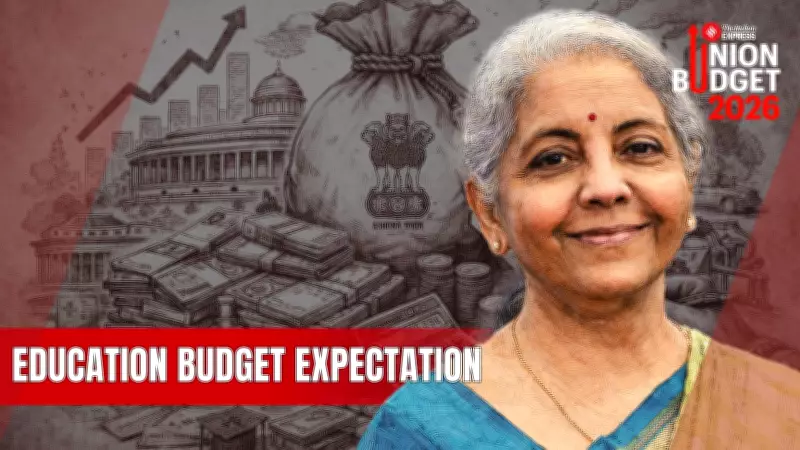
As India prepares for the Union Budget 2026-27 presentation by Finance Minister Nirmala Sitharaman on February 1, education leaders across schools, universities, research institutions, and the skilling ecosystem are calling for a decisive shift – from incremental funding to outcome-driven investment. With the government’s long-term vision of Viksit Bharat 2047 in focus, stakeholders argue that education must be treated not merely as social expenditure, but as strategic national capacity-building.
From improving school learning outcomes and implementing NEP 2020 in full, to building innovation-led universities, accelerating translational research, fostering entrepreneurship, and making digital education more affordable, expectations from this year’s Budget are both ambitious and wide-ranging. Educationists stress that sustained investment today will determine India’s ability to retain talent, achieve technological self-reliance, and remain globally competitive in the decades ahead.
School Education: Shifting Focus from Enrolment to Outcomes
Atul Temurnikar, chairman and co-founder of Global Schools Group, underlines that India’s challenge is no longer access to education, but learning quality. “With over 250 million students, India must move beyond enrolment numbers to focus on learning outcomes. Education should be treated as national capability-building, not just social spending,” says Temurnikar. “Budget priorities that reward innovation, teacher enablement and measurable learning impact will directly shape India’s workforce productivity and global competitiveness.” He stresses that improving how students apply concepts and preparing them for a rapidly changing world must be central to school education spending.

Renu Singh, Director Principal, Amity International School, Noida, said the upcoming Budget should prioritise academic inputs in school education over infrastructure alone. She urges the need to exempt core curriculum resources, teaching–learning aids, laboratory materials, and essential digital tools such as LMS platforms, e-libraries, and virtual labs to strengthen classroom learning. Greater support for teacher training, assessment systems, student enrichment programmes and policy recognition of free, education-focused AI tools would improve learning outcomes and equity, while enhanced funding for scholarships, nutrition and mental health support is crucial to reducing dropouts.
Namrata Bordoloi, a school teacher at the Govt. Girls’ Higher Secondary and Multipurpose School, Jorhat, Assam, said the Union Budget should prioritise strengthening government and government-aided schools, where a majority of India’s students and teachers are concentrated. Citing UDISE+ data, she noted that government schools account for nearly 70 per cent of institutions and educate about half of the country’s school-going children, making effective utilisation of education funding critical. She called for greater investment in basic infrastructure, including electricity, clean drinking water, hygiene facilities and fully equipped laboratories, particularly in remote areas where digital learning remains inaccessible. Emphasising the need to begin reforms at the school level, she also urged faster delivery of textbooks through digital alternatives, stronger focus on vocational education as envisaged under NEP 2020, and increased reservation for government school students in professional institutions to improve access and outcomes.

Higher Education: Building Depth, Quality, and Global Confidence
Calling for a long-term approach to strengthening India’s higher education ecosystem, Professor V Ramgopal Rao, group Vice Chancellor, BITS Pilani, and former director of IIT Delhi, says the Budget must prioritise scale with quality. “India must build world-class higher education capacity at home so talented students see credible options within the country, not only abroad,” Professor Rao notes. “Empowering high-performing institutions with greater autonomy, strong faculty, modern research infrastructure and interdisciplinary programmes is key to talent retention.” He adds that as global student mobility patterns shift, India has an opportunity to emerge as a serious destination for advanced study and research – provided academic depth and institutional flexibility are strengthened.
The Education Budget for Science and Humanities must emphasise promoting experience-based training at the high school and undergraduate levels, Prof Krishanu Ray, Department of Biological Sciences, BITS Pilani, notes. For this purpose, a national guideline and framework should be developed for the educational institutions. Currently, a major part of the high school and undergraduate training is based on classroom lectures and assessment through written tests, which fails to bridge concepts to applications. An experiment/ experience-based training method at the initial stages can impart the ability to seek and apply knowledge at the workplace. This way we could truly achieve the objectives of NEP 2020.
Former Ambassador of India and co-chair, School of Global Leadership, Gautam Bambawale, adds that as India opens up to foreign universities, equal focus is needed on helping Indian institutions expand overseas. He calls for diplomatic support, research financing mechanisms, and outcome-linked tax incentives to treat education as a strategic export. If Indian universities are to build credible education ecosystems abroad, they will need structured government support in the form of diplomatic facilitation for regulatory recognition and visas, targeted financial mechanisms for research collaboration and faculty mobility, and time-bound, outcome-linked tax incentives. Treating education as a strategic export would enable Indian institutions to extend India’s education and skills footprint globally while advancing national interest.
Medical Education: Upgrading Capacity, Workforce and AI Readiness
Dr Shubham Anand, chairman, Global Association of Indian Medical Students, said the upcoming Budget should focus on strengthening and upgrading existing healthcare infrastructure rather than expanding capacity through new establishments alone. He emphasised that addressing clinician burnout through the creation of additional posts is an urgent priority, alongside targeted investment in skill upgradation in artificial intelligence for healthcare professionals to improve service delivery.
Increased funding for the Ayushman Bharat scheme and faster claim settlements would encourage greater participation from private hospitals, underscoring that India’s economic aspirations cannot be sustained without a strong public healthcare system, he added.
Research and Innovation: From Labs to Markets
A recurring theme across experts is the need to move beyond basic research funding towards commercialisation and real-world impact. Professor Thillai Rajan A, IIT Madras faculty and head of CREST, calls for dedicated budgetary mechanisms to support institutional innovation. “Higher education institutions must become beacons of innovation. A dedicated ‘Fund for Promotion of Innovation in Higher Education Institutions’ can complement existing ANRF support,” he says. “Faculty need structured training in translational research and commercialisation to take ideas from labs to markets.”
He proposes an ambitious national initiative: “An initiative to create ‘One Hundred Innovation Universities’, each mandated to deliver at least one breakthrough innovation annually, can significantly accelerate India’s innovation output.” Echoing the need for translational research, Professor Ramgopal Rao adds: “India needs fit-for-purpose translational research institutions that bridge academia, industry, and startups – de-risking early-stage innovation and accelerating adoption.”
Engineering and Deep Tech: Building Sovereign Capabilities
Professor Sandeep K Shukla, Director, IIIT Hyderabad, says geopolitical uncertainty makes indigenous capability-building unavoidable. “Without strong investment in higher education and R&D, India cannot build semiconductors, secure operating systems or advanced manufacturing,” he says, adding that faculty development must move beyond token programmes to sustained, outcome-oriented training.
Dr Deepak K. Sinha, JAIN University, highlights the need to align technical education with industry through curriculum reform, research partnerships, and faculty recruitment, especially in AI and semiconductor domains. The budget should promote research in emerging fields like AI and semiconductors, while expanding digital learning access to tier-2 and tier-3 cities. However, challenges such as outdated infrastructure, curriculum gaps, and weak industry-academia collaboration persist. To succeed, funding must cultivate not just technical skills, but future-ready competencies like critical thinking and innovation. This requires incentivizing curriculum updates, fostering research partnerships, and attracting top faculty, ensuring India’s education system drives rather than follows global trends.
Entrepreneurship and Start-ups: Institutionalising Risk-taking
Dr Sunil Shukla, Director General of the Entrepreneurship Development Institute of India (EDII), calls for embedding entrepreneurship as a national growth strategy. “The Budget should strengthen entrepreneurship through enhanced credit guarantees, blended finance models, and interest subvention for startups and micro-entrepreneurs,” he says. “Dedicated support for entrepreneurship education, incubation and scale-up, especially in Tier I and Tier II cities, will deepen India’s startup base.” He believes such measures are critical to sustaining India’s position as a global startup powerhouse.
Skilling and Digital Learning: Affordability as a Catalyst
Pankaj Jathar, CEO, NIIT Limited, urges rationalising GST on verified digital learning programmes from 18% to 5% to improve affordability, and reiterates the need to raise education spending to 6% of GDP with a focus on digital infrastructure and public–private skilling partnerships. He also reiterates the long-standing demand to raise education spending: “Setting a clear target of 6% of GDP for education, with emphasis on digital infrastructure and public–private skilling partnerships, is crucial at this stage.”
The last Budget achieved scale by boosting funding and digital initiatives, but Budget 2026 must now focus on substance, says Fr. Nelson A. D’Silva, S.J., Acting Director, XLRI Delhi-NCR. “With enrolments surging, India faces a capacity bottleneck where infrastructure and faculty preparedness are struggling to keep pace. Investment must move beyond hardware and AI tools to ‘heartware’ – deep pedagogical training and industry-aligned curricula — so that institutions are not just accessible, but truly ready to prepare graduates for a global economy.”
International Education: Expanding Access and Equity
Piyush Kumar, Regional Director, South Asia, Canada, and LATAM at IDP Education, points to rising aspirations for global education across income groups. “International education plays a vital role in building a globally competitive workforce. Greater financial support and scholarship options will enable students to access global education irrespective of their economic background,” Kumar says.
With over 18 lakh Indian students studying abroad in 2025, overseas education now functions as an extension of India’s higher education system, financed almost entirely by Indian households. In the same period, education-related outward remittances under the Liberalised Remittance Scheme (LRS) declined from about $3.48 billion in FY 2024 to roughly $2.92 billion in FY 2025, a 16 per cent adjustment. Student mobility remained steady, which suggests families are reorganising tuition and settlement payments because of higher costs, proof-of-funds requirements, and compliance procedures across multiple countries. This trend, according to Saurabh Arora, founder and CEO of University Living, points to the need to update the three systems that shape overseas study financing: credit, remittance, and taxation. Education loans for international study are still priced higher than domestic credit, LRS transactions introduce working-capital pressure through TCS, and benefits such as Section 80E are unavailable to most young earners under the new tax regime.
Towards Viksit Bharat 2047
Summing up the broader vision, Professor Mahadeo Jaiswal, Director of IIM Sambalpur, stresses alignment with national development goals. “A strong higher education system is essential to achieving Viksit Bharat 2047,” he says. “Focused investment in research infrastructure, interdisciplinary learning, AI-driven education and sustainability-oriented curricula will future-proof India’s talent ecosystem.” Similarly, Professor Archana Choudhary, Dean (R&D) at Birla Global University, calls for increased research funding and global collaboration. “This is the time to invest in advanced laboratories, research parks, and simplified frameworks for international research partnerships to enhance India’s academic reputation,” the dean added.