Vittal College NSS Camp Hosts Innovative Children's Market
A unique children's market organized as part of a National Service Scheme (NSS) camp at Vittal First Grade College in Mangaluru has provided hands-on lessons in entrepreneurship, creativity, and the importance of local resources. The event, held on the final day of the camp, aimed to help children apply mathematics in daily life while developing practical skills.
Fostering Creativity and Local Resource Utilization
According to Aravind Kudla, a teacher at Dakshina Kannada ZP Higher Primary School in Moodambailu, Vittal, this year's market was "truly special." Initially, when organizers asked children what they planned to sell, many suggested items like keychains, stickers, pens, and hair clips sourced from online platforms. This raised concerns, as the primary objective was to encourage recognition of locally available resources and creative marketing.
To address this, organizers set a strict condition: only homemade, naturally available, and eco-friendly products could be sold. This rule pushed children to think innovatively about what they could offer using materials from their surroundings.

Diverse Product Range and Community Engagement
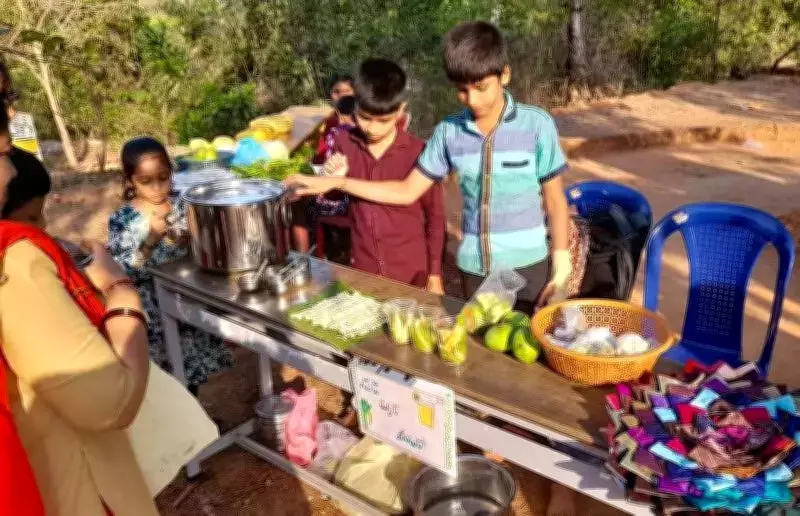
The market, organized in the evening on the school premises, attracted parents, villagers, camp students, teachers, a cluster resource person, and visitors from nearby areas. It was designed to encourage interaction beyond familiar circles, fostering community engagement.
Children sold a wide variety of products, including:
- Vegetables and produce from their backyards, such as brinjal, beans, spinach, cucumber, okra, mangoes, pomelo, Mangaluru jasmine, jackfruit seeds, tender mango pickles, cowpeas, and bananas.
- Seasoned items like watermelon and cucumber with spicy seasoning, raw and ripe mangoes, tamarind, jamun, tender coconut, banana stem, and cooking leaves.
- Homemade snacks and drinks, including sweet potato papad, kosambari, tender coconut juice, tamarind juice, muskmelon juice, lemon juice, banana dessert, and flavored soda.
Creative and practical products were also popular. For example, two households made and sold U pins from bicycle spokes, while banana fiber ropes for tying jasmine flowers sold well. One child achieved significant profit by selling bananas, and handcrafted wooden keychains with English letters sold out quickly.
Other items on offer included brooms, buttermilk bottles, coconuts, handmade mats, toys made from coconut shells, and cloth bags.
Practical Business Lessons and Profit Analysis
The market provided valuable business insights for the young participants. Children observed firsthand how processing products could increase profits. For instance, one child earned higher profits by selling processed banana snacks instead of raw bananas. Two other children made approximately Rs 1,000 in profit by selling seasonal forest fruit.
The next day, profits and losses were discussed, allowing children to reflect on their experiences and learn from both successes and challenges. This debriefing session reinforced the educational goals of the market, emphasizing practical application of mathematical concepts and entrepreneurial thinking.
The NSS camp's children's market not only promoted local resource utilization but also instilled a sense of creativity and business acumen in the participants, making it a memorable and impactful event for all involved.