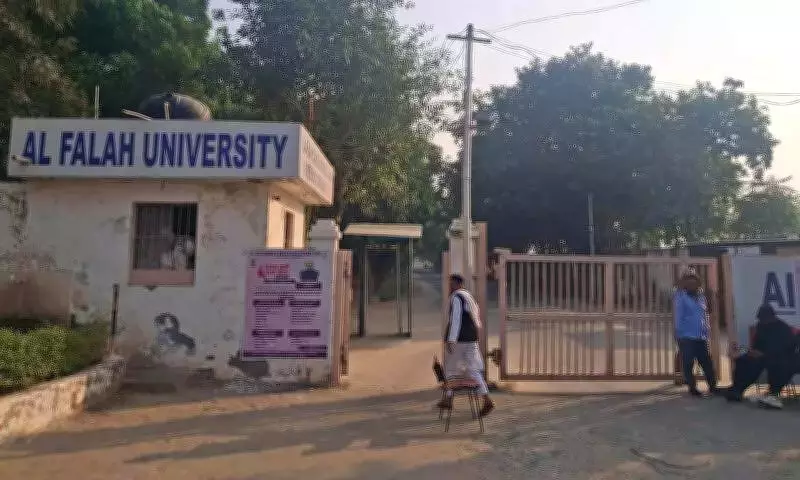
Al-Falah University Challenges Haryana's New Private University Act in High Court
Al-Falah Charitable Trust and Al-Falah University Faridabad have moved the Punjab and Haryana High Court, contesting the constitutional validity of the Haryana Private Universities (Amendment) Act, 2025. This legal action follows heightened scrutiny of the institutions after a car explosion near the Red Fort, with the petition accusing the Haryana government of assuming "unbridled and arbitrary" powers that endanger the existence of private and minority-run educational establishments.
Key Provisions Under Scrutiny
The petition centers on newly introduced sections 44B and 46 of the Act, enacted on January 6, 2025. These amendments empower the state government to appoint an "administrator" to take over the management and control of any private university under the pretext of "grave lapses", including vaguely defined concerns regarding national security, public order, and law and order. According to the plea, these provisions allow the state to maintain control even after normalcy is restored, which the petitioners argue is a direct violation of Article 30 of the Constitution. This article guarantees minorities the right to establish and administer educational institutions.
Background and Escalating Tensions
The friction between Al-Falah University and the state government escalated following an incident on November 10, 2025, when four faculty members were allegedly linked to a bomb blast in Delhi. The petition states that the university took immediate corrective action by terminating the services of the individuals—Nisarul Hassan, Umar-un-Nabi, Shaheen Saeed, and Muzammil Shakeel—and cooperated fully with investigating agencies. Despite this cooperation, the state issued an inquiry notice on January 14, seeking to inspect the campus under the new law.

Allegations of Overreach and Violations
The trust, which has managed the 70-acre campus in Faridabad's Mewat region since 1995, claims the state is using security concerns as a "garb" to usurp private property and institutional autonomy. The petition further contends that the law creates an "unintelligible differentia" between classes of universities, violating the principle of equality under Article 14. It also argues that the law penalizes institutions for past events, constituting a substantive change to their vested rights. Additionally, the takeover of assets and management without compensation is challenged as a violation of Article 300A.
Impact on Services and Community
Al-Falah University, recognized by the UGC in 2015, serves a marginalized population and operates a 650-bed charitable hospital. The petition warns that the state's move to appoint an "Administrator" would "extinguish" the minority character of the institution and disrupt essential healthcare and education services provided to the Mewat region. The case is yet to come up for hearing, but it highlights broader concerns about government overreach and the protection of minority rights in education.