AI Revolution Threatens Traditional University Model, Says Venture Capitalist
For over a century, the four-year university degree has stood as the primary gateway to advanced knowledge and professional credentials. Students traditionally enroll, dedicate years to mastering subjects, and graduate with diplomas that signal expertise to employers worldwide.
However, rapid advances in artificial intelligence are now challenging this long-established model. A fundamental question is emerging: what happens to traditional higher education when knowledge itself becomes widely accessible through technology?
The Case for Free Education in an AI-Driven World
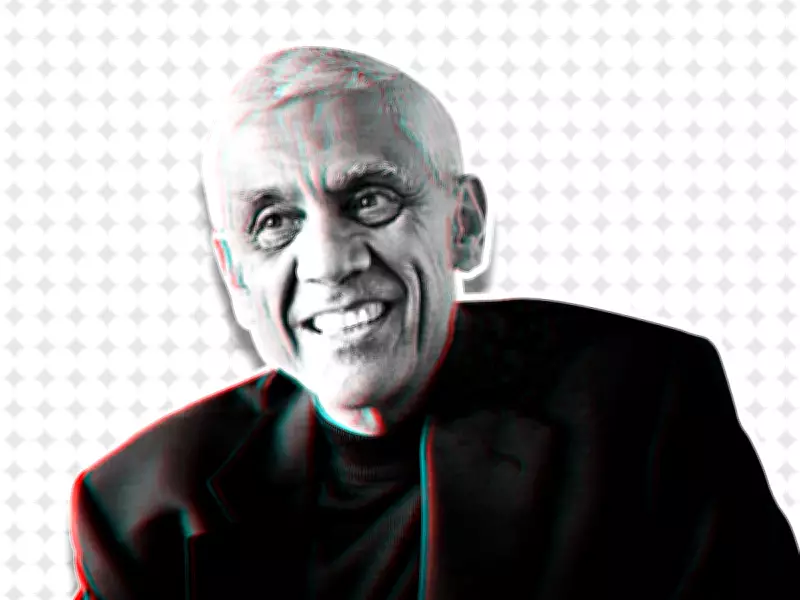
In a recent conversation on the Titans and Disruptors of Industry podcast, prominent venture capitalist Vinod Khosla presented a compelling vision of education's future. The founder of Sun Microsystems and Khosla Ventures argued that higher education's traditional structure faces significant transformation in coming decades.

Khosla's perspective begins with a straightforward premise. As technology enables easier access to knowledge, the economic justification for charging substantial sums for education becomes increasingly difficult to maintain.
"All education should be free," Khosla declared in his interview with Fortune magazine. He simultaneously suggested that universities themselves face an uncertain future, though he believes institutions will continue existing because people value them culturally and socially.
According to Khosla, universities may undergo a fundamental role shift. Rather than serving as the exclusive pathway to professional training, they could transform into places people attend primarily for intellectual exploration and personal interest.
"You won't need a college to get an engineering degree. You won't even need the engineering degree, except if your passion is learning," Khosla explained during the podcast discussion.
If AI systems can effectively teach, guide, and assist with complex subjects, many functions that once required structured university programs could migrate online or become more informal learning experiences.
Changing Attitudes Toward Higher Education
Evidence suggests attitudes toward traditional higher education are already shifting among younger generations, independent of AI's influence. A Gallup survey conducted in September revealed that only 35% of Americans now consider going to college "very important."
This figure represents a record low and marks a sharp decline from 2019, when more than half of respondents held that view. Multiple factors contribute to this changing perspective:
- Rising tuition fees creating substantial financial burdens
- Uncertainty about job prospects following graduation
- Growing questions about whether traditional degrees deliver value in today's labor market
Additional research supports this trend. A ResumeGenius survey found approximately one quarter of Generation Z members regret their decision to attend college. Simultaneously, interest in trade occupations has grown significantly among younger workers, with fields like welding, plumbing, and carpentry attracting increased attention.
These developments suggest the four-year degree is no longer universally viewed as the only reliable path to employment and career success.
When Expertise Becomes Widely Accessible Through AI
Khosla believes artificial intelligence could dramatically accelerate this educational transformation. If powerful AI systems can provide explanations, tutoring, and technical guidance comparable to human experts, they may substantially reduce the advantage traditionally associated with formal credentials.
This possibility raises profound questions about how societies value different forms of expertise. "Do you pay a farmworker the same as an oncologist, because they happen to have the same expertise, which is the expertise of AI?" Khosla asked during the podcast conversation.
Essentially, if AI tools provide similar access to knowledge across diverse professions, societies may need to fundamentally reconsider how different forms of work are compensated and valued.

AI's Broader Transformation of the Workforce
Khosla's predictions extend well beyond education into the broader job market. He believes artificial intelligence will transform employment landscapes significantly, with many tasks currently performed by humans eventually handled more efficiently by AI systems.
"Two thirds of all jobs will be capable of being done by an AI," he told Fortune. "Whether you're a physician, a radiologist, an accountant, a chip designer or a salesperson, AI will do your job better."
Recent corporate developments already hint at these impending changes. Financial technology company Block recently laid off approximately 4,000 employees, with CEO Jack Dorsey citing growing capabilities of intelligence tools as a contributing factor.
Other industry leaders have issued similar warnings about AI's workforce impact:
- Mustafa Suleyman has suggested workers performing computer-based tasks could see many roles automated within 18 months
- Jamie Dimon has indicated governments may eventually need to regulate artificial intelligence if job displacement becomes severe
A Future Shaped by Technological Abundance
Despite concerns about job displacement, Khosla maintains the long-term outcome could be a society where basic needs are easier to meet. He estimates AI could remove approximately 15 trillion dollars of labor-related output from the global economy while simultaneously making goods and services cheaper through productivity gains.
"I think we will have enough abundance. The need to work will go away," Khosla predicted optimistically.
Whether these specific predictions materialize remains uncertain. However, the debate Khosla has entered reflects a growing reality. As artificial intelligence spreads across education and employment sectors, the central question is no longer merely what students should study. The more fundamental question is whether twentieth-century educational structures will continue defining how knowledge is acquired and valued in our technological future.