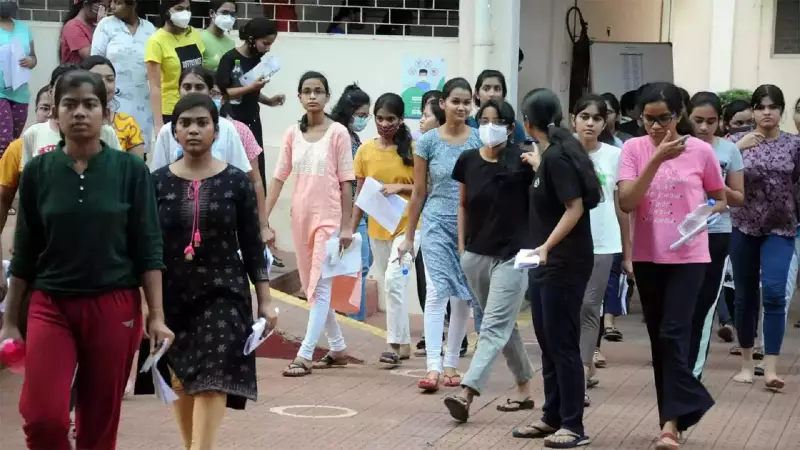
A high-level parliamentary committee has called for a significant shift back towards traditional pen-and-paper examinations for major national entrance tests. This recommendation comes in response to persistent and recurring technical failures and security breaches plaguing the computer-based tests conducted by the National Testing Agency (NTA).
Committee Findings and Exam Disruptions
The Parliamentary Standing Committee on Education, Women, Children, Youth and Sports, led by Congress MP Digvijaya Singh, conducted a thorough review of the NTA's operations. Its report, recently presented in Parliament, paints a concerning picture of the agency's administration in 2024.
The panel assessed 14 competitive examinations handled by the NTA last year and found that at least five faced major issues. Key tests like UGC-NET, CSIR-NET, and NEET-PG were postponed. The NEET-UG exam encountered paper leak allegations, while the results for CUET (UG/PG) were delayed. The problems spilled into early 2025, with the JEE (Main) 2025 session in January seeing 12 questions withdrawn due to errors in the final answer key.

Pen-and-Paper vs. Computer-Based Testing: A Security Dilemma
The committee meticulously examined both testing formats. It acknowledged that while pen-and-paper exams present "more opportunities for paper leaks," computer-based tests (CBT) are vulnerable to hacking that can be "difficult to detect." Despite recognizing risks in both systems, the panel leaned towards the proven track record of traditional exams.
Citing the reliability of systems used by the CBSE and UPSC, the committee advocated for a stronger emphasis on pen-and-paper mode. For instances where CBTs are unavoidable, it issued a strict directive: they should only be conducted in government or government-controlled centres and "never in private centres."
Vendor Management and Financial Oversight
A major point of concern in the report is the NTA's engagement with private vendors for tasks like paper setting, test administration, and evaluation. The committee discovered that several firms blacklisted by certain state governments or organizations continued to win contracts elsewhere.
To curb this, the panel recommended creating a nationwide blacklist of such firms and associated individuals to prevent their repeated involvement in examination processes. On the financial front, the report noted that over six years, the NTA collected approximately Rs 3,512.98 crore and spent Rs 3,064.77 crore, leaving a surplus of about Rs 448 crore.
This corpus, the committee suggested, should be used to strengthen the NTA's in-house capabilities, enhance regulatory oversight, and improve the monitoring of vendors. The funds could also bolster security measures for both formats of examination.
Broader Implications for Students and Education System
The push for pen-and-paper exams aligns with broader proposed reforms aimed at reducing the excessive pressure on students. A separate central panel is considering conducting national exams like JEE, NEET, and CUET as early as Class XI. This plan intends to ease the academic burden in Class XII and limit daily coaching hours to two or three, a significant reduction from the current five to six hours in many private institutes.
Officials are exploring a hybrid assessment model that would combine board exam marks with aptitude-based testing. This approach aims to strengthen classroom learning and internal assessments while diminishing reliance on coaching centres. The NCERT has been tasked with aligning the Class XI and XII syllabi with entrance exam requirements to minimise disparities.

While the parliamentary committee has not mandated a complete return to pen-and-paper testing, its strong recommendations highlight it as a more reliable alternative. The final decision on the format for exams like JEE Main, CUET, and UGC-NET will depend on the government's response to these findings. Implementing this shift, however, will demand increased logistical efforts, including secure printing, transportation, and manual evaluation, underscoring the need for robust planning and oversight.