For aspirants preparing for the Union Public Service Commission (UPSC) examinations, staying abreast of current events and their multidimensional implications is crucial. The Indian Express UPSC Key for January 3, 2026, curated by Khushboo Kumari, dissects several critical issues ranging from urban governance failures and infrastructure milestones to environmental challenges and geopolitical exclusions. Here is a detailed, rewritten analysis of these topics, essential for both the Preliminary and Main stages of the UPSC Civil Services Exam (CSE).
Indore's Water Contamination: A Crisis of Governance
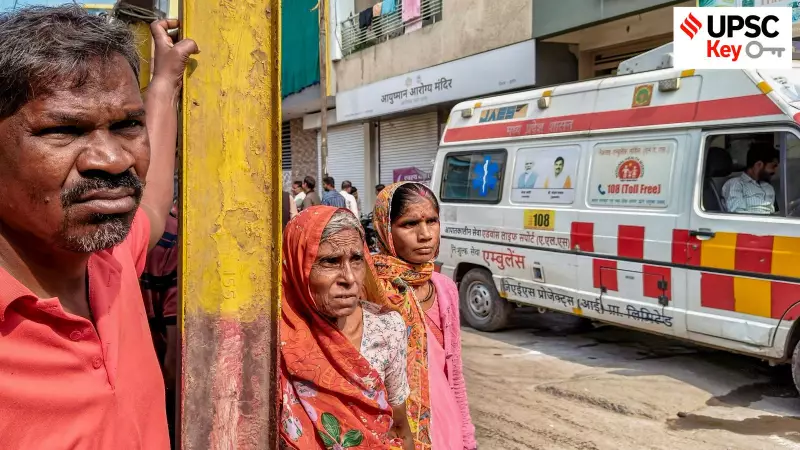
The unfolding tragedy in Indore's Bhagirathpura area starkly highlights the chasm between urban accolades and ground-level civic realities. What began with six admissions at the Urban Primary Health Centre on December 28, 2025, escalated within 48 hours into a deluge, with outpatient numbers soaring from 129 to over 300 in a single day. The cause? Drinking water contaminated by sewage, a hazard residents had reportedly flagged as early as October.
This crisis is a profound case study for UPSC aspirants, touching upon General Studies-II (Governance) and Prelims current affairs. Key points to ponder include the perspectives of various stakeholders—citizens, victims, healthcare workers, and different tiers of government. The incident forces an examination of the primary reasons for water contamination in India, the role and significance of robust Primary Health Centres (PHCs), and the spectrum of water-borne diseases.

Authorities were confronted with a multifaceted challenge: contaminated water had flowed for days, medical infrastructure was initially lacking, and patients were scattered across private clinics. A coordinated response involving door-to-door screening and centralised triage was eventually mobilised. Health department data indicated 310 hospital admissions, with 203 still hospitalised, 107 discharged, and 25 in intensive care.
Core Governance Failures and Takeaways
The irony is severe: Indore, an eight-time consecutive winner of the Swachh Survekshan cleanliness ranking, failed on fundamental urban governance principles. Municipal water supply, governed by Bureau of Indian Standards (BIS) norms, requires continuous monitoring and strict segregation of drinking water and sewage lines. These were blatantly flouted. The breach in the water pipeline, despite early warnings, points to deep-seated municipal inertia.
This tragedy connects to broader themes: the mandate of the 74th Constitutional Amendment for municipalities, the failure of schemes aimed at providing safe drinking water, and the growing urban pollution crisis. It serves as a grim reminder that rapid urbanization demands accountable and proactive local governance.
Bullet Train Project: A Mountain Tunnel Breakthrough
In a significant development for India's infrastructure ambitions, the Mumbai-Ahmedabad High Speed Rail (MAHSR) corridor achieved a breakthrough in its first mountain tunnel in Palghar, Maharashtra. Railway Minister Ashwini Vaishnaw hailed this as a major milestone for the bullet train project.
This topic is vital for General Studies-III (Infrastructure). The 1.5-km long Mountain Tunnel No. 5 (MT-5), the longest in the project, was excavated using the New Austrian Tunneling Method (NATM), suitable for non-uniform rock formations. A "tunnel breakthrough" marks the critical moment when excavation from both ends meets.
The project, spanning 508 km, includes 27.4 km of tunnels. As of November 2025, it had achieved 55.63% physical progress and 69.62% financial progress. While delays due to land acquisition and the pandemic have pushed the full operational date to 2029, Minister Vaishnaw announced that the first train on the Surat-Bilimora stretch is slated to run by August 15, 2027.
Energy Transition: Beyond Solar and Wind Capacity
An editorial page piece argues that India's clean energy transition is now constrained not by generation capacity—with over 180 GW of solar and wind—but by distribution reforms and market design. The core of the challenge lies with the financially strained Distribution Companies (DISCOMs).

High Aggregate Technical and Commercial (AT&C) losses (around 16%) and a reliance on cross-subsidies from commercial/industrial consumers create a vicious cycle. When these consumers adopt rooftop solar or shift to open access, DISCOMs lose high-margin sales but retain fixed costs and the obligation to serve subsidised consumers.
The solution proposed involves a triad of reforms: dynamic retail tariffs paired with smart technologies for demand response, a transition to nationwide market-based economic dispatch to prioritise cheapest power, and integrating captive power plants into wholesale markets. The editorial underscores that repeated bailouts (like UDAY and RDSS) are insufficient; introducing competition in distribution is key.
Pax Silica & India's Exclusion: A Geopolitical Reality Check
The launch of the US-led Pax Silica initiative—a coalition to secure supply chains for critical minerals, semiconductors, and AI—and India's exclusion from it offers a stark geopolitical lesson. The nine member countries (US, Japan, South Korea, etc.) bring either high-tech capability or critical resources to the table.
Analyst Dhiraj Nayyar posits that India's absence is a transactional outcome of its current standing in the high-tech and resource sectors. India's R&D expenditure stagnates at 0.6-0.7% of GDP, far behind the US (3%) or China (2.5%). Similarly, the mining sector contributes a mere 2% to GDP, with heavy import dependence even for coal and bauxite. The commentary suggests that to gain a seat at the high table, India must either become a player in geo-economics (through innovation and resource exploration) or leverage its vast market as a bargaining chip.
Stray Dogs: Balancing Compassion and Public Safety
The Supreme Court's suo motu intervention in the street dogs issue raises questions about judicial overreach and the separation of powers. The executive authority, the Animal Welfare Board (AWB), already has guidelines under the Animal Birth Control (Dogs) Rules, 2023, which advocate the scientifically endorsed Capture-Sterilise-Vaccinate-Release (CSVR) method.
The article argues that removal or culling is counterproductive, creating ecological vacuums. Success stories from France and the Netherlands, which achieved zero stray dogs through CSVR and strict enforcement, are cited. The solution lies in implementing existing laws rationally, focusing on feeding and neutering, rather than fear-driven measures.
Cutting Methane from Paddy Fields: A Win-Win with Carbon Credits
A promising "low effort, high impact" agricultural practice for climate action is Alternate Wetting and Drying (AWD) in rice cultivation. Continuously flooded paddy fields create anaerobic conditions that produce methane, a potent greenhouse gas. AWD involves periodic drying, disrupting these conditions.
A 2024 study by Mitti Labs in Telangana found AWD reduced water consumption by about 37% and methane emissions by approximately 42%, without compromising yield. This reduction can be converted into carbon credits, traded domestically or internationally. At current prices ($15-25 per tonne of CO2 equivalent), this could mean an additional income of roughly Rs 1,363 per acre for farmers. Initiatives like the Good Rice Alliance are already scaling this model, showcasing a viable path for India, the world's top rice producer, to mitigate agricultural emissions.
Also in News: Government Questions X Over AI Tool Grok
The Indian government has issued a notice to Elon Musk's X platform, expressing grave concern over its AI service, Grok, being used to generate non-consensual, objectionable images of women. The notice alleges violations of the IT Rules, 2021, and the Bharatiya Nagarik Suraksha Sanhita, 2023, citing a "serious failure" of safeguards. X has been given 72 hours to respond with technical details.
For UPSC aspirants, these interconnected stories from a single day's news provide a rich tapestry for answer writing, linking environment, governance, economy, and international relations—a must-know for a holistic preparation strategy.