CBSE Class 12 Psychology Examination 2026 Successfully Conducted Nationwide
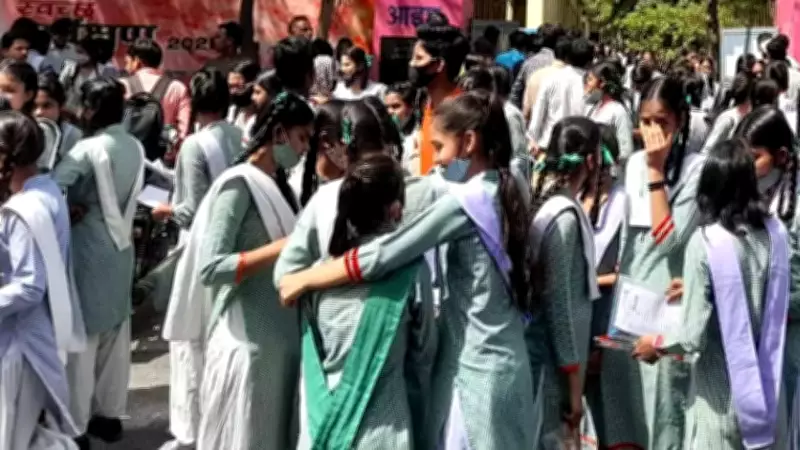
The Central Board of Secondary Education (CBSE) administered the Class 12 Psychology board examination on March 5, 2026. The test was held from 10:30 AM to 1:30 PM across numerous examination centers throughout India, adhering strictly to the pre-announced schedule. This year, a substantial total of 18,59,551 students are registered for the Class 12 board exams, which encompass 120 different subjects and are being conducted at 7,574 centers nationwide.
Psychology, with the subject code 037, is offered as an elective within the CBSE curriculum. The examination followed the official syllabus and blueprint meticulously prescribed by the board, ensuring alignment with educational standards.
Paper Design Aligns with CBSE Blueprint and Sample Papers
According to Deanna Mary Fugle, a Post Graduate Teacher (PGT) in Psychology at Jain International Residential School in Bengaluru, the question paper was thoughtfully designed in complete accordance with the established board pattern and sample papers. She emphasized that the paper adhered to the prescribed blueprint and weightage distribution, resulting in a balanced assessment across various sections and competencies.

"The examination was structured to evaluate students' comprehension of psychological concepts, theories, and their practical applications in real-world contexts. The overall difficulty level ranged from easy to moderate, making it accessible yet challenging," Fugle stated.
Detailed Section-Wise Distribution and Question Pattern Analysis
Fugle provided a comprehensive breakdown of the question patterns. She noted that several questions were straightforward, focusing primarily on recall and basic conceptual understanding. "The multiple-choice questions (MCQs) and the two-mark questions were largely direct and could be answered clearly by students with a sound grasp of fundamental psychological concepts. These questions also allowed for the application of knowledge in simple, relatable contexts," she explained.
The three-mark and four-mark questions located in Sections C and D demanded deeper reasoning and greater clarity of concepts. Some of these questions were specifically framed to assess higher-order thinking skills, requiring students to analyze and interpret psychological ideas within relatively complex situations.
The six-mark questions in Section E were based on conceptual understanding and required explanatory writing. Students who organized their responses systematically and demonstrated clear, logical thought processes would have found these questions manageable and within reach.
Case-Based Questions Effectively Assess Application of Theoretical Knowledge
A significant and noteworthy feature of the 2026 Psychology paper was the inclusion of case-based questions. These questions presented students with specific scenarios, requiring them to interpret the situations and apply relevant psychological principles to real-life contexts.
According to Fugle, such case-based questions effectively tested students' analytical and evaluative skills alongside their theoretical knowledge. The overall examination structure ensured a holistic assessment of knowledge retention, reasoning ability, and practical application skills. The difficulty level for these components was consistently described as easy to moderate, providing a fair testing ground for students.
In summary, the CBSE Class 12 Psychology exam for 2026 was conducted smoothly and was characterized by a balanced design that followed board guidelines. It successfully assessed a range of skills from basic recall to advanced application, with an overall difficulty that was manageable for well-prepared students.