Calcutta High Court's Timely Intervention Saves Student's Academic Future
In a crucial ruling that underscores the judiciary's role in protecting students' rights, the Calcutta High Court has stepped in to rescue a young student's career from a potentially devastating administrative error. The court directed the West Bengal Board of Secondary Education (WBBSE) to immediately enroll the student and issue an admit card for the Madhyamik examination 2026, after the school authorities mistakenly forwarded details of a namesake classmate instead of the eligible petitioner.
Court's Stern Observations on Institutional Responsibility
Justice Amrita Sinha, presiding over the case, delivered a powerful message about institutional accountability. "For the fault of the school, the academic career of a student ought not to be hampered," the court order stated emphatically. The bench further noted that preventing the petitioner from participating in the examination through no fault of his own would constitute serious injustice.
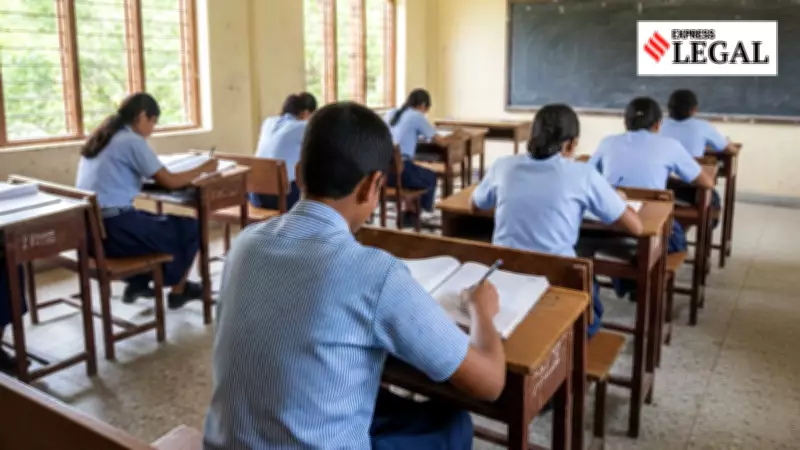
The court recognized the Madhyamik examination as the first board examination that a student takes, emphasizing its extreme importance in shaping future career prospects. While acknowledging that the board would face logistical challenges with last-minute enrollment, Justice Sinha asserted that the student's best interest must prevail in such circumstances.

The Administrative Mix-Up That Nearly Derailed a Career
The case revealed a troubling series of administrative failures:
- The petitioner had a namesake in his class who failed to qualify for the test examination
- Despite this, the school inadvertently forwarded the unsuccessful namesake's details to WBBSE
- The board consequently issued an admit card to the disqualified student while leaving the eligible petitioner without one
- The school's counsel admitted the mistake but claimed the WBBSE correction portal had closed by the time they attempted rectification
The court noted there had been a serious lapse on the part of the school in forwarding proper details of eligible candidates. The school should have forwarded the petitioner's details since he had successfully passed the test examination and was fully eligible to sit for the board examination.
Board's Opposition and Court's Directive
Representing the WBBSE, advocates Koyeli Bhattacharyya, Bibek Dutta, and Manas Bhattacharyya opposed the student's plea, arguing that:
- The board had provided repeated opportunities for corrections through a dedicated online portal
- There was no provision for offline corrections after the portal closure
- The board would face various operational problems with last-minute enrollment
- Disciplinary action should be taken against the Head of the Institution for the error
Despite these arguments, the court issued clear directives:
- WBBSE must immediately enroll the candidate and issue an admit card with proper details
- The student must be allowed to sit for the Madhyamik examination scheduled from February 2
- The board retains the liberty to take disciplinary action against erring school officials
- Such measures should prevent similar lapses causing inconvenience to candidates and the board
Broader Implications for Educational Administration
This case highlights several critical issues in India's educational administration system. The petitioner, a minor represented by his mother, had to approach the High Court as a last resort after exhausting all administrative remedies. The incident raises questions about:
- The adequacy of verification processes in schools
- The flexibility of correction mechanisms in examination systems
- The balance between administrative convenience and student welfare
- The need for more robust checks to prevent such errors
The court's intervention serves as a reminder that educational institutions bear significant responsibility in safeguarding students' academic futures. By granting the board authority to take disciplinary action against responsible officials, the judgment aims to create systemic improvements that will benefit future students.

This ruling comes at a crucial time when board examinations are underway across India, emphasizing the need for error-free administrative processes in educational institutions. The Calcutta High Court's decisive action ensures that one student's career won't be derailed by an administrative mistake, while setting important precedents for institutional accountability in the education sector.