

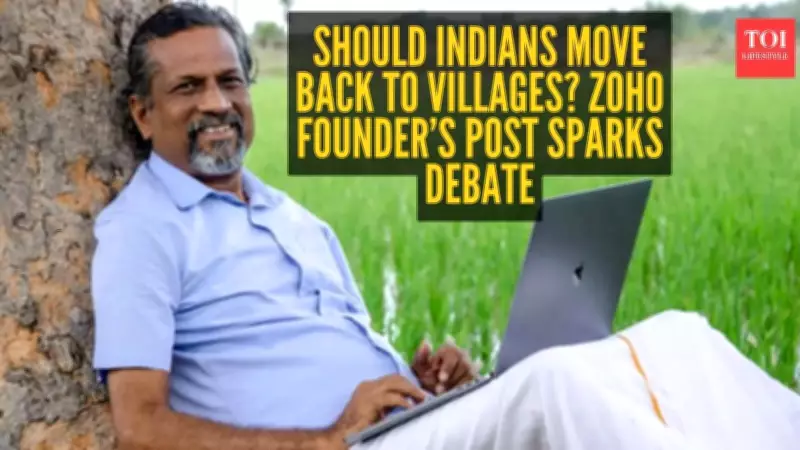
Zoho Founder Sridhar Vembu Sparks National Conversation About Returning to Rural Roots
In a thought-provoking social media exchange, Zoho Corporation founder Sridhar Vembu has shifted focus from technology and entrepreneurship to address a deeply personal and societal issue: the gradual emptying of India's villages. The tech billionaire's observations about rural depopulation have ignited a substantial online debate about migration patterns, economic opportunities, and cultural preservation.
The Silent Exodus from Tamil Nadu's Temple Towns
Vembu's commentary emerged in response to observations by user Krishnan about the changing character of temple towns in Tamil Nadu's Thanjavur region. Places like Papanasam, Neduntheru, and Ayyampettai that once buzzed with community activity now present a different reality: locked houses, quieter streets, and temples struggling to find caretakers.
"Villages have lost a lot of their talent over the past few decades," Vembu noted in his response, suggesting that perhaps it's time to consider returning to these communities. He specifically mentioned temples like Appakudathaan and Anbil that previously enjoyed regular local maintenance but now face challenges in finding people to sustain traditional practices.

Zoho's Practical Initiatives in Rural Development
Beyond philosophical discussion, Vembu highlighted concrete steps his company is taking to address rural challenges. Zoho already maintains an operational office near Kumbakonam and is actively developing a larger campus in the region. Additionally, the technology firm is supporting local innovation through its backing of Yali Aerospace, a drone startup based in Thanjavur.
Despite these initiatives, Vembu acknowledged their preliminary nature, emphasizing that "it's just a start, and a lot more needs to happen" to create meaningful, sustainable change in rural communities.
The Online Debate: Hope Versus Practical Realities
The internet response to Vembu's proposition has been both enthusiastic and skeptical, revealing deep divisions in how Indians view rural-urban migration:
- Supportive Perspectives: Many respondents embraced the vision of revitalizing villages, citing potential benefits including cultural preservation, local economic stimulation, and reduced urban congestion. Supporters suggested various contribution methods beyond physical relocation, such as:
- Supporting rural educational institutions
- Improving healthcare infrastructure
- Participating in community cleanliness initiatives
- Assisting with temple maintenance and management
- Skeptical Viewpoints: Critics highlighted practical challenges, noting that migration to cities often represents economic necessity rather than choice. They pointed to urban advantages including:
- Superior employment opportunities
- Enhanced educational facilities
- Better healthcare infrastructure
- Improved quality of life amenities
Fundamental Questions About Rural Revival
The discussion has raised several critical questions about the feasibility of reversing migration trends:
Employment Generation: Can villages realistically create sufficient quality jobs to retain or attract talent, or will opportunities remain limited to select individuals?
Infrastructure Development: What level of investment is required to provide adequate roads, hospitals, reliable internet connectivity, and daily conveniences that urban residents take for granted?
Social and Political Factors: How do local politics, social pressures, and the limited adoption of remote work arrangements influence migration decisions and complicate return scenarios?
The Broader Implications of Concentrated Opportunity
Beyond the immediate discussion about returning to villages, Vembu has prompted examination of a more fundamental issue: why economic opportunities remain disproportionately concentrated in urban centers despite India's predominantly rural population.

His characterization of rural India possessing "untapped potential" resonates with development economists who argue that with appropriate investment in infrastructure, job creation, and consistent institutional support, smaller towns could transform into vibrant economic hubs.
While the concept of returning to rural roots may appear idealistic to some and hopeful to others, it has undoubtedly initiated a crucial conversation about regional development disparities. This dialogue represents a necessary first step toward reimagining what life beyond metropolitan areas could offer to India's next generation.





