West Asia Conflict Severely Disrupts Madhya Pradesh's Perishable Food Exports to Gulf Markets
Few would realize that frozen parathas manufactured in Madhya Pradesh routinely travel thousands of kilometers to stock supermarket shelves across the Gulf region. That extensive journey has now been severely disrupted, with shipments stalling, orders getting cancelled, and new orders drying up completely as war-induced logistics bottlenecks cripple perishable exports from the central Indian state.
Exporters Face Widespread Order Cancellations and Delays
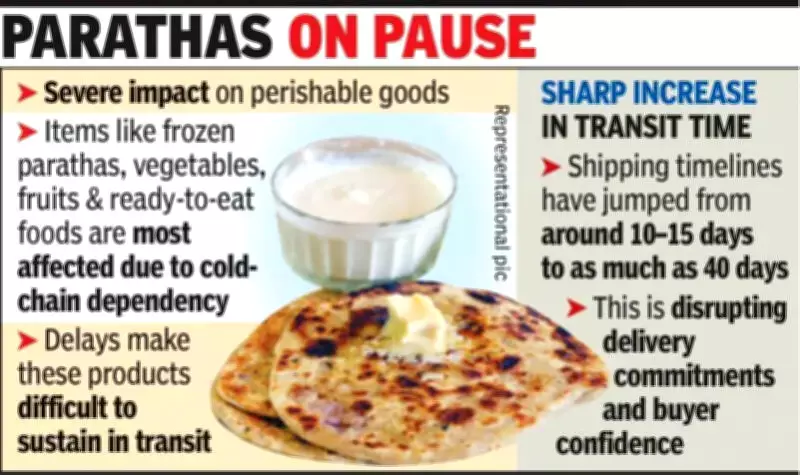
Exporters of ready-to-eat food items, frozen vegetables, fruits, and other perishables from Madhya Pradesh report that orders from Gulf markets have either been cancelled outright or placed on indefinite hold amid the ongoing West Asia conflict. Being highly dependent on uninterrupted cold-chain logistics, these temperature-sensitive products are among the worst affected by the current crisis.
Transit times have increased dramatically due to the rerouting of vessels, which has severely affected delivery commitments and eroded buyer confidence throughout the supply chain. Exporters explained that shipments that previously took approximately 10 to 15 days are now requiring up to 40 days for delivery, making it extremely challenging to sustain perishable exports under current conditions.

Shipping Disruptions Drive Costs Higher and Squeeze Margins
Shipping routes through the Red Sea and Gulf region have been significantly disrupted, pushing freight and insurance costs sharply higher and squeezing already thin profit margins for exporters. The combination of extended transit times and increased expenses has created a perfect storm for businesses dependent on timely deliveries.
"Frozen products like parathas, peas, and mixed vegetables simply cannot withstand these extensive delays," said Indore-based exporter Hitesh Patidar. "My exports to the Middle East have almost come to a complete halt. Orders are being cancelled regularly, and even earlier consignments are now under dispute due to sudden cost escalations that were impossible to anticipate."
Supply Chain Breakdown Affects Regional Distribution Hubs
The disruption extends beyond individual shipments to affect entire regional distribution networks. "The entire supply chain has been thoroughly disturbed," explained Krishna Mandowra, who ships approximately 400 containers annually. "Dubai used to serve as the main hub for redistribution across the entire region, but now even that critical function is severely affected. My containers carrying various spices are stuck without movement, and there is absolutely no clarity on delivery timelines from shipping companies."
Mandowra reported that his export volumes have dropped by nearly 70 percent since the conflict began, reflecting the widespread impact on businesses throughout Madhya Pradesh's export sector.
Madhya Pradesh's Established Export Base Faces Unprecedented Challenge
Madhya Pradesh has developed a strong and diversified export base in processed foods over recent years, supplying ready-to-eat items, grains, pulses, frozen vegetables, and fruits to multiple markets including Iran, Saudi Arabia, United Arab Emirates, Qatar, Kuwait, Bahrain, and Oman. This export ecosystem now faces its most significant challenge in recent memory as logistics networks remain disrupted.
The situation highlights the vulnerability of global supply chains to geopolitical conflicts, particularly for perishable goods that require precise temperature control and timely delivery. Exporters remain uncertain about when normal operations might resume, with many contemplating alternative shipping routes and markets despite the additional costs and complexities involved.