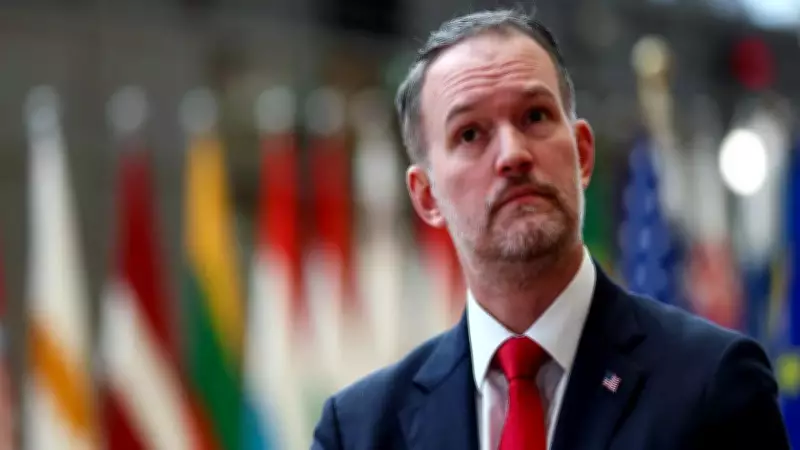
US Trade Representative Positions India as Strategic Supply Chain Partner
In a significant television interview on Tuesday, US Trade Representative Jamieson Greer declared that the forthcoming India-US trade agreement will be a landmark deal with long-lasting global implications. He explicitly positioned India as a viable and trusted alternative to China for American corporations actively diversifying their production and supply networks.
India as a Manufacturing "Waystation" for Resilient Supply Chains
Greer outlined the strategic shift in US economic policy, stating, "We know that many companies already are going in that direction. We want the supply chains to be here in the US and as close to home as possible." He acknowledged the complex transition from a globalized model to a more secure economy, noting, "At some point, you have to shift supply chains around, India can be a waystation for that. They have a lot of folks there, manufacturing capacity."
While emphasizing the priority of American workers, Greer affirmed that India represents a balanced and fair source for imports, provided the trade relationship remains equitable. These remarks were widely interpreted as a strong endorsement of India's role as a "trusted partner" within the global supply chain framework.

Progress on Trade Issues and Broader Strategic Deals
The Trade Representative highlighted concrete progress in bilateral relations. He confirmed that India has begun reducing its purchases of Russian oil while simultaneously increasing energy imports from the United States. Additionally, he noted India's steps to dismantle its digital services tax, addressing a previous point of friction.
Greer contrasted this with US-China relations, which he described as currently "stable," while asserting that the trade policies of the previous Trump administration are reshaping the global trade architecture to benefit America. "Just over the past 10 days, we have signed agreements with Argentina, Bangladesh, India, before that with Guatemala and El Salvador," he said, explaining these pacts open foreign markets to US exports and foster cooperation against market distortions.
He specifically pointed to efforts to prevent third-country exports, an apparent reference to Chinese goods, from being rerouted to circumvent US tariffs.
Tariffs as a Permanent Tool in US Trade Policy
When questioned about the Trump administration's contingency plans should the US Supreme Court rule against its trade policies, Greer was unequivocal. "Tariffs are going to be part of the landscape going forward," he stated. "If the Supreme Court goes the wrong way, then we will find ways to use tools to adjust some of the unfair trade policies that these countries are pursuing." This underscores the administration's commitment to using tariffs as a strategic instrument to counter perceived unfair practices by trading partners.
The comprehensive interview solidifies the view that the United States is strategically courting India not merely as a trade partner, but as a foundational pillar in its long-term plan to build a more resilient and secure economic network, reducing over-reliance on any single nation, particularly China.