

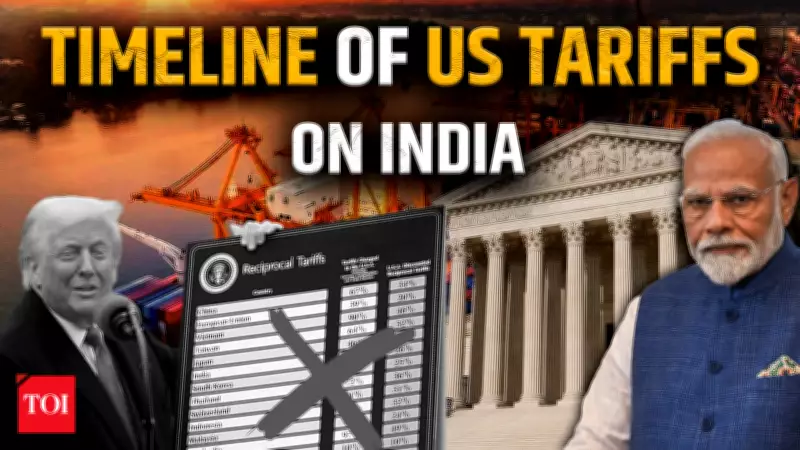
US Tariffs on India: The Evolution Amid Supreme Court Ruling and Trade Disputes
In a significant development, the United States Supreme Court invalidated the use of emergency powers for imposing broad tariffs, leading to a pivotal shift in trade policy. Following this ruling, President Donald Trump enacted a 10 percent global tariff, a move that directly affects India and numerous other nations. This action underscores the continued centrality of tariffs in the US trade strategy, despite legal challenges.
Impact on Indian Exporters and Key Sectors
The imposition of these tariffs has introduced new challenges for Indian exporters, particularly in critical industries. Sectors such as steel, aluminium, automobiles, and textiles are now facing heightened barriers to entry into the US market. This development threatens to disrupt trade flows and economic stability for businesses reliant on American consumers.
Experts highlight that the tariffs could lead to increased costs, reduced competitiveness, and potential job losses in these sectors. The uncertainty surrounding future trade policies adds to the complexity, making it difficult for Indian companies to plan long-term strategies.

Legal Implications and Timeline of US Tariffs
The Supreme Court's decision to strike down the use of emergency powers for tariffs marks a landmark moment in trade law. This ruling limits the executive branch's ability to unilaterally impose tariffs without congressional approval, setting a precedent for future trade disputes.
The timeline of US tariffs on India has evolved through several phases:
- Initial Tariff Impositions: Prior to the Supreme Court ruling, the US had already implemented various tariffs on Indian goods under different justifications, including national security concerns.
- Supreme Court Intervention: The court's invalidation forced a reassessment of these measures, leading to the 10 percent global tariff as a response.
- Ongoing Trade Uncertainties: The situation remains fluid, with potential for further legal battles and policy adjustments as both nations navigate their economic interests.
Broader Trade Disputes and Global Context
This tariff evolution occurs against a backdrop of broader trade disputes between the US and India. Issues such as digital taxes, intellectual property rights, and market access have long been points of contention. The new tariffs exacerbate these tensions, potentially impacting diplomatic relations and cooperative efforts.
Moreover, the global nature of the 10 percent tariff means India is not alone in facing these challenges. Other countries are similarly affected, leading to a complex web of international trade dynamics that could influence global economic stability.
Future Outlook and Strategic Considerations
As trade uncertainties persist, Indian policymakers and businesses must adapt to this evolving landscape. Strategies may include diversifying export markets, enhancing domestic production capabilities, and engaging in bilateral negotiations to mitigate tariff impacts.
The ongoing legal and political developments will likely shape the future of US-India trade relations. Stakeholders are advised to monitor updates closely, as further rulings or policy changes could alter the course of these disputes.
In summary, the Supreme Court's ruling and subsequent tariff impositions highlight the intricate interplay between law, policy, and international trade. For India, navigating these challenges requires a nuanced approach to safeguard economic interests while fostering global partnerships.






