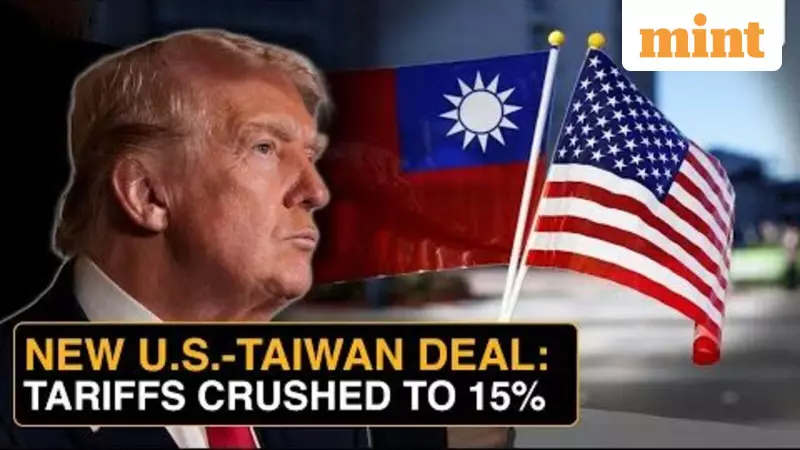
US Grants Taiwan Significant Trade Relief with Tariff Reductions and Investment Pledge
The United States under the Trump administration has delivered substantial trade relief to Taiwan. This move marks a pivotal shift in economic relations between the two nations.
Tariff Cuts Align Taiwan with Key US Allies
Washington has decided to slash planned tariffs on Taiwanese goods. Initially set at a high 32%, these tariffs will now drop to 20% and eventually settle at 15%. This reduction brings Taiwan in line with other major US allies in the region, such as Japan and South Korea.
The adjustment provides Taiwanese exporters with much-needed breathing room. It enhances their competitiveness in the American market.

Taiwan Commits Massive $250 Billion Investment to US Economy
In return for the tariff relief, Taiwan has pledged a colossal investment of $250 billion into the United States. This investment targets critical sectors including semiconductors, artificial intelligence, and clean energy.
The commitment underscores Taiwan's strategic focus on strengthening economic ties with the US. It aims to bolster American industries and create jobs.
TSMC Leads with Major $165 Billion Investment in US Fabs
Taiwan Semiconductor Manufacturing Company (TSMC) is at the forefront of this investment drive. The chipmaker plans to invest $165 billion in building fabrication plants, or fabs, across the United States.
This investment is particularly concentrated in Arizona, where it is expected to spur an economic boom. The move will enhance US semiconductor production capacity significantly.
US Commerce Department Hails Historic Reshoring Effort
The US Commerce Department has described this development as a historic reshoring of the semiconductor sector. Officials emphasize that it strengthens national security and economic resilience.
This initiative is seen as a key part of broader efforts to bring critical manufacturing back to American soil. It reduces dependence on foreign supply chains.
China Condemns the Deal as Economic Plunder
China has strongly criticized the US-Taiwan trade agreement. Beijing labels it as economic plunder and a violation of its sovereignty.
The Chinese government views Taiwan as an inseparable part of its territory. It opposes any direct dealings between Taiwan and other countries.
Trump Doctrine Scores Another Win in Trade Policy
This deal represents another victory for the Trump doctrine in international trade. The approach prioritizes bilateral agreements and domestic economic interests.
It demonstrates a continued shift away from multilateral trade frameworks. The focus remains on securing favorable terms for the United States.
The updated details reflect developments as of January 17, 2026. The agreement is set to reshape US-Taiwan economic relations for years to come.