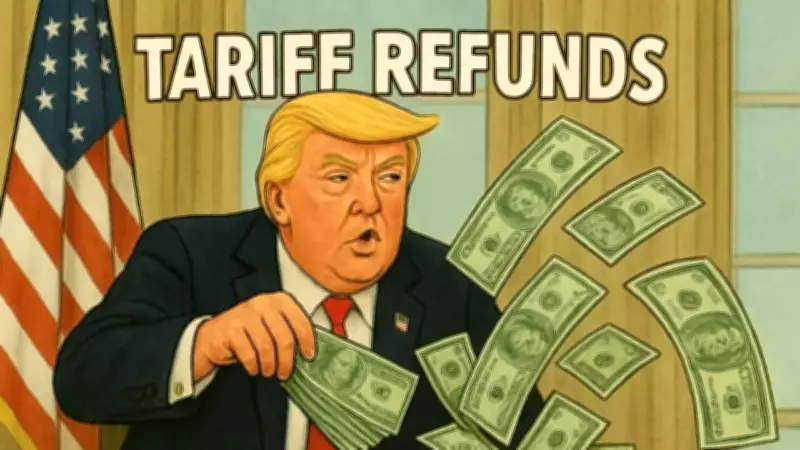
US Government Activates $166 Billion Tariff Refund System Following Supreme Court Decision
The United States government has officially launched a comprehensive system to facilitate the refund of more than $166 billion in tariffs that were originally imposed under the administration of former President Donald Trump. This move comes after the US Supreme Court struck down these reciprocal tariffs in February 2026, declaring them unlawful and paving the way for massive repayments to affected importers.
New Online Platform Enables Refund Claims Starting April 20
On Monday, US Customs and Border Protection announced that the first phase of its refund-processing platform, known as CAPE (Consolidated Administration and Processing of Entries), is now fully operational. This system allows importers and customs brokers to begin submitting claims electronically to recover duties they paid under the invalidated tariff regime. The initial rollout covers approximately $127 billion in duty payments eligible for electronic refunds, with the agency estimating that over 330,000 importers may qualify for reimbursements linked to more than 53 million shipments.
Background: Supreme Court Ruling Invalidates Trump-Era Tariffs
The refund process stems from a landmark judgment by the US Supreme Court on February 20, 2026. The court ruled that the tariffs introduced by Donald Trump were imposed without adequate legal backing under the International Emergency Economic Powers Act, rendering them unlawful. This decision delivered a significant setback to a central pillar of Trump's economic agenda and effectively nullified the entire tariff structure, which had escalated rapidly from an initial 10% rate on April 2, 2025, to as high as 50% for some goods by August 28, 2025.

Impact on Indian Exports and Refund Eligibility
The tariffs had a substantial impact on exports from various countries, including India, with nearly $12 billion tied specifically to Indian goods. According to the Global Trade Research Initiative (GTRI), approximately 53% of India's shipments to the US, predominantly in textiles and apparel, were subject to these higher tariffs, making them the largest contributors to the refund pool. Textiles and apparel are estimated to account for around $4 billion of the Indian total, followed by engineering goods with a similar share and chemicals contributing about $2 billion.
However, it is crucial to note that eligibility for refunds is strictly limited to those who originally paid the tariffs—primarily US importers and businesses. Indian exporters and end consumers are not permitted to file claims directly. As Ajay Srivastava, founder of GTRI, explains, "Payments go only to US importers, and exporters have no legal right to claim them. Indian exporters, therefore, have no direct legal route to claim refunds."
Process for Claiming Refunds and Implications for Negotiations
To receive repayments, US importers must submit detailed claims that include shipment information, applicable tariff classifications, and proof of payment. Once approved, these refunds, along with interest, are expected to be processed within 60 to 90 days. For Indian exporters, any potential recovery of these funds will depend entirely on commercial discussions with their US counterparts. This may involve reopening contracts, adding rebate-sharing clauses, requesting price revisions or credit notes, and using invoices and tariff data to demonstrate how costs were absorbed.
GTRI suggests that exporters with stronger bargaining power, particularly in sectors like textiles and engineering goods, may secure more favorable terms in future orders. Industry bodies such as the Apparel Export Promotion Council, Engineering Export Promotion Council of India, and Chemexcil can provide guidance on contract renegotiation and sector-specific strategies to assist exporters in navigating these negotiations.

Broader Economic and Trade Implications
This refund system marks a significant development in US trade policy, potentially easing financial burdens on importers and influencing global trade dynamics. The ruling underscores the importance of legal frameworks in economic decisions and may set a precedent for future tariff disputes. As the process unfolds, stakeholders will closely monitor its impact on bilateral trade relations and economic recovery efforts in the post-tariff era.