US and India Set to Finalize Interim Trade Agreement in Coming Weeks
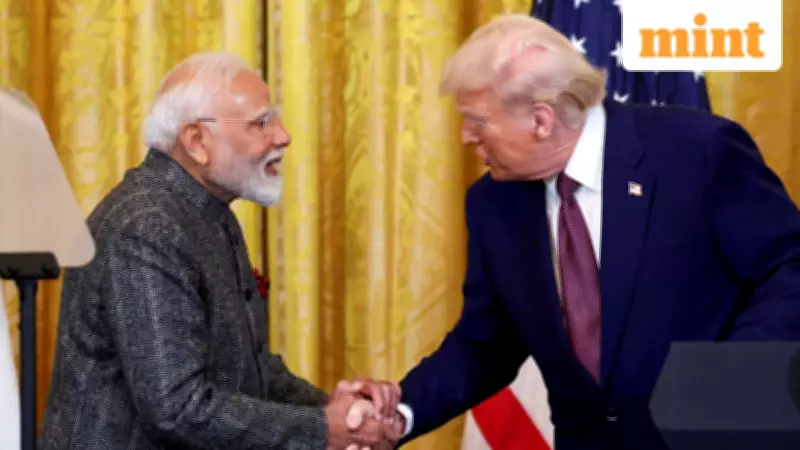
The United States and India are poised to move forward in the coming weeks to finalize an interim trade agreement, a significant milestone aimed at paving the way for a more comprehensive Bilateral Trade Agreement (BTA). According to a White House fact sheet released shortly after a joint announcement by both governments, this interim deal is designed to deliver reciprocal market access and reduce long-standing tariff and regulatory barriers that have historically hindered trade between the two nations.
Interim Agreement as a Bridge to Broader Trade Pact
The White House has emphasized that the interim agreement is not an endpoint but rather a strategic bridge to a larger, more comprehensive BTA. In a statement, the administration noted, "In the coming weeks, the United States and India will promptly implement this framework and work toward finalising the Interim Agreement with a view to concluding a mutually beneficial BTA to lock in benefits for American workers and businesses." This framework, outlined in a joint statement, is portrayed as a "tangible path forward" in reshaping one of the world's most consequential trading relationships, though difficult negotiations on services, investment, and government procurement still lie ahead.
Key Commitments from India in the Deal
The fact sheet, titled 'The United States and India Announce Historic Trade Deal (Interim Agreement)', details a sweeping set of commitments attributed to India. These include:

- Tariff cuts across US industrial exports and a wide range of agricultural goods, such as dried distillers' grains, red sorghum, tree nuts, fresh and processed fruit, certain pulses, soybean oil, wine, and spirits.
- Pledges to increase purchases of American energy and technology products, with commitments to buy over USD 500 billion worth of US goods in sectors like energy, information and communication technology, agriculture, and coal.
- Removal of India's digital services taxes and a commitment to negotiate robust bilateral digital trade rules, addressing discriminatory practices and barriers to digital trade, including prohibitions on customs duties for electronic transmissions.
Addressing Trade Barriers and Geopolitical Linkages
The White House fact sheet uses direct language to highlight India's trade regime, describing it as among the most restrictive faced by US exporters. It notes that India has maintained high tariffs, with averages of 37% for agricultural goods and over 100% on certain autos, alongside protectionist non-tariff barriers. The interim agreement aims to dismantle these obstacles and push for regulatory reforms to ease access for US companies.
Geopolitically, the deal is tied to India's energy purchases, with the White House linking tariff reductions to India's commitment to stop buying Russian oil. Specifically, the US president agreed to remove an additional 25% tariff on imports from India, lowering the Reciprocal Tariff to 18%, in recognition of this strategic alignment. This linkage underscores the administration's use of trade concessions as leverage for broader security objectives.
Economic Security and Future Negotiations
Beyond market access, the interim agreement is framed within a national security context, focusing on economic security alignment to enhance supply chain resilience, investment screening, and export controls. The two countries have committed to strengthening cooperation to address non-market practices by third parties and expand joint technology cooperation, reflecting a trend in US trade policy that treats technology supply chains as strategic infrastructure.
However, the White House has made clear that the interim deal does not resolve all complex issues. Ongoing negotiations will cover:
- Services and investment
- Labour and environment standards
- Government procurement
- Intellectual property
- Trade remedies and good regulatory practices
The breadth of these topics indicates that significant work remains before a full BTA is concluded, but the interim agreement marks a critical step in recalibrating the US-India trade relationship under a stricter reciprocity doctrine.