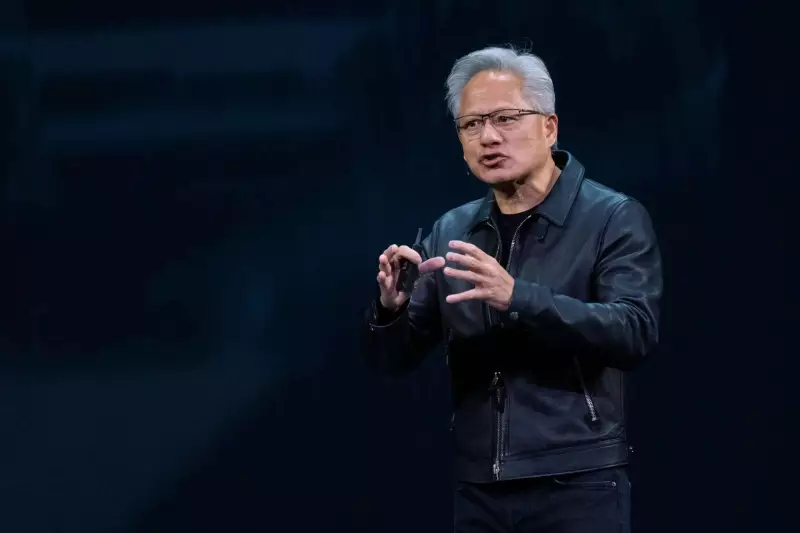
In a significant victory for the tech industry, US lawmakers have decided to exclude the controversial GAIN AI Act from the annual National Defense Authorization Act (NDAA). This move comes after intense lobbying efforts led by Nvidia CEO Jensen Huang, who argued the legislation would damage American competitiveness.
What Was the GAIN AI Act and Why Was It Dropped?
The proposed Guaranteeing Access and Innovation for National Artificial Intelligence (GAIN AI) Act would have imposed strict conditions on companies like Nvidia and AMD. It mandated that these chipmakers must give US customers the right of first refusal before selling advanced AI processors to China and other listed "countries of concern."
To get an export license, companies would have had to certify several conditions: that domestic customers were notified publicly, that no backlog of US orders existed, and that the sale wouldn't cause supply delays for American buyers for a year. The bipartisan bill, supported by lawmakers wary of China's military advancement, was expected to be part of the NDAA this week but was omitted from the current draft.

Jensen Huang met with former President Donald Trump and key legislators on Wednesday to voice his opposition. Speaking outside the Capitol, he praised the lawmakers' "wise" decision, stating the Act would be "even more detrimental to the United States than the AI Diffusion Act."
Industry Opposition and Global Ramifications
Nvidia and other semiconductor firms fiercely opposed the GAIN AI Act, claiming it would hurt their global market position without securing domestic supply. They pointed out that US customers already have full access to top-tier chips like the Hopper H100 and H200, while Chinese buyers receive downgraded versions.
Policy analysts warned of unintended consequences, estimating that if US firms pulled back, South Korean companies could gain $21 billion in sales, European firms $15 billion, and Taiwanese companies $14 billion. Critics also highlighted the bill's vague terms like "backlog," which could lead to arbitrary enforcement and force public disclosure of deals, potentially depressing global chip prices and handing rivals a negotiation advantage.
The Real Bottleneck: Power, Not Chips
Interestingly, tech executives are identifying a different challenge for AI growth in America. The primary constraint is increasingly electrical power capacity, not chip availability. Amazon CEO Andrew Jassy and Microsoft CFO Amy Hood have both cited power limitations as a major hurdle in recent earnings discussions.
Despite this setback for advocates of stricter controls, China hardliners are not backing down. They are preparing new legislation called the Secure and Feasible Exports Act, which would permanently restrict exports to China to only downgraded versions of 2022-2023 era chips. Simultaneously, the White House is considering whether to approve exports of Nvidia's advanced H200 chip to China, with AI czar David Sacks reportedly favouring increased sales to bolster US technological leadership worldwide.