

Uttar Pradesh's Aviation Revolution Takes Flight with 21-Airport Network
Uttar Pradesh is experiencing a profound and transformative aviation revolution, shifting from a state heavily reliant on railways and highways to one building a comprehensive network of 21 airports. This ambitious expansion includes five international gateways, fundamentally altering how millions of residents and visitors travel across India's most populous state. For decades, air travel was confined to a few major cities, leaving vast regions without direct aviation access. However, recent years have seen rapid progress as the state aggressively pursues enhanced regional connectivity and infrastructure modernization.
Strategic Goals Beyond Runways
Officials emphasize that this aviation push aims to achieve far more than merely adding new runways. The expansion is strategically designed to strengthen tourism, support industrial growth, reduce inter-city travel times, and improve accessibility to smaller districts. Integrated with new expressways and industrial corridors, airports are becoming a cornerstone of Uttar Pradesh's broader infrastructure transformation, fostering economic development and mobility.
International Airports Leading the Charge
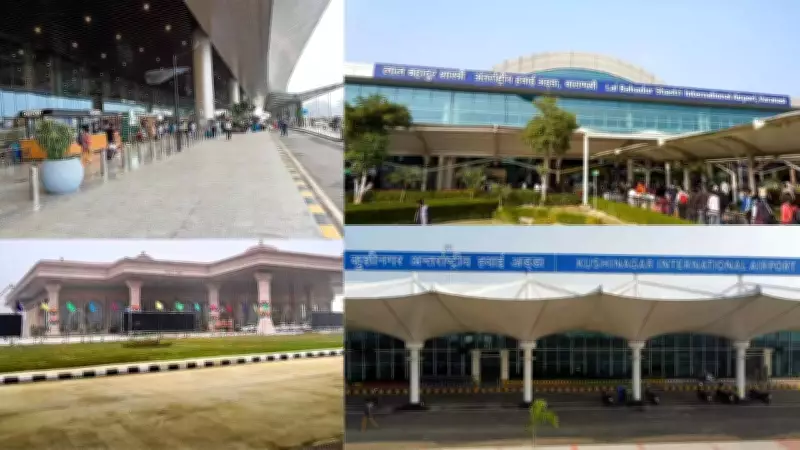
The heart of this effort lies in creating a diverse network ranging from large international hubs to smaller regional airstrips. Key international airports include:

- Lucknow: Chaudhary Charan Singh International Airport – Serving as the aviation backbone, this airport has undergone significant expansion with upgraded terminals and runways, handling domestic routes to cities like Delhi, Mumbai, Bengaluru, and Kolkata, plus international flights to the Middle East and Southeast Asia.
- Varanasi: Lal Bahadur Shastri International Airport – A crucial hub for eastern Uttar Pradesh, it connects the ancient city with major destinations, supporting tourism to the Ganges ghats, Kashi Vishwanath Temple, and Buddhist sites like Sarnath.
- Kushinagar International Airport – Inaugurated in 2021, it boosts India's Buddhist tourism circuit, attracting pilgrims from Thailand, Sri Lanka, Japan, and Myanmar to the site of Gautama Buddha's Mahaparinirvana.
- Ayodhya: Maharishi Valmiki International Airport – Recently opened with temple-inspired architecture, it caters to the surge in religious tourism following the Ram Mandir inauguration.
- Jewar: Noida International Airport – A massive greenfield project near Greater Noida, set to complement Delhi's airport, handle millions of passengers annually, and serve as a major cargo hub, spurring regional development.
Domestic Airports Enhancing Regional Links
Domestic airports play an equally vital role in connecting Uttar Pradesh's regions with major Indian cities, reducing travel time and boosting local economies. Notable facilities include:

- Agra Airport – Operating as a civil enclave, it serves tourists visiting the Taj Mahal and Agra Fort, though commercial operations remain limited.
- Prayagraj Airport – One of India's oldest aviation facilities, upgraded with a modern terminal, it becomes critical during events like the Kumbh Mela.
- Gorakhpur Airport – A key air link for eastern Uttar Pradesh and Bihar, offering flights to Delhi, Mumbai, and Kolkata.
- Kanpur Airport – Revived with infrastructure upgrades, it provides connectivity for a major industrial centre.
- Bareilly Airport – Revived under regional connectivity schemes, it connects Bareilly with Delhi, improving accessibility for nearby districts.
- Hindon Airport – Located in Ghaziabad, it handles regional flights under the UDAN scheme, easing reliance on Delhi's main airport.
Emerging Regional Airports and Smaller Airstrips
To extend aviation access to smaller districts, several regional airports are in development in cities like Azamgarh, Moradabad, Shravasti, Chitrakoot, and Aligarh. These will operate under connectivity programs aimed at linking smaller cities with major hubs through affordable air travel. Additionally, Uttar Pradesh hosts smaller airstrips in Meerut, Jhansi, Lakhimpur Kheri, and Ghazipur, used for government flights, pilot training, and emergencies, forming part of the state's broader aviation infrastructure with potential for future upgrades.
The Broader Impact and Future Outlook
Collectively, this expanding airport network reflects Uttar Pradesh's comprehensive drive to modernize transport infrastructure. Aviation projects are synergized with expressways, industrial corridors, and logistics hubs to create an integrated mobility system. If current plans proceed on schedule, Uttar Pradesh is poised to become one of India's most connected states in aviation terms, linking pilgrimage centres, industrial hubs, and emerging cities through a rapidly growing air network that promises to boost economic growth and regional development significantly.





