Left-affiliated trade unions in Jharkhand have launched strong opposition against the four new labour codes implemented by the Union government, labeling them as anti-worker legislation that requires immediate withdrawal.
What Are the New Labour Codes?
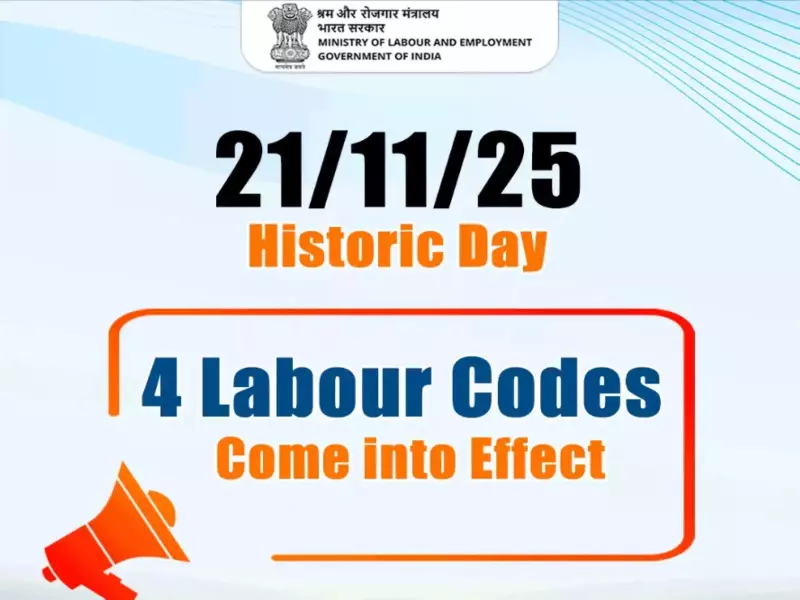
The Central government officially implemented four comprehensive labour codes starting Friday, marking a significant overhaul of India's labour laws. The four codes include the Code on Wages 2019, Industrial Relation Code 2020, Code on Social Security 2020 and the Occupational Safety, Health and Working Conditions Code 2020. These new regulations consolidate and replace multiple existing labour laws that previously governed worker rights and employer obligations across the country.
Trade Unions Voice Strong Opposition
CPI-M state secretary Prakash Viplav expressed grave concerns about the impact of these codes on worker protections. "The new codes would leave the workers unprotected in the hands of the capitalists," Viplav stated during Saturday's announcement. He emphasized that the labour codes have dismantled 29 laws which previously protected worker rights to some extent, creating what unions believe is an unbalanced system favoring employers.

Viplav confirmed that CITU (Centre of Indian Trade Unions) has already begun organized resistance, staging protests against the implementation of these codes in Dhanbad. The demonstrations signal the beginning of what trade unions promise will be an extended campaign to force the government to reconsider the new legislation.
Workers Called 'Sacrificial Goats' in Economic Growth Push
Bhuwaneshwar Kewat, state secretary of AICTU, used even stronger language to describe the new regulations, terming the four codes as "black laws" that fundamentally favor employers over employees. "The four labour codes are in favour of employers. It is wrong to make the workers sacrificial goats and give liberties to the capitalists for economic growth in the name of Atmanirbhar Bharat," Kewat asserted.
Despite the challenging circumstances, trade union leaders expressed confidence in their ability to mobilize worker resistance. Kewat highlighted the historical resilience of workers, noting that "workers have won under every circumstance and crisis and they would win this time also," indicating a determined stance against what they perceive as legislation undermining decades of worker protections.
The trade unions' strong reaction sets the stage for potential widespread labour unrest as organizations representing workers across various sectors prepare to challenge the implementation of these codes through protests, demonstrations, and political pressure.