Shashi Tharoor Delivers Scathing Critique of India-U.S. Interim Trade Deal
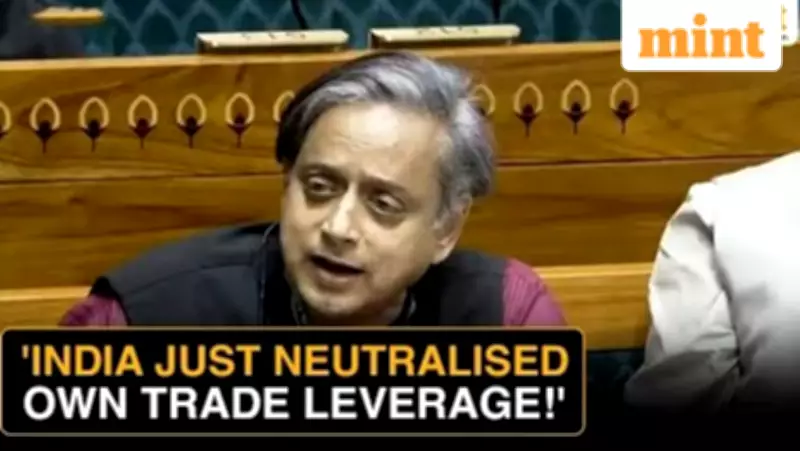
In a sharp rebuke delivered in the Lok Sabha, Congress Member of Parliament Shashi Tharoor has lambasted the recently announced India-U.S. interim trade deal, declaring it 'Not Reciprocal At All!'. Tharoor's comments, made on Tuesday, February 10, 2026, have ignited a fresh political debate over the terms of the bilateral agreement.
Trade Deal Labeled a 'Pre-Committed Purchase Agreement'
Tharoor argued that the interim pact, rather than fostering balanced trade, resembles a 'pre-committed purchase agreement' that fundamentally undermines the principle of reciprocity. He emphasized that such an arrangement overturns established norms of fair trade, potentially placing India at a disadvantage in negotiations.
'This deal appears to commit India to specific purchase obligations without ensuring equitable benefits in return,' Tharoor stated, highlighting concerns over the deal's structure and long-term implications for the Indian economy.

Accusations of Ministerial 'Ping Pong' Over Questions
Adding to his critique, Tharoor accused Union Ministers S. Jaishankar and Piyush Goyal of engaging in what he described as a 'ping pong' game when faced with parliamentary inquiries about the deal. He claimed that questions are being deflected between the ministers, leading to a lack of transparency and accountability.
'When serious questions are posed, we see a game of ping pong between the ministers, with no clear answers forthcoming,' Tharoor remarked, urging for greater clarity and detailed explanations from the government regarding the trade terms.
Broader Implications for India-U.S. Trade Relations
The interim trade deal, aimed at boosting economic ties between India and the United States, has been a focal point of discussion in political and economic circles. Tharoor's criticism underscores ongoing tensions and differing perspectives on how such agreements should be structured to ensure mutual benefit.
Key points raised by Tharoor include:
- The perceived lack of reciprocity in the deal's terms.
- Concerns over India's commitment to purchase agreements without proportional gains.
- The need for transparent dialogue and accountability from government ministers.
As the debate continues, stakeholders are closely watching how the government responds to these allegations and whether revisions to the deal might be considered to address the issues of fairness and balance highlighted by Tharoor.