Sanyukt Kisan Morcha Condemns India-EU Free Trade Agreement as Economic Colonisation
The Sanyukt Kisan Morcha (SKM) has issued a strong condemnation of the India-European Union Free Trade Agreement (FTA) 2026, which was signed on January 27. In a scathing release from Bathinda on Friday, the farmers' union labeled the pact not as a fair trade deal but as a blueprint for economic colonisation. SKM warned that this agreement could lead to a systematic corporate capture of India's vast market, devastating domestic agriculture and industry while ruining employment opportunities across the nation.
Tariff Reductions and Agricultural Concerns
Under the terms of the FTA, the Union government has agreed to significant concessions that have raised alarm bells. Import duties will be completely eliminated on a range of products, including olive oil, margarine, other vegetable oils, fruit juices, non-alcoholic beer, processed foods like breads, pastries, biscuits, pasta, chocolate, and pet food, as well as sheep meat. Additionally, tariffs will be slashed on key items: wine from 150% to 20-30%, spirits from 150% to 40%, beer from 110% to 50%, kiwis and pears from 33% to 10%, and sausages and other meat preparations from 110% to 50%.
SKM argues that while the government claims the agriculture sector is not fully open, the opening of the processed food market will have a disastrous and far-reaching impact on domestic agricultural production and small farmers. The union highlighted that this move could flood the Indian market with cheap imports, undermining local producers and threatening their livelihoods.

Double Standards in Sanitary and Phytosanitary Measures
The farmers' group accused the government of succumbing to EU pressure by maintaining complex and expensive sanitary and phytosanitary (SPS) barriers. These barriers effectively block agricultural exports from India, such as grapes and mangoes, while the FTA simultaneously dilutes India's own standards to ease the entry of EU produce. SKM described this as a double standard that protects EU farmers while exposing Indian fields and consumers to unfair and unsafe competition. They warned that stringent rejections of Indian grape, apple, mango, and other producers will likely continue even after the deal is implemented, calling this a betrayal of farmers' interests.
Economic Warfare and Subsidy Disparities
EU leaders have touted this FTA as providing the biggest trade opening India has ever offered. For agriculture, this translates to an annual influx of approximately €4 billion in subsidised EU dairy, processed foods, wines, and spirits. SKM pointed out that the EU's Common Agricultural Policy (CAP) provides massive, distorting subsidies that Indian farmers cannot match. The elimination of tariffs on 96.6% of EU goods is expected to trigger an avalanche of cheap imports, which could influence international agricultural prices and crash domestic prices, replicating past disasters seen with pulses and edible oils. SKM framed this not as competition but as economic warfare against India's smallholder farmers.
Intellectual Property and Broader Industrial Impact
The FTA includes high-level Intellectual Property protection, which SKM likened to a Trojan horse for European seeds and agro-chemical monopolies. It aims to impose TRIPS-plus provisions on seeds and plant varieties, potentially criminalising traditional rights to save, exchange, and reuse seeds. Furthermore, by extending pharmaceutical patents and enforcing data exclusivity, the agreement threatens to gut India's generic medicine industry, making healthcare unaffordable for millions. SKM accused the Union government of prioritizing corporate profits over people's lives and farmers' rights, noting that this agenda is also reflected in the proposed seed bill 2025 of the NDA government.

Beyond agriculture, the agreement eliminates import duties on machinery, electrical equipment, aircraft, spacecraft, optical, medical, and surgical equipment, plastics, pharmaceuticals, iron, steel, and chemicals. It also reduces tariffs on motor vehicles from 110% to just 10%. SKM warned that this will have a disastrous impact, leading to deindustrialisation, the devastation of MSMEs, and massive unemployment. They characterized the agreement as a complete surrender, negotiated in secrecy under corporate pressure, and a profound betrayal of India's national interest.
Demands for Transparency and Parliamentary Debate
According to EU leadership, the India-EU FTA will only be finalized after ratification by each European country's parliament and the EU Parliament, a process expected to take about one year. SKM criticized the lack of discussion in the Indian Parliament, despite Prime Minister Modi's claims of India being the "Mother of Democracy". They called it ridiculous that an agreement with such long-term impacts on people and the economy is not being debated. SKM demands that the Prime Minister make all negotiation documents public and subject the deal to a thorough parliamentary debate to ensure accountability.
Future Mobilisation and Campaigns
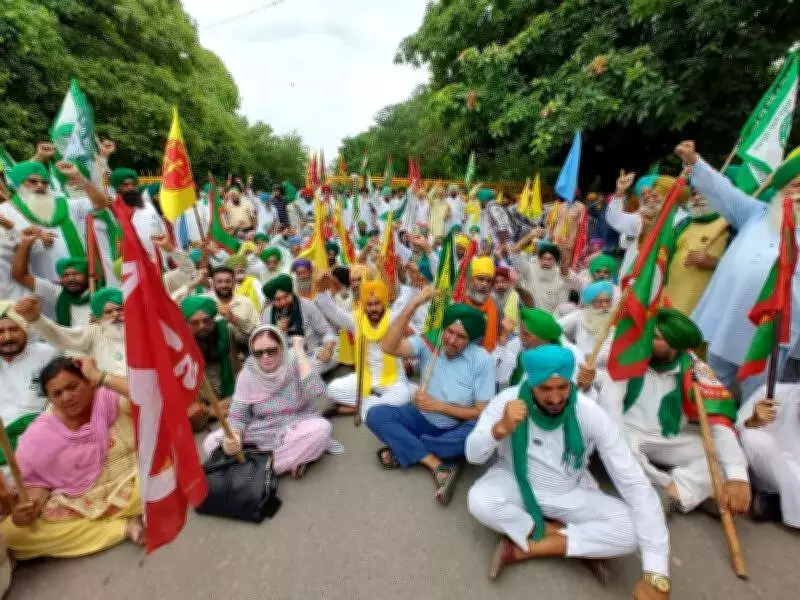
In response to these concerns, SKM announced plans to continue mobilising farmers and joining hands with workers to intensify their campaign. They are calling for a general strike on February 12 to protest against corporate legislations, policies, and the India-EU FTA. The union remains steadfast in its opposition, viewing this agreement as a direct threat to India's economic sovereignty and the well-being of its agricultural and industrial sectors.