

Marathwada's Agricultural Exports Paralyzed by Escalating Middle East Conflict
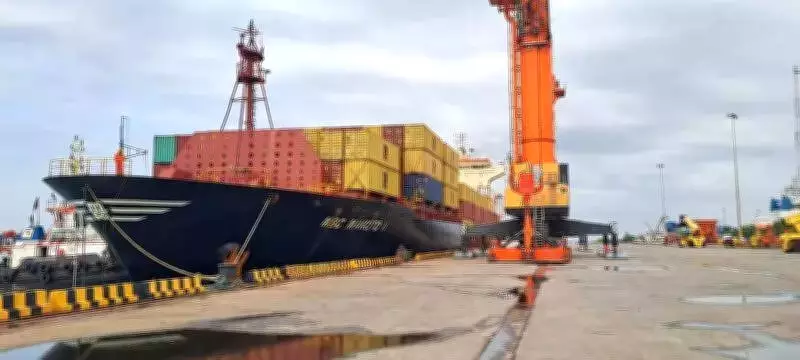
The intensifying military confrontation between Israel, the United States, and Iran has delivered a severe blow to agricultural exports from Maharashtra's Marathwada region. Iran's strategic Bandar Abbas port, along with several other critical trade gateways in the region, has been completely shut down for commercial traffic. This abrupt closure has left approximately 800 tonnes of valuable farm produce stranded at Mumbai's Jawaharlal Nehru Port Authority (JNPA), while simultaneously forcing a statewide halt to all new export shipments.
Vital Trade Corridor Severed, Consignments in Limbo
Exporters report that a diverse range of commodities, including chickpea, tur (pigeon pea), soybean meal, Bengal gram, maize, and onion seeds destined for markets in Uzbekistan and various Gulf nations, are now stuck in logistical limbo. The Bandar Abbas shipping route, which serves as an essential artery for trade with Central and West Asia, has become inaccessible. This has compelled traders to offload their trucks at the port, exacerbating an already critical space shortage and creating massive piles of unsent goods.
"At present, around 800 tonnes of cargo is stranded at the port. Transportation has come to a complete halt," stated Shrirang Kalya, director of Maheshwari Agro in Latur. "There is no space available at the Mumbai port to send fresh consignments. The goods are piled up in one place. Fortunately, the shipments did not yet sail, but we have no clarity on when the market will reopen." Kalya noted that exports from Marathwada typically consist of chickpea, tur, soybean meal, and limited quantities of maize.

Industry Fears Soaring Costs and Record Losses
The crisis extends beyond immediate logistical gridlock. Traders are deeply concerned about a potential surge in freight rates once port operations eventually resume. "If fuel prices rise amid the conflict, logistics costs will go up further, eroding margins. The trade may become unviable," Kalya added, highlighting the fragile economics of agricultural exports.
Industry representatives emphasize that the closure of multiple ports has effectively severed a crucial trade corridor used extensively by exporters across Maharashtra. The impact is particularly acute for high-value perishable goods.
"Indian pomegranate and grapes are in great demand in Dubai and other Gulf countries. Our produce is likely to set record losses if the export of these fruits is not resumed at the earliest," warned Suyog Kulkarni, state secretary for the pomegranate association of Maharashtra. "The farmers are set to face unprecedented loss. In addition, crude oil prices are feared to surge, due to which the cost of transportation will take a toll on the supply chains."
Broader Trade Disruption and Altered Routes
The conflict has exposed the vulnerabilities of complex global supply chains. Exporters noted that ports in the United Arab Emirates (UAE) are frequently used as intermediate transit points, especially after recent US tariff measures altered direct trade routes. The current port closures disrupt this alternative pathway as well, compounding the crisis.
The situation remains fluid, with no indication of when the vital Bandar Abbas port and other regional hubs will reopen for trade. For the farmers and exporters of Marathwada, the geopolitical tensions thousands of miles away have translated into immediate financial distress and an uncertain future for their agricultural harvest.






