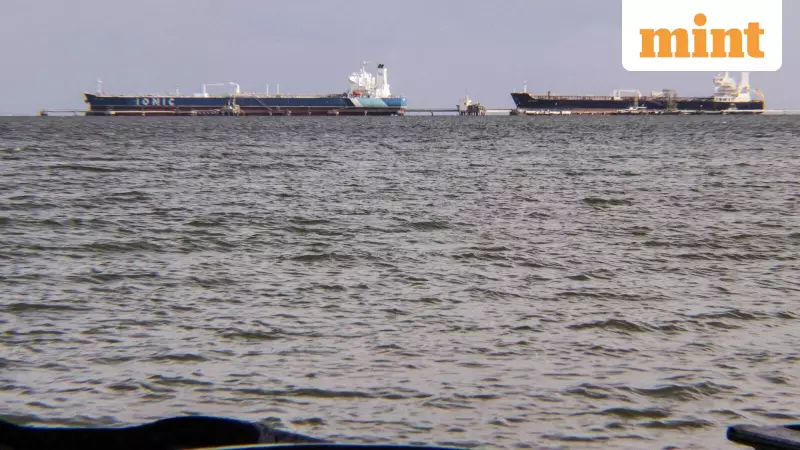
Iran's Oil Conundrum: Rising Exports, Falling Revenue in 2025
In a striking economic paradox, Iran managed to export more crude oil in 2025 than it had in years, defying international sanctions through sophisticated smuggling networks. However, this increased volume did not translate into higher profits for the regime. Instead, Tehran's revenue from oil sales collapsed dramatically, exacerbating an already severe economic crisis within the country.
The Mechanics of the Sanctions Evasion Trade
The decline in profits was largely driven by a complex web of middlemen and buyers who capitalized on Tehran's limited options for unloading its sanctioned crude. With few alternatives apart from its shadow fleet—a global network of aging tankers—Iran became increasingly dependent on these intermediaries. Gregory Brew, senior analyst for Iran and energy at Eurasia Group, noted that sanctions force the Iranians and their partners to establish new intermediaries constantly, with everyone taking a cut along the way.
Iran sells its crude primarily to small Chinese refiners, colloquially known as teapots. These refiners do not operate internationally but rely on cheap crude to compete domestically in China's energy market. This arrangement has allowed Iran to maintain, and even increase, its export volumes. In October 2025, Iran shipped nearly two million barrels per day, a multiyear high, according to Capital Economics. For the entire year, Iran sold more oil than in any year since 2018.

Deepening Discounts and Rising Costs
Buyers are increasingly exploiting the restrictions on Iran to secure sanctioned oil at even deeper discounts. Since the West imposed new sanctions last year, the value of Iranian crude has plummeted relative to international benchmarks. Data from Kpler shows that while a barrel of Iranian oil sold for $1 less than Brent crude at the start of 2025, by year's end, it was $8 cheaper.
Moreover, the logistics of getting crude to Chinese refiners have become more difficult and costly. Homayoun Falakshahi, head of crude oil analysis at Kpler, emphasized that the main problem is logistics, which means higher costs, more middlemen, and ultimately, lower revenues for Iran. The cost of ship-to-ship transfers, necessary to conceal a cargo's true origin, has risen as everyone in the supply chain dealing with sanctioned oil incurs new expenses.
Impact on Iran's Economy and Global Markets
The sharp drop in oil revenue has intensified Iran's economic crisis, which previously triggered days of deadly protests—the most significant challenge to the Shiite leaders in over four decades. Falling oil revenue has severely dented Iran's foreign-currency earnings, crucial for paying imports and supporting the drastically weakened rial. The widespread demonstrations that erupted in late December were sparked by the dramatic devaluation of the currency, with a death toll exceeding 5,000 people, according to Human Rights Activists in Iran.
This situation has broader implications for global energy markets. As a founding member of OPEC, Iran is responsible for approximately 3% of daily global oil output. Some analysts estimate Iran's full-year sales of crude totaled about $30 billion in 2025, with Iran retaining roughly two-thirds as profit. However, these figures are significantly lower than in prior years, though precise comparisons are unavailable due to the opaque nature of the trade.
Geopolitical Pressures and Future Outlook
The Trump administration has pursued the shadow fleet with sanctions and special forces, seizing six oil tankers that moved oil from Iran, Russia, or Venezuela and promising more action. Additionally, the capture of Venezuelan strongman Nicolás Maduro cost Tehran a longtime ally and partner in black-market oil. While Trump's desire to flood the market with Venezuelan crude to lower prices could challenge Tehran, rebuilding Venezuela's dilapidated industry will take years, potentially allowing Iran to increase its market share in China in the short term.

An internet blackout imposed during recent demonstrations has left OPEC with little visibility into Iran's oil sector, complicating efforts to monitor production and maintain market stability. Gulf OPEC delegates have reported a significant breakdown in communication with their Iranian counterparts and cautioned that Iran's oil sales system may collapse if the regime itself fails.
Analysts like Gregory Brew predict a slowdown or even a decline in Iranian oil production and exports, with a deterioration in the domestic situation likely worsening that outlook. The threat of U.S. military action has receded for now, but all options remain on the table, according to Trump administration officials. Meanwhile, new U.S. sanctions imposed in response to the government crackdown on protesters target individuals and entities linked to laundering proceeds from Iranian petroleum sales, further squeezing Tehran's financial lifeline.