

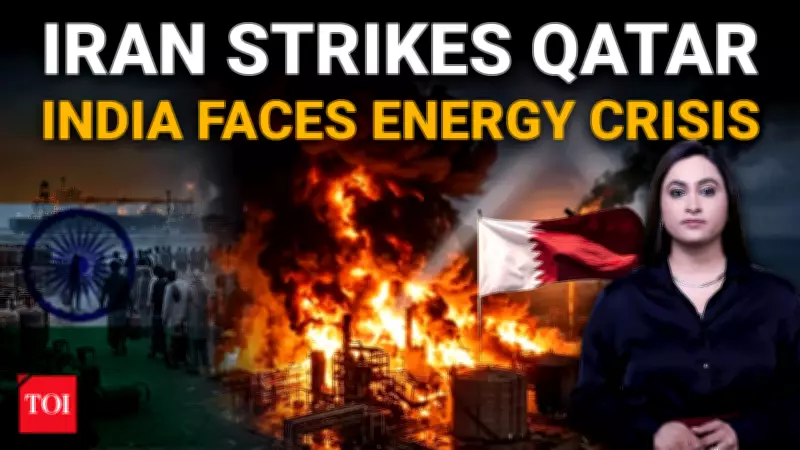
Iran's Assault on Qatar's Ras Laffan Gas Hub Ignites India's Energy Emergency
Iran's recent military strike on Qatar's Ras Laffan, the world's largest liquefied natural gas (LNG) hub, has unleashed seismic shockwaves across the global energy landscape, with India positioned directly at the epicenter of this escalating crisis. The Ras Laffan facility, responsible for supplying approximately one-fifth of the world's total LNG output, has sustained significant damage from the attack. This destruction is projected to severely disrupt international gas supply chains for multiple years, creating a ripple effect that threatens energy security worldwide.
India's Critical Dependence on Qatari LNG Exposed
For India, the ramifications are particularly severe and immediate. The nation imports nearly 40% of its total LNG requirements from Qatar, making it exceptionally vulnerable to supply interruptions from the Ras Laffan hub. This heavy reliance stems from long-term contracts and Qatar's role as a dominant supplier in the Asian LNG market. The attack has abruptly exposed this strategic vulnerability, forcing Indian authorities and energy companies into emergency response mode.
Compounding Threats: The Strait of Hormuz Peril
Further exacerbating the crisis, Iran's aggressive actions have rendered the Strait of Hormuz increasingly hazardous for maritime traffic. This narrow waterway serves as a critical chokepoint for global oil and gas shipments, with approximately one-third of the world's seaborne oil passing through it. The heightened military tensions and potential for further conflict now jeopardize not only LNG but also vital crude oil and liquefied petroleum gas (LPG) supplies destined for India. This dual threat creates a perfect storm for India's energy import infrastructure.

Market Turbulence and Supply Scramble
The immediate aftermath has seen global gas and oil prices skyrocket as markets react to the supply shock. India, already grappling with these price surges, faces additional challenges from soaring freight costs and intense competition for alternative energy sources. With global demand remaining robust, the struggle to secure replacement LNG cargoes is intensifying daily. Indian energy firms are reportedly scouring markets from the United States to Australia and Africa, but availability is limited and premiums are steep.
Domestic Impact: From Power Generation to Agriculture
This energy emergency transcends mere market inconvenience for India—it threatens to cascade through multiple sectors of the economy and daily life. Key areas at risk include:
- Power Generation: Gas-fired power plants, which contribute significantly to India's electricity grid, may face fuel shortages, potentially leading to power cuts or increased reliance on more expensive alternatives.
- Household Cooking Gas: Supplies of LPG, commonly used for cooking across Indian households, could become constrained or more expensive, affecting millions of families.
- Fertilizer Production: Perhaps most critically, the natural gas shortage threatens ammonia and urea production as the crucial sowing season approaches. Any disruption to fertilizer supplies could have severe consequences for agricultural output and food security.
The timing of this crisis could not be worse, with India's agricultural cycle and energy demand patterns creating additional pressure points. Government agencies are reportedly activating contingency plans, including potential rationing measures and accelerated development of domestic gas fields, but these are long-term solutions to an immediate emergency.
As the situation continues to evolve, India's energy security strategy faces its most severe test in decades. The nation's response to this crisis will likely reshape its energy import policies, supplier relationships, and domestic production priorities for years to come.






