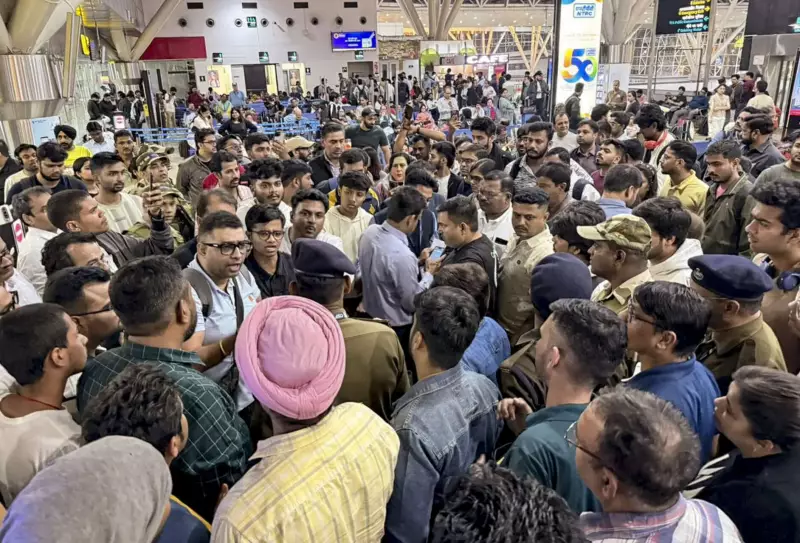
India's aviation sector witnessed severe disruptions on Thursday as the country's largest carrier, IndiGo, was forced to cancel approximately 300 flights. The chaos, described as unprecedented, spilled over to major airports across the nation, causing significant misery for thousands of passengers, including those booked on other airlines at airports like Pune.
DGCA Exposes IndiGo's Planning Failure
The Directorate General of Civil Aviation (DGCA) stated that the airline admitted to grossly underestimating pilot requirements for its current schedule under the new Flight Duty Time Limitation (FDTL) rules. Following a meeting with the airline's management, the regulator revealed that the disruptions stemmed from a critical misjudgment. "These disruptions have arisen primarily from misjudgement and planning gaps in implementing phase 2 of the flight duty time limitation," the DGCA said, adding that the airline accepted the actual crew need exceeded their anticipation.
IndiGo has informed the regulator that flight cancellations will persist for the next two to three days. Starting Monday, December 8, the airline plans to reduce its flight operations to minimise further passenger distress. The carrier has assured the DGCA that normalised and stable operations will be fully restored by February 10, 2026. To achieve this, IndiGo has sought operational exemptions from specific FDTL provisions for its Airbus A320 fleet until that date.

Passenger Anguish and Wider Airport Chaos
The cascading effect of IndiGo's operational meltdown was felt widely. At Pune airport, IndiGo aircraft stranded without pilots blocked bays, preventing flights of other airlines from operating. Frustrated passengers at several airports protested at departure gates after enduring long waits and uncertainty, which also hampered boarding processes for other carriers.
IndiGo's on-time performance plummeted to a dismal 19.7% on Wednesday. Passengers expressed fury over the handling of the situation. One traveller, stranded on a Tuesday night flight from Delhi to Bengaluru, accused the airline of unethical behaviour, stating flights would be displayed as on-time before vanishing from boards post check-in.
DGCA inspections at Delhi's Terminal 1, which saw the highest passenger impact, found that IndiGo's passenger-handling manpower was utterly inadequate to manage the crisis-induced crowding. The regulator has instructed the airline to urgently increase staff and bolster support services at all affected terminals. Additionally, DGCA officials will conduct real-time inspections at major airports to monitor the situation.
Regulatory Scrutiny and the Road to Recovery
The crisis comes from a perfect storm of miscalculation. While IndiGo underestimated crew requirements after November 1, when the second phase of FDTL rules kicked in, it had also increased its domestic flights by 6% for the winter schedule effective from October 26. This combination created a yawning gap between scheduled flights and available crew.
Civil Aviation Minister Ram Mohan Naidu reviewed the situation with senior officials. He has directed the DGCA and the ministry to keep a close watch and instructed IndiGo to normalise operations at the earliest. Airport Authority of India (AAI) and other operators have been told to provide all necessary support to stranded passengers. The DGCA has also been asked to monitor airfares closely to prevent price gouging during the disruption.
With the annual fog season set to envelop North India around mid-December, a swift resolution is crucial to prevent a compounded crisis. The DGCA is expected to decide on IndiGo's request for exemptions as early as Friday, aiming to restore a semblance of normalcy before weather-related disruptions begin anew.