India's Strategic Oil Import Policy and Trade Negotiations Detailed in Parliamentary Session
Senior government officials have affirmed that India will maintain its policy of sourcing crude oil from countries offering the most competitive prices and suitable quality, while carefully navigating geopolitical conditions and avoiding sanctioned sources. This position was formally presented to the Parliamentary Standing Committee on External Affairs during a comprehensive briefing on Tuesday.
High-Level Parliamentary Engagement
The meeting, which extended for over three hours, was chaired by Congress MP Shashi Tharoor and witnessed participation from 28 out of the committee's 30 members. Foreign Secretary Vikram Misri and senior officials from both the Ministry of External Affairs and the Ministry of Commerce provided detailed briefings to the parliamentary panel.
Shashi Tharoor described the interaction as exceptionally productive, noting that officials addressed every query with thoroughness and confidence. "It was an extremely effective meeting and serves as a prime example of what parliamentary committees can accomplish," Tharoor told reporters following the session.

Trade Agreements Take Center Stage
According to Tharoor, the discussions predominantly revolved around two significant trade initiatives: the India-US interim trade agreement and the proposed India-European Union Free Trade Agreement. The dialogue encompassed a broad spectrum of issues, ranging from India's continued import of Russian oil to agricultural product negotiations.
Officials informed the committee that negotiations are actively progressing to finalize the interim trade agreement with the United States, though specific details will only become clear upon the deal's conclusion. Tharoor indicated that committee members were advised to await the formal announcement for comprehensive understanding.
Addressing US Tariff Adjustments
Regarding the United States' decision to implement an 18 percent reciprocal tariff on Indian goods, Tharoor observed that international trade has increasingly become "weaponized" in global relations. As reported, Indian products will now face an 18 percent tariff in the US market, representing a significant reduction from the previous combined rate of 50 percent, which included a 25 percent base tariff plus an additional 25 percent linked to India's procurement of Russian oil.
"India is among the countries which received the lowest rate," Tharoor emphasized, noting that European Union products would encounter a 15 percent tariff, while United Kingdom goods would attract a 10 percent tariff in exchange for zero tariffs on US exports.
Anticipated Timeline for Interim Agreement
Tharoor revealed that both the foreign secretary and the commerce ministry's chief negotiator provided extensive briefings to committee members, while simultaneously highlighting confidentiality constraints that limit detailed disclosures. "We are looking forward to the interim agreement being finalized by the middle of next month," he stated, adding that Parliament would conduct thorough discussions once the details become publicly available.
Concerning India's ambitious plan to import goods worth $500 billion from the United States over a five-year period, Tharoor clarified that officials explained this as a flexible target rather than a rigid commitment. "$500 billion is not a hard and fast commitment; we will be making concerted efforts," he elaborated, suggesting that current imports of approximately $42 billion could potentially be doubled without substantial difficulty, with no sanctions anticipated if the target remains unmet.
Oil Sourcing Strategy and Regional Diplomacy
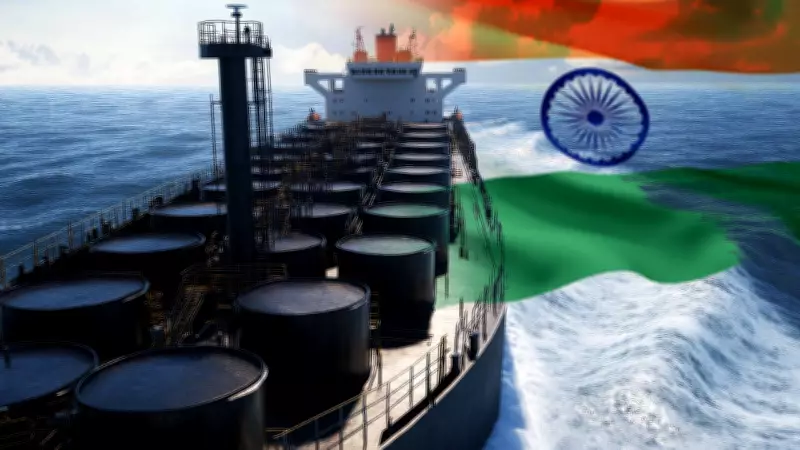
Sources indicated that officials reiterated India's comprehensive approach to oil imports, emphasizing that purchases would prioritize affordability and quality while considering geopolitical realities and exclusively utilizing non-sanctioned suppliers. Notably, Indian oil companies now have expanded access to crude from both the United States and Venezuela, following the lifting of sanctions on Venezuela's energy sector after recent political changes.

Regarding India-Bangladesh relations, Tharoor confirmed that New Delhi maintains continuous communication with all stakeholders in the neighboring country. He further announced that the parliamentary panel would conduct a Bangladesh-specific discussion with the foreign secretary once election results there are officially announced.
Cross-Party Perspectives on Trade Discussions
AAP MP Raghav Chadha characterized the briefing as highly informative, acknowledging that officials delivered detailed presentations on both the India-US interim trade agreement and the India-EU Free Trade Agreement. "There are certain aspects we need to observe as they unfold in the coming days, as these trade agreements typically require substantial time to become fully operational," Chadha remarked, as documented in official reports.
The parliamentary session demonstrated robust engagement between government officials and elected representatives on critical matters of energy security and international trade, reflecting India's strategic balancing of economic interests with geopolitical considerations in an increasingly complex global landscape.