The year 2025 proved to be a watershed moment for international commerce, characterized by slower economic growth in major powers, unexpected tariff hikes, and increasingly concentrated supply chains. This environment made global trade more fragmented and unpredictable than ever. However, within this period of turbulence, India showcased remarkable resilience and embarked on a strategic overhaul of its approach to global economic engagement.
Strategic Pivot: Diversification and Institutional Reforms
India's total exports for the financial year 2024-25 achieved a significant milestone, reaching $824.9 billion. This represented a 6% increase from the previous year, a notable feat considering the subdued demand in global markets. This performance was not a result of isolation but a deliberate strategy built on three pillars: diversifying export markets, repositioning within global supply chains, and implementing critical institutional reforms.
A major disruption emerged from the United States, which announced reciprocal tariffs on sensitive sectors including metals, chemicals, and machinery. The impact was direct and substantial: India's exports to the US plummeted by roughly 37.5% between May and September 2025. India's response was calibrated and strategic, focusing on containment. While a bilateral trade deal with the US may be finalized in 2026, India proactively moved to mitigate the damage.

The government deployed trade defence tools like anti-dumping and safeguard duties to prevent destabilizing import surges. Simultaneously, export support schemes were fine-tuned to encourage value-added manufacturing. To boost competitiveness, customs procedures were streamlined through expanded risk-based clearance systems.
Forging New Alliances: FTAs as Tools of Resilience
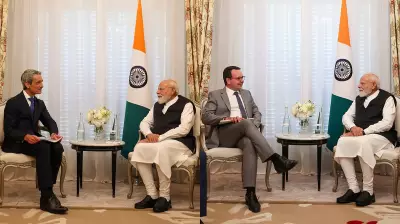
A defining aspect of India's 2025 trade strategy was its renewed and vigorous pursuit of Free Trade Agreements (FTAs) as instruments of strategic resilience. The landmark India-EFTA Trade and Economic Partnership Agreement, signed in March 2024, became operational on 1 October 2025. This pact, India's first operational FTA with developed European nations, grants duty concessions on over 92% of tariff lines and is projected to attract $100 billion in investments and generate one million jobs over 15 years.
In a parallel development, India and the United Kingdom signed the Comprehensive Economic and Trade Agreement on 24 July 2025, with implementation expected by mid-2026. Once in force, it will provide duty-free access for 99% of India's exports to the UK by value. Steady progress in negotiations with the European Union, Canada, New Zealand, the GCC, and others is weaving a wider, rules-based network of trade partnerships for India.
To structurally enhance export capabilities, the government launched a massive ₹25,060-crore mission. This initiative aims to upgrade export infrastructure, improve trade finance access, provide better market intelligence, and help MSMEs meet international standards, marking a shift from short-term incentives to long-term capacity building.
Building Domestic Strength and Future Priorities
Global supply chain diversification efforts, driven by companies in electronics, pharma, auto components, and solar equipment seeking to hedge risks, found a willing partner in India. Through targeted Production-Linked Incentive (PLI) schemes and a strengthening manufacturing base, India emerged as a key beneficiary. Indian firms are now integrating deeper into global production networks and climbing the value chain.
Geographic diversification served as a practical risk-management tool. Steady growth in shipments to Africa, West Asia, and Latin America reduced over-reliance on traditional Western markets and provided a buffer against the slowdown in US-bound exports.

Domestic policy reforms further fortified the economy against external shocks. The rollout of GST 2.0 simplified the indirect tax structure to a two-slab framework. Recommendations to rationalize the Quality Control Order regime, covering about 790 products, aimed to ease input costs. Proposed customs duty reforms also promised greater transparency and lower rates on select goods.
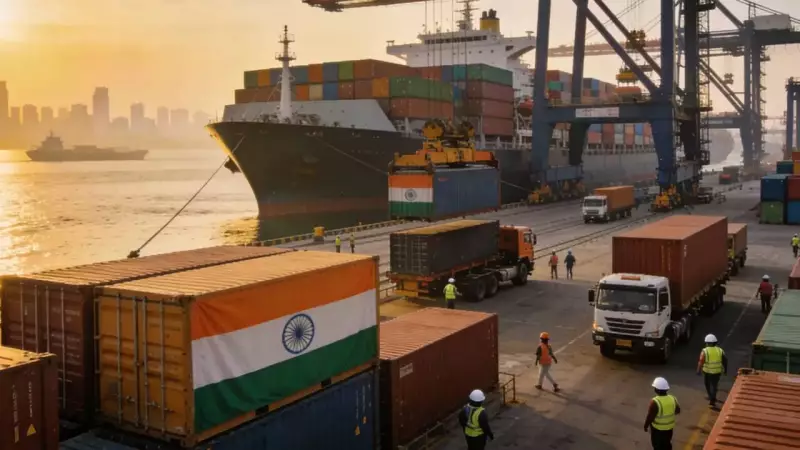
Looking ahead to 2026, two structural priorities will be crucial: securing access to critical minerals and boosting logistics competitiveness. India has approved a ₹7,280-crore PLI scheme for rare-earth magnet manufacturing and is pursuing strategic partnerships with mineral-rich nations like Australia. On logistics, the PM Gati Shakti initiative and the modern Indian Ports Act, 2025 are driving the development of multimodal parks and streamlined port operations to meet global standards.
The central lesson from 2025 is clear: resilience in global trade is achieved not by turning inward but through smarter, strategic integration. India is steadily transitioning from merely reacting to global volatility to actively shaping outcomes. Through diversified markets, robust trade agreements, secure mineral access, and competitive logistics, India is positioning itself to not just participate in global commerce, but to influence its future trajectory.