

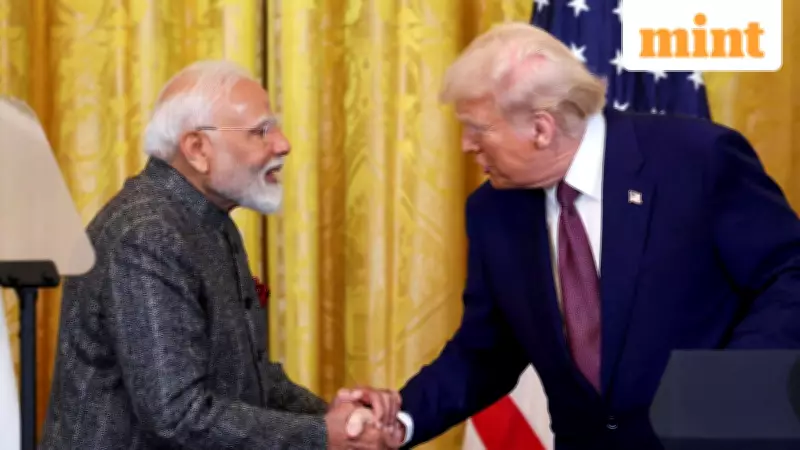
India-US Trade Agreement: A Landmark Deal with Far-Reaching Benefits
The recent announcement of a trade agreement between India and the United States marks a pivotal moment in bilateral economic relations. Following the comprehensive India-EU pact and the strategic growth policies outlined in India's 2026-27 budget, this deal represents a significant step forward for both nations.
Immediate Relief for Indian Exporters
The most immediate impact of this agreement is the substantial reduction in US tariffs on Indian exports. The tariff rate has been slashed from a staggering 50% to a more manageable 18%, providing crucial relief to Indian exporters who were grappling with the high tariffs imposed in 2025. This preferential access to the US market, combined with existing agreements with the EU, UAE, and UK, positions Indian exporters advantageously against competitors from Vietnam and Indonesia.
Labor-intensive sectors such as garments, footwear, and leather goods stand to benefit significantly from this development. Without this tariff relief, India's exports to the United States might have experienced a concerning decline, potentially affecting numerous industries and employment sectors.

Strategic Economic Implications
Like other recent US trade agreements, this deal involves substantial commitments from India regarding purchases of American goods. According to statements from US President Donald Trump, India has agreed to purchase over $500 billion worth of US products, including energy resources, advanced technology, and agricultural commodities.
The groundwork for this agreement was laid through strategic budgetary measures. India's recent budgets have demonstrated a clear commitment to enhancing competitiveness and global market integration through several key measures:
- Reduction of import duties on pharmaceuticals and technology-related products
- Exemption of basic customs duty on aircraft components and defense equipment materials
- Duty-free import of nuclear power generation products until 2035
- Zero-duty access for specific pharmaceutical products of interest to US companies
Agricultural and Logistics Advancements
The budget's emphasis on high-value agriculture, including specific mentions of almonds and walnuts, signals India's willingness to open certain agricultural commodities to imports from the United States. This represents a significant shift in India's trade policy approach to agricultural products.
Furthermore, the agreement addresses several logistical concerns that had previously hindered trade efficiency:
- Removal of the ₹10 lakh per consignment limit on Indian courier exports
- Resolution of issues related to 'reject-and-return' consignments
- Establishment of clear timelines for fully integrated, paperless customs clearances
Geopolitical Significance and Future Prospects
This trade agreement extends beyond mere economic considerations, carrying substantial geopolitical weight. The deal reflects India's strategic recalibration of energy imports, potentially reducing dependence on Russian oil while increasing purchases of American energy resources and technology.
While the current agreement primarily focuses on goods trade, leaving services, digital trade, and H-1B visa issues for future discussions, it establishes a robust framework for ongoing dialogue and partnership development. The agreement's prompt implementation timeline represents a significant advantage over India's previous trade deals, which often faced prolonged negotiation periods.
Comparative Advantage and Global Positioning
Indian exporters are particularly optimistic about potential reductions in the 50% tariff on steel and aluminum imposed under America's Trade Expansion Act of 1962. Given that the UK's trade agreement secured a 25% tariff for these metals, similar concessions for India would represent a major achievement.
When compared to its direct competitors, India has secured favorable terms. While Japan and the EU face 15% US tariffs for most products, India's 18% rate represents a substantial improvement over previous levels and positions the country competitively in the global marketplace.

A Foundation for Future Growth
The leaders and negotiators from both nations deserve recognition for crafting an agreement that not only addresses immediate trade concerns but also lays the groundwork for deeper strategic engagement. This deal represents more than just tariff reductions—it symbolizes India's accelerated globalization efforts and commitment to becoming a developed nation by 2047.
The agreement's emphasis on structural changes, enhanced competitiveness, and global market integration demonstrates a forward-looking approach to economic diplomacy that benefits both nations while strengthening their bilateral partnership across multiple domains.





