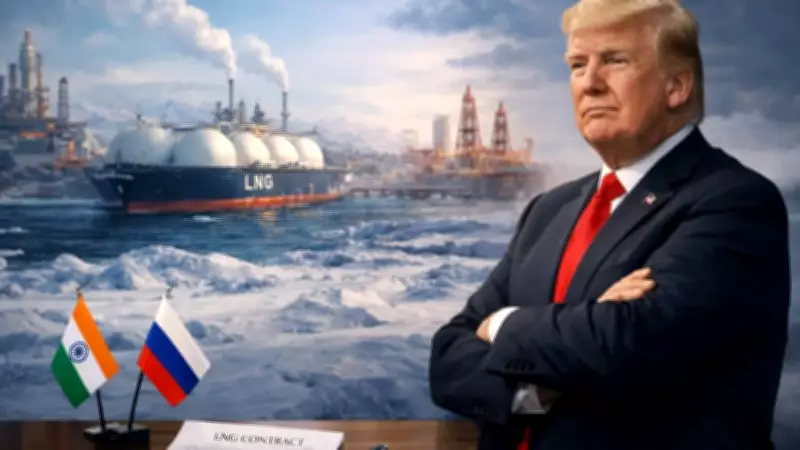
India Pursues US Waiver to Import Russian LNG as Middle East Conflicts Disrupt Supplies
Amid significant supply disruptions linked to the Strait of Hormuz, India has reportedly sought a waiver from the United States to purchase liquefied natural gas (LNG) from Russia. According to a Reuters report, India has approached the Donald Trump administration with this request, aiming to alleviate severe supply constraints that have emerged due to escalating conflicts in the Middle East.
India-Russia Talks Advance on Direct LNG Supplies
Two individuals familiar with the developments revealed that India and Russia have agreed to begin preparations for restarting direct LNG supplies from Russia, which have been halted since the outbreak of the Ukraine conflict. One source indicated that if India proceeds, discussions could conclude within weeks, despite potential risks of breaching Western sanctions.
The understanding to explore an LNG agreement was reached during a March 19 meeting in New Delhi between Russian Deputy Energy Minister Pavel Sorokin and India’s Petroleum and Natural Gas Minister Hardeep Singh Puri, as reported by sources.

Domestic Preparations and Diplomatic Outreach
Separately, India has advised domestic energy importers to prepare for a possible restart of Russian LNG purchases. The country has also reached out to the United States to explore securing a waiver from sanctions, according to sources. Foreign ministry spokesperson Randhir Jaiswal stated last week that India is in discussions with multiple countries to ensure energy security, including sourcing LNG.
Officials noted that India continues to import Russian liquefied petroleum gas, primarily used for cooking and not subject to sanctions. This move comes as India has already aggressively increased procurement of Russian crude oil after the US-Israel-Iran war disrupted supply via the Strait of Hormuz.
Global LNG Market in Turmoil
The supply of LPG and LNG has been significantly impacted by Middle East conflicts. India, which imports a large portion of its LPG and LNG needs, is seeking alternative sources. Attacks on Middle East energy infrastructure have triggered consequences beyond immediate price spikes, damaging critical facilities across Gulf nations and raising concerns over future LNG production and supply.
The turmoil has unsettled the global LNG market, with higher prices, disruptions to key export facilities in Qatar, and potential delays in upcoming projects creating uncertainty, particularly for cost-sensitive buyers in Asia.
Supply Constraints and Long-Term Impacts
Supply constraints are expected to persist as Iran’s closure of the Strait of Hormuz, handling around 20% of global LNG trade, and damage to Qatar’s liquefaction infrastructure have disrupted flows. Affected facilities could take 3 to 5 years to restore, sidelining about 12.8 million tonnes per year of capacity.
Consultancies including S&P Global, ICIS, Kpler, and Rystad Energy have lowered global supply estimates by as much as 35 million tonnes. This shortfall is equivalent to roughly 500 LNG cargoes, sufficient to meet over half of Japan’s annual LNG imports or cover Bangladesh’s requirements for nearly five years.
Revised Global Supply Forecasts
Before the conflict, analysts expected global LNG supply to grow by up to 10% this year, reaching between 460 million and 484 million metric tonnes, supported by new capacity additions mainly in the United States and Qatar. Demand was projected to rise at a similar pace.
S&P Global now estimates that exports from Qatar and the United Arab Emirates could decline by about 33 million tonnes this year. It has also cut its supply outlook by a further 19 million tonnes annually between 2027 and 2029, citing likely delays in Qatar’s North Field expansion and ADNOC’s Ruwais LNG projects.
Lucien Mulberg, an analyst at S&P Global, commented, “We expect this gas price crisis will lead some countries to reconsider growing their gas demand at the rate we previously forecast and so LNG demand growth will be lower than our pre-war forecast.”