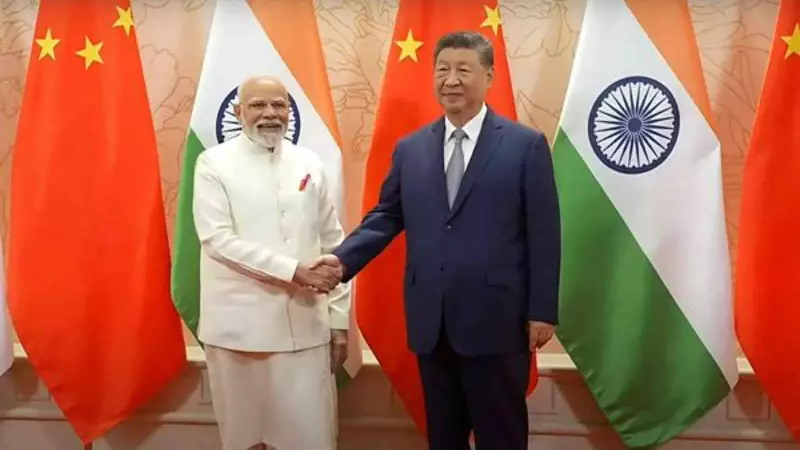
In a significant policy shift, the Indian government is actively considering a carefully calibrated, "graded" opening of its economy to China. This potential easing of restrictions, learned by The Indian Express, is being deliberated at the highest levels and is firmly contingent on reciprocal actions from Beijing.
A Deliberate and Incremental Approach
The discussions are set against the backdrop of a rapidly evolving global trade environment and the looming possibility of increased tariffs from the United States. Officials emphasize that the strategy under review is incremental rather than sweeping. India has already initiated steps like simplifying the business visa process for Chinese workers. The focus is now on examining whether certain investment-related curbs could also be relaxed.
"It (easing of norms for China) is being worked upon. It will take time though. There has to be reciprocity," stated an official familiar with the high-level deliberations. The official pointed to earlier measures like restoring flights and easing entry norms for technicians on stalled projects as examples of the gradual process.

The Foundation for a Thaw: Reports and Recommendations
Substantial groundwork has already been laid for this potential policy rebalancing. A high-level committee led by NITI Aayog member Rajiv Gauba had previously recommended the withdrawal of restrictions on Chinese investments. This view found support in the Economic Survey 2023-24, which argued for attracting investment from Chinese firms to bolster India's export competitiveness.
The current restrictions stem from Press Note 3 issued in April 2020, which mandated government approval for investments from countries sharing a land border with India. This was initially a pandemic-era measure to prevent opportunistic takeovers and was sustained following the Galwan clash in 2020 due to heightened national security concerns.
Reciprocity and Recent Diplomatic Steps
The call for a pragmatic warming of economic ties represents a recalibration of India's foreign policy and trade options. A key factor for any forward movement is reciprocity from Beijing, particularly in easing its own curbs on services exports and areas like rare earth magnets.
Parallel diplomatic efforts have sought to stabilize the broader relationship. Last year, both nations agreed on several "people-centric steps" to repair ties, including the resumption of the Kailash Mansarovar Yatra, restoration of direct flights, issuance of visas for journalists and researchers, and sharing of trans-border river data.
In line with this approach, India resumed issuing tourist visas to Chinese nationals and later eased entry norms for skilled workers after sustained industry representations. A dedicated portal has been made operational to fast-track short-term business visas for Chinese technicians, which are seen as critical for operationalizing production units under the government's Production Linked Incentive (PLI) scheme.
Industry bodies had raised alarms that prolonged visa delays were hurting manufacturing, with companies unable to commission plants using imported Chinese machinery. They argued that dependence on China for key components in electrical and electronics makes the presence of Chinese technical personnel essential, especially to meet export commitments.
The visa disparity is notable: Indian issuances to Chinese nationals plummeted from around 2 lakh in 2019 to just a few thousand in 2024. In contrast, the Chinese Embassy in Delhi reported issuing over 1.8 lakh visas to Indian citizens in 2023, and more than 85,000 between January 1 and April 9, 2025.