Historic India-EU Trade Agreement Finalized After Two Decades of Negotiations
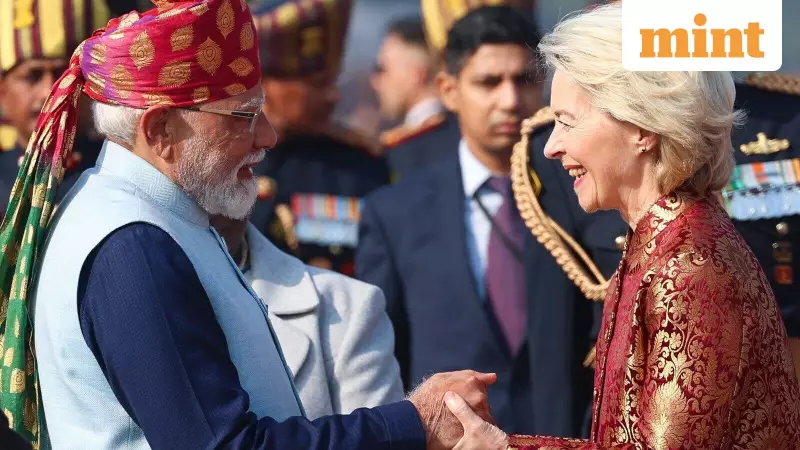
In a landmark development for global trade, India and the European Union have officially sealed a comprehensive trade agreement that had been pending for nearly twenty years. Prime Minister Narendra Modi announced this significant breakthrough on Tuesday, marking a pivotal moment in India's economic diplomacy.
A Strategic Response to Global Uncertainties
The timing of this agreement is particularly noteworthy as both India and the EU seek to strengthen their economic ties as a buffer against uncertain relationships with other major trading partners, particularly the United States. This strategic alignment comes at a crucial juncture in global trade dynamics.
Creating a Vast Economic Zone
European Commission President Ursula von der Leyen, who was present in New Delhi for the announcement, declared that the agreement has established a free trade zone encompassing two billion people. "Europe and India are making history today," she stated emphatically. "We have concluded the mother of all deals."

This monumental pact will open India's substantial and traditionally protected market to free trade with the 27-member European Union, which happens to be India's largest trading partner. The agreement represents a significant shift in India's trade policy approach.
The Road to Implementation: Eight Crucial Steps
According to the European Commission's official release, several procedural steps must be completed before the agreement becomes operational:
- Publication of the negotiated draft texts for public review
- Legal revision and translation into all official EU languages
- Formal proposal to the EU Council for signature and conclusion
- Adoption by the EU Council
- Official signing ceremony between EU and Indian representatives
- Approval by the European Parliament
- Final Council decision allowing the agreement to enter into force
- Ratification by India to enable full implementation
Safeguarding Against Trade Diversion
A critical component of the agreement addresses concerns about products of non-Indian origin being imported into the EU through India to benefit from preferential tariffs. Both parties have established strict rules of origin that ensure only products significantly processed in either India or EU member states can qualify for tariff preferences.
This mechanism effectively prevents third countries from using India as a transit point to access EU markets under favorable terms, thereby protecting the integrity of the bilateral trade relationship.
Broader Implications and Complementary Agreements
Beyond the core trade agreement, India and the EU are expected to finalize several complementary arrangements. These include agreements to facilitate mobility for seasonal workers, students, researchers, and highly skilled professionals, along with a comprehensive security and defence partnership.
As von der Leyen emphasized in her social media statement: "India and Europe have made a clear choice. The choice of strategic partnership, dialogue and openness. We are showing a fractured world that another way is possible."
Economic Significance for India
Former Indian trade official Ajay Srivastava highlighted the agreement's importance for India's economy. The tariff reductions with the EU are expected to boost exports in labor-intensive sectors, potentially offsetting some impacts of U.S. tariffs. Simultaneously, EU products will gain immediate price advantages in the Indian market due to relief from India's traditionally high tariffs, which have reached up to 110% on certain items like automobiles.
Geopolitical Context and Timing
The revival of India-EU negotiations in 2022 after a nine-year hiatus gained significant momentum following the imposition of tariffs by the United States on multiple trading partners. This development comes as India, projected by the International Monetary Fund to become the world's fourth-largest economy this year, seeks to diversify its international partnerships.

New Delhi has been actively working to reduce its decades-long dependence on Russian military hardware through import diversification and domestic manufacturing initiatives. The collapse of India-U.S. trade talks last year further underscores the strategic importance of this EU agreement for India's economic future.
This historic India-EU trade pact represents more than just an economic arrangement—it signifies a fundamental realignment in global trade relationships and demonstrates how major economies are adapting to an increasingly complex international landscape.