

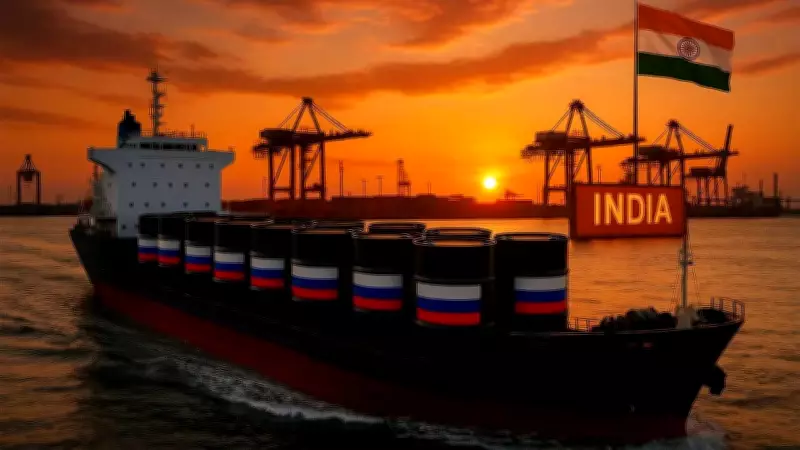
India Intensifies Russian Crude Oil Purchases as Hormuz Disruptions Squeeze Global Supply
India is dramatically escalating its procurement of Russian crude oil, responding to ongoing supply constraints triggered by disruptions in the Strait of Hormuz. As the world's third-largest oil importer, India relies on imports for nearly 90% of its crude requirements. The persistent military tensions between the US and Iran have refocused attention on Russian oil as a critical alternative source.
Strategic Shift Back to Russian Imports Amid Middle East Uncertainty
India had previously scaled back its Russian crude acquisitions following US sanctions imposed on major Russian producers like Rosneft and Lukoil. However, with Middle Eastern supply chains becoming increasingly unreliable, Indian refiners have aggressively resumed buying Russian oil over the past two months. Industry experts anticipate that this heightened procurement will continue throughout the remainder of the year, especially as concerns about potential sanctions from the Donald Trump administration have eased.
"India is grabbing all the Russian crude it can get its hands on," stated Vandana Hari, founder of the Singapore-based consultancy Vanda Insights. "I expect India to continue maximizing Russian intake as long as its flows from the Persian Gulf remain crimped," she elaborated in an interview with Bloomberg.

Historical Context and Recent Developments
Historically, India sourced only a minimal portion of its crude from Russia. This dynamic transformed significantly after the 2022 Russia-Ukraine conflict, when India capitalized on substantial discounts to become the largest seaborne buyer of Russian oil as other nations reduced their imports. The scenario shifted again last year when President Donald Trump intensified pressure on India to curtail these purchases, implementing tariffs and eventually sanctioning Russia's leading oil producers.
Recent geopolitical events have further altered the landscape. Military actions by the US and Israel against Iran, coupled with the closure of the Strait of Hormuz, have fundamentally reshaped global oil supply considerations. While Washington aims to maintain stable oil prices, India has acted swiftly to secure adequate supplies. A US waiver allowing the purchase of Russian oil was initially granted in early March and has since been extended and broadened.
Current Import Volumes and Future Projections
According to data from the intelligence firm Kpler, India's imports from Russia averaged 1.98 million barrels per day in March, marking the highest level since June 2023. Although the figure has moderated to 1.57 million barrels per day in April, this decline is primarily due to maintenance shutdowns at Nayara Energy's refinery, which processes 400,000 barrels per day and predominantly uses Russian crude. Industry executives predict that import volumes will rebound starting next month.
Senior executives at major Indian refining companies have informed Bloomberg that they expect the US waiver permitting imports of Russian oil to be renewed before its imminent expiration. Even if the waiver is not extended, purchasing is unlikely to decrease substantially due to the limited availability of alternative supply options.
"Our priority is to source the energy needed to meet our domestic demand," explained Sujata Sharma, joint secretary in India's oil ministry, when questioned about the importance of US waivers. "The choice is driven by the technical commercial feasibility of the crude and the commercial sense it makes to our refiners," she added during a press briefing in New Delhi.
Logistical Challenges and Inventory Management
Following the initial waiver, India secured approximately 60 million barrels of Russian crude scheduled for delivery this month. Earlier, shipments of Russian oil had accumulated at sea in late 2023 as Indian buyers hesitated, cautious of potential backlash and tariff measures from Washington. Data from Vortexa indicates that volumes on water surged to about 155 million barrels by early January, up from roughly 93.2 million barrels around mid-year.

This stockpile has since decreased to nearly 100 million barrels, a level similar to that observed a year ago, though it may include cargoes that have already been contracted. The strategic adjustments highlight India's proactive approach to navigating complex global oil markets while ensuring energy security for its growing economy.





