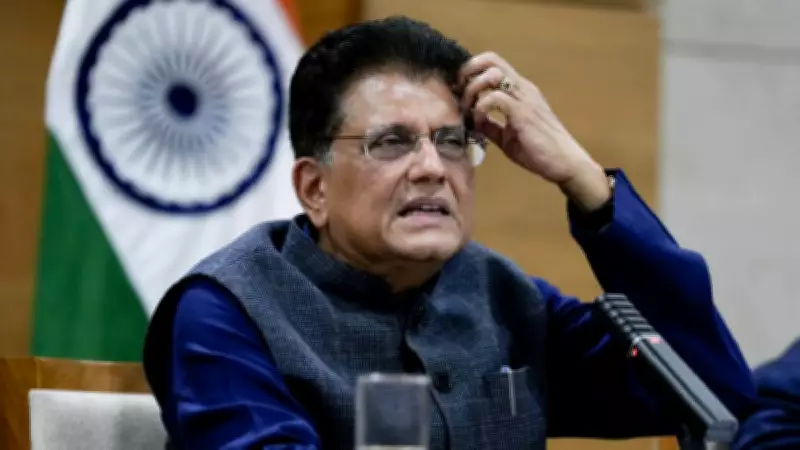
Commerce Minister Piyush Goyal Rebukes EU's Trade Approach, Emphasizes India's Economic Fortitude
In a pointed critique of European Union trade policies, Indian Commerce and Industry Minister Piyush Goyal has directly addressed EU Ambassador Sergio Gori, highlighting what he perceives as a fundamental flaw in the bloc's negotiation strategy. The minister's remarks came during a high-level discussion on bilateral trade relations, where he underscored India's growing economic resilience and its commitment to fair and reciprocal trade practices on the global stage.
Goyal's Sharp Retort on Tariff Disparities
Minister Goyal did not mince words when he stated, "If only you had made reciprocal tariff zero, you would possibly have won the match." This metaphorical reference to a "match" clearly alludes to the ongoing trade negotiations between India and the European Union. Goyal's comment suggests that the EU's insistence on maintaining high tariffs, while expecting concessions from India, has undermined its position and effectiveness in these critical discussions.
The minister elaborated that India has consistently advocated for a balanced and equitable trading environment. He pointed out that the current tariff structures imposed by the EU create significant barriers for Indian exports, particularly in sectors such as textiles, agriculture, and information technology. This imbalance, according to Goyal, not only hampers trade flows but also contradicts the principles of mutual benefit that should underpin international economic partnerships.

India's Strategic Economic Positioning and Growth Trajectory
Beyond the critique, Piyush Goyal took the opportunity to highlight India's remarkable economic performance and strategic advancements. He emphasized that India is no longer a passive participant in global trade but a dynamic and influential player with a rapidly expanding economy. The minister cited key indicators such as robust GDP growth, increasing foreign direct investment, and a thriving startup ecosystem as evidence of the nation's economic vitality.
Goyal asserted that India's trade policies are meticulously designed to protect domestic industries while fostering international collaboration. He mentioned initiatives like the Production Linked Incentive (PLI) schemes and efforts to enhance ease of doing business, which have bolstered manufacturing and exports. The minister also noted India's active engagement in multilateral forums, including the World Trade Organization, where it champions the interests of developing nations.
Implications for Future India-EU Trade Relations
The exchange between Goyal and Gori signals potential challenges ahead for the India-EU Free Trade Agreement (FTA) negotiations, which have seen intermittent progress over the years. Key sticking points include:
- Tariff Reductions: Disagreements on the extent and pace of lowering duties on goods and services.
- Non-Tariff Barriers: Issues related to standards, regulations, and market access beyond tariffs.
- Intellectual Property Rights: Differing views on protection and enforcement mechanisms.
- Sustainable Development: Integrating environmental and labor standards into trade agreements.
Goyal's comments suggest that India is prepared to take a firm stance, prioritizing its economic interests and the welfare of its citizens. He implied that the EU must demonstrate greater flexibility and reciprocity to achieve a mutually beneficial outcome. The minister's confidence reflects India's leverage as one of the world's fastest-growing major economies, attracting global interest for trade and investment.
Broader Context of Global Trade Dynamics
This development occurs against a backdrop of shifting global trade patterns, with nations reassessing their strategies in response to geopolitical tensions and economic uncertainties. India has been proactively forging trade partnerships with other regions, such as through agreements with the United Arab Emirates and Australia, diversifying its economic ties.

Piyush Goyal's remarks underscore a broader message: India is committed to engaging with the world on terms that ensure fairness and prosperity for all parties involved. As trade negotiations continue, his stance may influence not only EU relations but also India's approach to other trading partners, reinforcing its role as a key player in shaping the future of international commerce.