

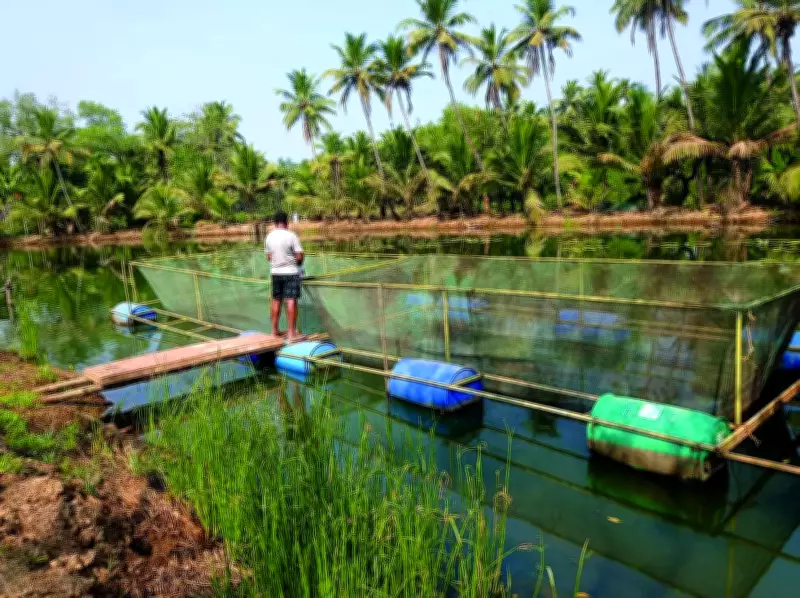
Goa Women Pioneers Embrace River Cage Aquaculture Under PMMSY
In a significant development for Goa's fisheries sector, two women entrepreneurs have successfully adopted river cage farming under the Pradhan Mantri Matsya Sampada Yojana (PMMSY), turning flowing waterways into productive aquaculture sites. This initiative highlights how modern techniques can create sustainable livelihoods while boosting local fish production.
Transforming Rivers into Thriving Fish Farms
Maria Joana Rosaria Fernandes from Panchwadi, Ponda, and Silvia Fernandes from Curtorim, Salcete, have become trailblazers in river cage aquaculture, an emerging practice that allows fish farming in open waterbodies like rivers and lakes. By establishing controlled environments within natural water flows, this method ensures consistent yields, stable income, and employment opportunities for coastal communities.
Cage culture represents a forward-thinking approach to aquaculture, leveraging flowing water to maintain fish health and growth while minimizing environmental impact. Fisheries officials emphasize that this model combines traditional knowledge with contemporary technology to achieve both ecological and economic benefits.

Maria's Sustainable Venture in Panchwadi
Maria installed six river cages in Muxer, Panchwadi, focusing on farming Asian seabass, locally known as Chonak, a fast-growing species with strong market demand. "With careful planning and modern techniques, we wanted to demonstrate that river farming could be both sustainable and profitable," explained a fisheries department official.
Each production cycle is projected to yield approximately 2.5 tonnes of fish, harvested at weights between 1 and 1.5 kilograms. The harvest is supplied directly to local markets, ensuring freshness and fair pricing for consumers. Maria highlighted the financial advantages, stating, "The subsidy covers the structure costs, and profits offset input expenses while guaranteeing quality fish. It's a win-win situation."
Silvia's Community-Focused Project in Curtorim
In Curtorim, Silvia established 12 river cages at Ullando, with a dual focus on aquaculture and women's empowerment. "This initiative aims to create opportunities for women and inspire others in the community to explore modern, eco-friendly livelihood methods," the official noted. Her project also centers on Asian seabass, targeting similar production volumes and market distribution.
Silvia detailed her operations, saying, "I stock about 500 fish seeds per cage across 12 cages, cultivating pomfret and Asian seabass. The venture is performing well, and I take pride in being among the few women in this sector. I encourage others, especially women, to utilize government schemes, pursue entrepreneurship, and achieve self-reliance."
Financial Support and Broader Impact
Both projects received substantial financial assistance under the women beneficiary category of PMMSY, with each entrepreneur granted a subsidy of Rs 10.8 lakh from the Goa State Directorate of Fisheries. This support has been crucial in enabling their ventures to take off and scale effectively.
Fisheries officials praised the achievements, noting, "The success of these fish farmers exemplifies how women can lead the Blue Revolution in Goa. These projects deliver fresh, high-quality fish to local communities while establishing sustainable livelihoods."
They further elaborated on the model's potential, adding, "River cage aquaculture is replicable, profitable, and environmentally responsible. With adequate support, technical expertise, and determination, small-scale fish farming can thrive and contribute to economic growth. We hope such initiatives inspire more women across Goa to become self-sufficient, aligning with the Swayampurna Goem model."

Key Benefits of River Cage Farming
- Environmental Sustainability: Utilizes natural water flows without significant ecological disruption.
- Economic Viability: Provides steady income through high-yield fish production.
- Community Empowerment: Creates employment and encourages women's participation in fisheries.
- Market Advantages: Ensures fresh, locally sourced fish with transparent pricing.
- Scalability: Offers a model that can be replicated in other suitable waterbodies.
The endeavors of Maria and Silvia underscore a growing trend toward innovative aquaculture in Goa, demonstrating how government schemes like PMMSY can catalyze rural entrepreneurship and food security. Their stories serve as powerful testimonials for the transformative potential of river cage farming in coastal regions.





