

Forests Emerge as Sustainable Livelihood Source for Yavatmal's Tribal Communities
As summer intensifies across rural India, many regions face severe employment shortages that force laborers to migrate in search of livelihood opportunities. However, in the tribal-dominated villages of Hivardhara and nearby Lahan Mohada in Ghatanji taluka of Yavatmal district, a remarkable transformation is underway. The surrounding forests have emerged as a sustainable source of income, effectively preventing the seasonal migration that plagues so many agricultural communities.
Forest Wealth Replaces Agricultural Downtime
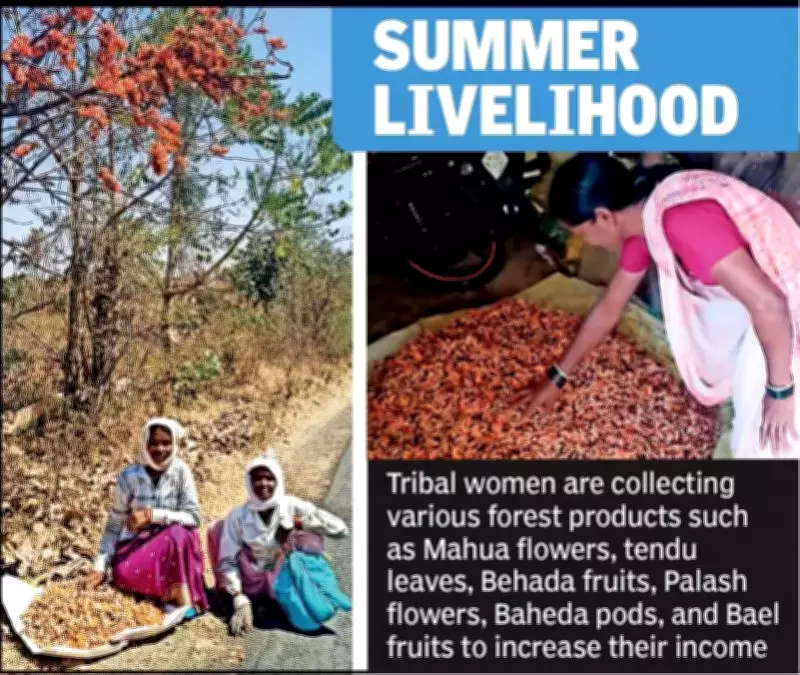
The forests adjoining these villages are remarkably rich in minor forest produce, wild fruits, and berries that are now providing steady employment to tribal laborers, with women playing a particularly significant role. Yavatmal district contains several talukas including Kelapur, Ghatanji, and Zari Jamani that are predominantly tribal regions with extensive forest cover. Due to the area's reliance on rain-fed agriculture, employment opportunities decline sharply after the cotton season concludes, often creating severe financial distress among laborers during the summer months.
Sarathi Sanstha's Transformative Initiative
A positive economic transformation has begun in the region through the initiative of the Sarathi Sanstha organization. The organization mobilized tribal women and educated them about the collection techniques and market value of various minor forest products. Through the concept of wild forest produce (known locally as raanmeva), even the otherwise idle summer months have become economically productive for these communities.

Rasul Sheikh, President of Sarathi Sanstha, explained their approach: "Since last year, we have been guiding tribal women on collecting minor forest produce such as wild fruits, seeds, Behada, Palash flowers, tendu leaves, and Bael fruits. We also help them access appropriate markets to ensure they receive fair value for their collections."
Impressive Economic Returns Without Investment
The economic potential of these forest resources is substantial. From a single Mahua tree, approximately 150-200kg of flowers can be collected, generating an income of around ₹15,000. Similarly, a Behada tree yields 200-250kg of fruit, adding nearly ₹1,500 to household income. Remarkably, these earnings require no investment in fertilizers or irrigation, making this a truly sustainable and cost-effective livelihood option during the challenging summer season.
Various forest products including Mahua flowers, tendu leaves, Behada fruits, Palash flowers, Baheda pods, and Bael fruits are now being systematically collected and marketed through organized channels. The diversity of products ensures a steady income stream throughout the summer months.
Growing Participation and Economic Impact
Encouraged by the fair returns achieved last year, villagers have shown significantly increased participation during the current season. This year's collections have included four quintals of Behada, one and a half tonnes of Palash flowers, along with substantial quantities of Bael fruits and Bahava pods. Within just one month, the total income generated has exceeded ₹1 lakh, providing a substantial boost to the economic condition of participating villagers.
This forest-based livelihood model represents more than just temporary income generation—it offers a sustainable alternative to migration, strengthens community resilience, and empowers tribal women economically. As climate patterns become increasingly unpredictable and agricultural employment more seasonal, such innovative approaches to rural livelihood creation may provide valuable lessons for other forest-rich regions across India.






