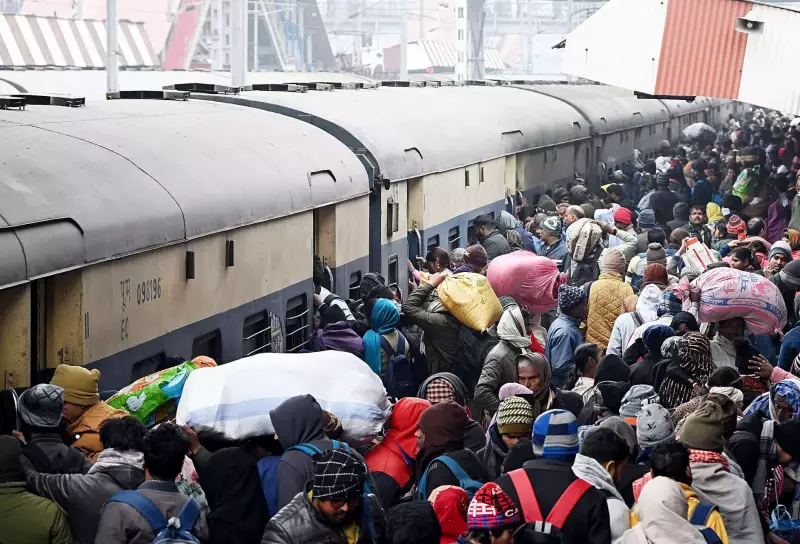
Passengers travelling to Bihar from the national capital faced immense difficulties on Friday as a severe cold wave and dense fog crippled railway operations, leading to abnormal delays for multiple important trains.
Major Trains Running Hours Behind Schedule
The situation was most critical during the early morning hours when visibility plummeted, severely affecting long-distance train movements on the crucial Delhi–Patna corridor. The New Delhi-Rajendra Nagar Terminal Tejas Rajdhani Express (12310) was delayed by almost five hours, compounding the misery of passengers already enduring freezing conditions.
In the opposite direction, the New Delhi-bound Tejas Rajdhani Express (12309), which had departed from Patna on Thursday, reached its destination with a delay of 5 hours and 28 minutes. Adding to the chaos, the New Delhi-bound Sampoorna Kranti Express (12393) also arrived six hours behind its scheduled time, according to official sources.

Widespread Disruption Across Multiple Routes
Information from the Danapur control room painted a grim picture of widespread delays. The New Delhi–Rajendra Nagar Terminal Sampoorna Kranti Express (12394) reached Patna more than two hours late. Other significant delays included:
- The New Delhi–Rajgir Shramjeevi Express (12392): Delayed by 1 hour and 20 minutes.
- The New Delhi–Islampur Magadh Express (20802): Ran 4 hours and 49 minutes late.
- The Anand Vihar–Danapur Janshatabdi Express (13258): Delayed by 1 hour and 30 minutes.
- The Anand Vihar–Bhagalpur Vikramshila Express (12368): Reached Patna nearly two hours late on Friday.
Financial Toll and Operational Challenges
Railway officials pointed to the persistent dense fog and inclement weather on the Delhi-Kanpur-Prayagraj route, especially within the North Central Railway zone, as the primary cause. This recurring weather phenomenon is not just an inconvenience but also leads to significant revenue loss for the railways due to widespread cancellations, diversions, and chronic late running of trains.
The combination of near-zero visibility and biting cold left hundreds of passengers stranded at stations for hours, turning journeys into ordeals. With the cold wave persisting, similar disruptions may continue to affect rail traffic in the region until weather conditions improve.