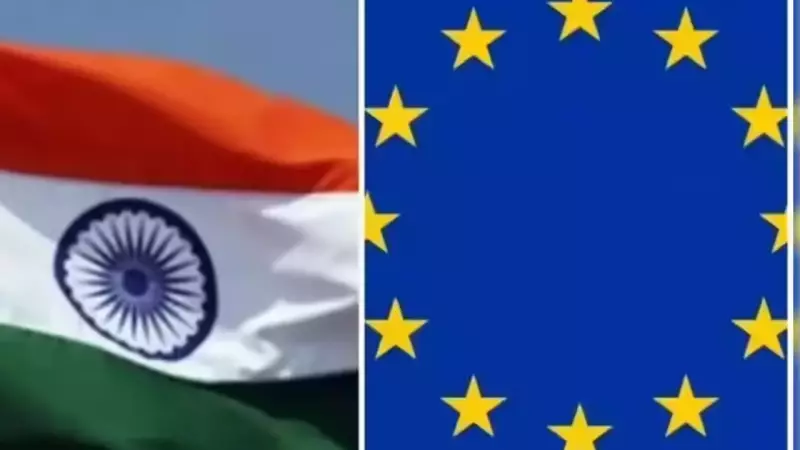
The European Union and India are preparing for a potentially transformative summit in late January, driven by growing uncertainties in global politics and the need for reliable partnerships. Both sides have outlined ambitious goals that could reshape not only their bilateral relations but also influence global economic and security agendas.
Ambitious Agenda for January Summit
The summit, tentatively scheduled for January 27, represents a crucial milestone in EU-India relations. Despite significant geopolitical differences, particularly regarding Russia, both parties have demonstrated strong political will to advance their partnership to the next level. The planned outcomes extend beyond the much-anticipated free trade agreement to include a comprehensive defence and security partnership and accelerated progress on the IMEC connectivity project.
These initiatives are expected to form the core of a joint statement following the summit. The EU's top leaders, Ursula von der Leyen and Antonio Costa, might also attend India's Republic Day parade on January 26, highlighting the importance both sides attach to strengthening ties.

Free Trade Agreement: Progress and Challenges
While negotiators have closed approximately twelve chapters so far, both sides express confidence about reaching a deal in time for the January summit. However, significant hurdles remain, particularly concerning steel exports, automotive market access, and the EU's Carbon Border Adjustment Mechanism (CBAM).
The EU has shown willingness to accommodate India's development stage by offering to liberalize five percentage points more trade than India does. According to diplomatic sources, 90-98% of work on most remaining chapters has been completed, including agricultural and non-agricultural market access. Yet the three sticking points require urgent political intervention.
India seeks greater clarity about its steel exports to EU markets, while the European bloc wants better market access for its automotive sector to make the agreement commercially meaningful. The carbon import tax remains particularly contentious, with concerns it could potentially derail the entire agreement.
Broader Strategic Cooperation
Beyond trade, the proposed EU-India Security and Defence Partnership represents a significant step forward. This collaboration would facilitate defence industrial cooperation while addressing concerns about technology leakage. Both sides recognize the importance of building resilient security architecture in an increasingly volatile global landscape.
The IMEC (India-Middle East-Europe Economic Corridor) connectivity project also features prominently in discussions. The EU aims to advance the EU-Africa-India Digital Corridor through a submarine cable system connecting Europe to India via the Mediterranean, Middle East, and Eastern Africa. This initiative promises ultra-high-speed, secure, and diversified data connectivity resilient to natural disasters or sabotage attempts.
Navigating Differences and Moving Forward
The Paris Agreement commitments present another area requiring delicate negotiation. While both nations have joined the climate treaty, the EU wants stronger environmental commitments integrated into the trade agreement, whereas India views this as a sovereignty issue that shouldn't be mixed with trade discussions.
Remarkably, India's continued purchase of Russian oil hasn't emerged as a significant obstacle in negotiations, indicating both sides' pragmatic approach to managing geopolitical differences. The EU will closely monitor the outcomes of Prime Minister Narendra Modi's December summit with Russian President Vladimir Putin, though this hasn't slowed current trade discussions.
The concept of a "living FTA" has gained traction, with both sides viewing the agreement as a platform that can evolve over time, allowing them to address difficult issues as they arise. This flexible approach acknowledges different development stages and sensitivities while creating mechanisms for ongoing dialogue and adjustment.

As the January summit approaches, political intervention at the highest levels will likely be necessary to break remaining deadlocks. The economic case for an EU-India FTA, always present according to European officials, has been reinforced by current geopolitical realities, creating unprecedented momentum for a comprehensive agreement that could define the future of this crucial partnership.