Beyond EVs: The Global Cycling Revolution Reshaping Urban Transport
Forget the hype around self-driving electric cars. A far more humble yet transformative technology is rapidly changing the face of urban mobility across the globe: the bicycle. From the boulevards of Paris to the streets of Montreal, a silent revolution is underway, powered by pedals and propelled by a confluence of factors that are making two wheels the preferred choice for millions.
The Numbers Don't Lie: Bicycles Are Winning the Race
On a sunny Thursday during rush hour on Montreal's Saint Denis Street, a simple count reveals the shift. Over ten minutes, 132 bicycles flowed smoothly in one direction, many carrying children. In the adjacent, much wider car lane, only 82 cars and one bus crawled bumper-to-bumper. This single bike lane saw over 14,000 cyclists in a single day in June. Under Mayor Valérie Plante, Montreal has emerged as North America's premier cycling city, with bicycles accounting for a fifth of all journeys in the Plateau neighborhood and over a third of the population cycling weekly.
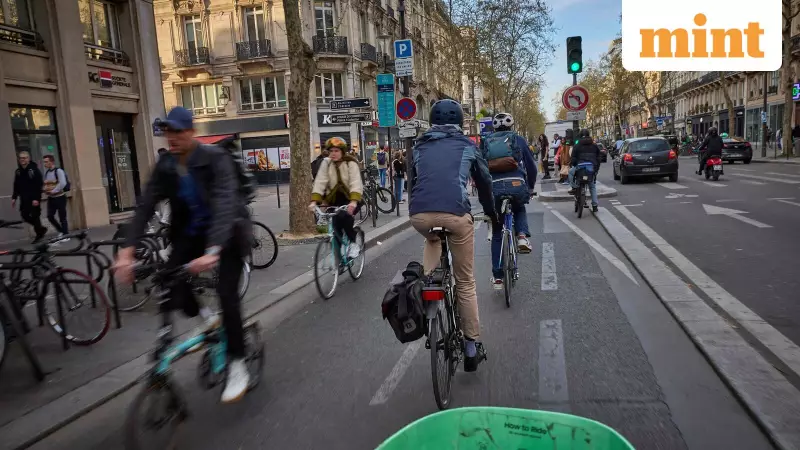
This is not an isolated trend. In London's financial district, cyclists now outnumber cars two to one. Paris has reached a point where cyclists outnumber motorists citywide, challenging traditional bike capitals like Amsterdam and Copenhagen, where nearly half of all commuter journeys are made by bike. Even in Beijing, after decades of car dominance, cycling is resurgent, albeit with fancier rides replacing the old black Flying Pigeons.

The Three Engines of the Two-Wheeled Renaissance
The Pandemic Push: COVID-19 acted as a massive accelerator. As commuters shunned public transport, bike sales soared. Governments installed pop-up bike lanes to encourage social distancing. Surveys show an 18% increase in bike purchases in the US and a 16% rise in weekly bike trips between 2019 and 2020. In Tokyo, 23% of businessmen switched to cycling to avoid crowded trains.
The E-Bike Boom: Advances in battery technology have made electric bicycles cheaper, more accessible, and more enjoyable. E-bikes open cycling to a broader demographic, allowing riders to arrive at work sweat-free and making it easier to transport children and groceries. They have also supercharged bike-share schemes; in Chicago, e-bikes in the "Divvy" scheme are ridden 70% more than traditional bikes.
Infrastructure Investment: The proliferation of separated bike lanes has been a game-changer. Historically, cycling declined because sharing roads with cars became lethally dangerous. Dedicated lanes have dramatically improved safety, creating a virtuous cycle: safer lanes encourage more cyclists. As former Vancouver planner Brent Toderian notes, well-built bike systems can effectively compete with cars and mitigate congestion.
The Culture War on Two Wheels
As cycling gains prominence, it has ignited a fierce cultural and political battle. The fight over road space and parking pits cyclists against motorists in a zero-sum conflict. In Montreal, despite bike lanes occupying less than 2% of road space, they are a hot-button issue in local elections, with opposition candidates calling for pauses or removals.
This "war on cars" rhetoric has been adopted by populist and right-leaning politicians globally. Figures like Britain's Nigel Farage decry bike lanes as "anti-car fanaticism," while in Berlin, a conservative administration suspended new bike lane projects upon taking power. In the US, the political divide is increasingly mirrored by car ownership, as seen in New York's Democratic primary where a car-free socialist candidate outperformed in low-driving districts.
Challenges on the Path Forward
The rise of e-bikes brings genuine concerns. Heavier, faster bikes, often ridden by novices, have led to more severe accidents. In London, shared e-bikes have been linked to a surge in leg fractures, while the Netherlands saw a record high in cyclist deaths in 2022. The proliferation of illegal, throttle-powered e-bikes, popular among delivery riders, further complicates safety, prompting crackdowns in cities like New York.

Despite these hurdles, the momentum appears unstoppable. In cities that have embraced cycling, reverting to car-clogged streets is unthinkable. From Dutch prime ministers pedaling to work to Danish royalty arriving at events on cargo bikes, the bicycle has been mainstreamed. Paris now faces a novel complaint: bicycle traffic jams. Montreal is nearing that point in summer. The humble bicycle, it seems, is here to stay, reshaping not just how we move, but the very fabric of our urban politics and culture.