

China Discovers Massive Uranium Reserve in Ordos Desert, Transforming Energy Landscape
While gold prices often dominate financial headlines, uranium is quietly emerging as a critical player in global energy circles. Amid fuel shortages exacerbated by geopolitical tensions like the US-Iran conflict, nations worldwide are increasingly turning to cleaner power sources. This shift has sparked a surging demand for nuclear fuel to operate massive reactors that generate carbon-free electricity for millions. In a groundbreaking development, China has struck gold in the uranium sector with a monumental discovery that could reshape its energy future.
Unprecedented Uranium Find in China's Desert Region
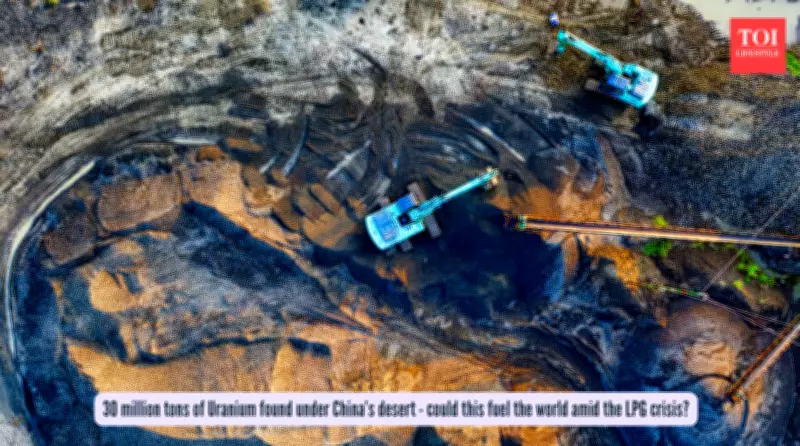
China recently announced the discovery of an enormous uranium deposit beneath the Ordos Desert in Inner Mongolia's Jingchuan area. According to a report from Futura Sciences, preliminary estimates indicate the reserve contains approximately 30 million tons of uranium. This super-large deposit, identified by the China Geological Survey (CGS) under the Ministry of Natural Resources, represents the world's first ultra-large uranium haul found in aeolian sandstone landforms.
The timing of this discovery could not be more perfect for China's energy strategy. The nation is aggressively transitioning away from fossil fuels and currently constructing 11 new nuclear reactors to meet its skyrocketing energy demands. This vast uranium reserve has the potential to power China for generations, significantly reducing its reliance on imports from major producers such as Kazakhstan, Canada, Australia, and Namibia.

Strategic Implications for China's Energy Security
According to China Daily, this uranium discovery is expected to greatly enhance China's energy security as its nuclear capacity expands. "The discovery is a game-changer for China's energy security," stated Lin Boqiang, head of the China Institute for Studies in Energy Policy at Xiamen University. CGS chief scientist Jin Ruoshi described the find as a "new frontier for uranium exploration worldwide," noting that aeolian sandstone covers approximately 200,000 square kilometers in the Ordos Basin, with similar geological formations in areas like Tarim and Junggar suggesting more discoveries may follow.
China is already extracting uranium from the Ordos region through its National Uranium No.1 project, which stands as the country's largest domestic mine. Zhao Xiangbin, chief strategist at Beijing Gold and Forex Fortune Investment Management, emphasized that this domestic resource serves as a "safeguard against supply chain vulnerabilities" for China's nuclear energy push.
Global Market Impact and Environmental Considerations
If China proceeds with large-scale mining of this uranium reserve, it could potentially flood the global market, leading to price reductions and altering international trade dynamics. Achieving self-sufficiency in uranium would diminish foreign influence over China's energy policies, strengthening Beijing's position in climate negotiations and energy agreements.
However, desert mining presents significant challenges that must be addressed:
- Water-intensive operations in an arid, fragile ecosystem
- Management of radioactive waste materials
- Potential ecological impacts on the desert environment
- Worker safety protocols and community acceptance dependent on environmental safeguards
Despite these challenges, the Ordos uranium discovery fits strategically into China's broader energy mix, complementing its investments in nuclear, solar, and wind power to create a more sustainable, low-carbon energy future. This development comes at a crucial moment when global energy security concerns are driving renewed interest in nuclear power as a reliable, emissions-free electricity source.






