

Bengaluru's Historic KR Market Unveils State-of-the-Art Parking Facility
In the bustling heart of Bengaluru, the iconic KR Market has long served as a vital trade and transport hub, yet for over two decades, it has struggled with a notorious parking crisis. The designated underground parking area was once a dim, foul-smelling space, largely avoided by the public and known more for illicit activities than vehicle storage. However, after nearly 26 years since the market's new building was inaugurated, a remarkable transformation has taken place, turning this neglected zone into a high-tech parking facility poised to revitalize the area.
A Modern Makeover with Cultural Flair
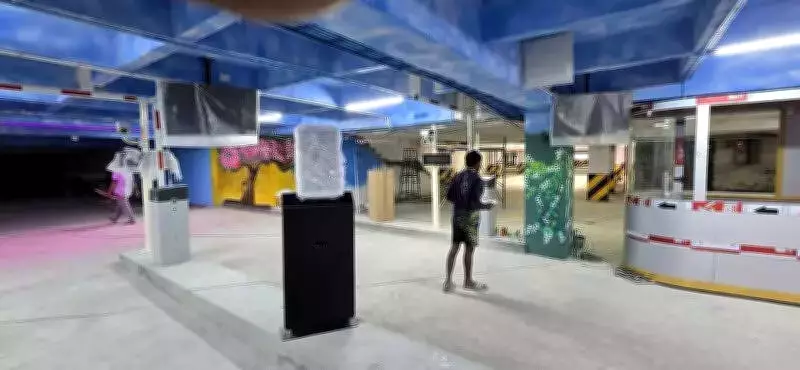
The revamped single-floor parking lot now boasts the capacity to accommodate up to 200 cars and 400 two-wheelers, addressing long-standing congestion issues. Awaiting its formal inauguration, with work 90% complete, the facility will greet visitors with vibrant floral decor, wall drawings depicting the market's rich origins, a statue of Kempegowda, and fully illuminated surroundings. Decorative elephant trunk designs on new pillars seamlessly blend traditional cultural aesthetics with contemporary infrastructure, creating a welcoming environment.
Public-Private Partnership Drives Change
This overhaul stems from a strategic initiative by the Greater Bengaluru Authority (GBA), which awarded a 10-year tender to Right Parking in September 2025 for the revamp and operation of the facility. The company invested approximately Rs 6 crore to modernize the structure, with a contractual agreement to pay Rs 4.5 lakh monthly to the Bengaluru Central city corporation. Kumar, Managing Director of Right Parking, emphasized that maintaining cleanliness and ensuring the space is used strictly for parking are top priorities. "It should not be used for spitting or other misuse," he stated, highlighting efforts to curb past abuses.

Overcoming Significant Challenges
The transformation required extensive efforts, including the removal of 210 abandoned vehicles—such as small trucks—handed over to Halsuru Gate police, and clearing nearly 260 tractor-loads of accumulated waste. Structural repairs were critical, with 82 open holes on the first floor previously allowing rainwater to flood the parking area, causing damage. Kumar confirmed, "We've sealed and covered all of them," and redesigned the system to channel rainwater into tanks, preventing waterlogging.
While the underground levels are now clean and organized, the ground and first floors, part of the active market, still reflect the typical chaos and dirt of a bustling commercial zone. GBA chief commissioner Maheshwar Rao and Bengaluru Central city commissioner Rajendra Cholan recently visited, even stopping for tea in the parking area—a stark contrast to its former state. Kumar remarked, "From not being able to even stand here to commissioners sitting and having tea in the same place... it reflects the transformation we've achieved."
Community Perspectives and Future Prospects
Local stakeholders express cautious optimism. Divakar GM, president of the KR Market Vendors' Association, noted that affordability and accessibility will be key to success. "The parking charges should be affordable. Vendors cannot pay high amounts daily, and even regular users may find it difficult," he said, adding concerns about limited space due to post-Covid-19 shop expansions onto walkways. Nagaraj, a vendor, highlighted how the lack of parking had reduced footfall, with vehicles parked haphazardly in front of shops. "We're told the market will reopen very soon, and that should help vendors as customers will have more space to walk and shop," he explained.
Regular visitors like Narasimhamurthy from Nandini Layout are eager for the change. "I haven't seen the new parking lot yet, but am excited. It will be very beneficial if we can park our vehicles in a safe, designated space instead of doing so randomly on the roads," he shared. The long-term success of this initiative hinges on public civic sense and the effective use of technology, as noted by the contractor.
This development marks a significant step in Bengaluru's urban infrastructure, aiming to enhance the market experience for vendors and shoppers alike while preserving the area's cultural heritage.






