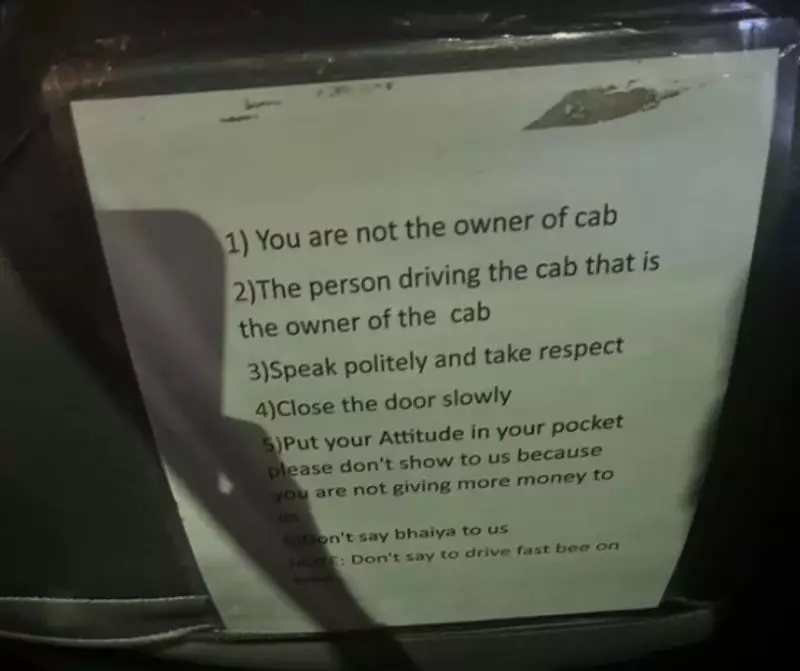
A Bengaluru-based cab driver has taken social media by storm with his straightforward list of rules for passengers, sparking a heated nationwide conversation about respect, professional boundaries, and customer service etiquette in India's ride-hailing ecosystem.
The Viral Rules That Started It All
The controversy began when a passenger shared a photo of the rules displayed inside the cab of driver Nagaraj, who drives for the ride-hailing platform Rapido in Bengaluru. The list contained several direct instructions that immediately caught passengers' attention and eventually went viral across multiple social media platforms.
The most prominent rule that sparked immediate discussion was "Don't call me Bhaiya" - a common term used across India to address male strangers, particularly those in service roles. Other rules included instructions not to honk unnecessarily, not to play music without permission, and not to eat inside the vehicle.

Nagaraj, the driver behind these rules, explained his perspective in subsequent interviews. He emphasized that his intention wasn't to be rude but to establish professional boundaries and mutual respect. "When passengers call me 'Bhaiya,' it feels informal and sometimes disrespectful," he stated. "I prefer being called 'sir' or simply using my name, which shows professional courtesy."
Public Reaction and Social Media Storm
The viral post triggered an enormous response across social media platforms, with opinions sharply divided between supporters and critics of Nagaraj's approach.
Many users defended the cab driver's right to set professional boundaries. One social media user commented, "He's absolutely right. Why should service staff tolerate informal address if they're uncomfortable with it? Respect should be mutual." Another supporter added, "This is about dignity of labor. Cab drivers are professionals providing a service, not your younger brothers."
However, critics argued that the rules came across as overly strict and unfriendly. Some passengers expressed concern that such demands might create an uncomfortable atmosphere during rides. "The term 'Bhaiya' is often used affectionately in Indian culture," one comment read. "Making an issue out of it seems unnecessary."
The debate expanded beyond the specific rules to address broader questions about the gig economy, worker rights, and customer service expectations in modern India. Many pointed out that the incident reflects changing dynamics in how service professionals view their work and demand respect.
Broader Implications for Service Industry
This incident has opened up important conversations about the treatment of service workers across various industries in India. Experts suggest that Nagaraj's rules represent a growing trend among service professionals asserting their dignity and demanding to be treated as equals rather than subordinates.
The discussion has also highlighted regional cultural differences in addressing service providers. While terms like "Bhaiya" are common in northern India, southern states like Karnataka typically use different forms of address. This cultural context adds another layer to understanding the driver's perspective.
Ride-hailing companies are increasingly facing questions about how to balance passenger comfort with driver dignity. The viral incident has prompted discussions about whether platforms should establish clearer guidelines about respectful communication between both parties.
As the debate continues, one thing remains clear: the conversation started by one Bengaluru cab driver has touched a national nerve, forcing Indians to examine their own behavior and attitudes toward service workers. The incident serves as a reminder that mutual respect forms the foundation of positive interactions in any professional context, whether in a cab or any other service environment.