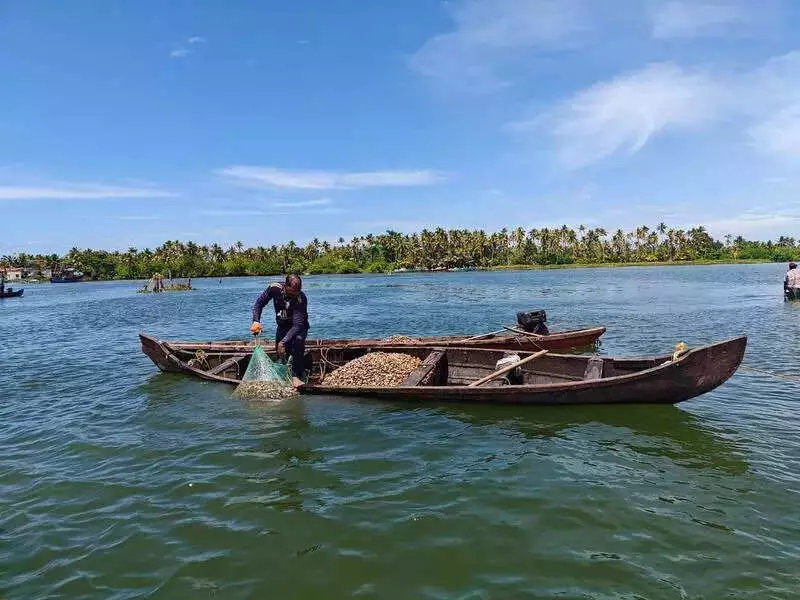
Encouraging signs of revival have been detected in the depleted population of short-neck clams in Kerala's Ashtamudi Lake, a year after a major scientific intervention. The Central Marine Fisheries Research Institute (CMFRI) reports early evidence of recovery following its ambitious stock enhancement programme launched in the lake.
Hatchery Success and High Survival Rate
The positive trend stems from an initiative led by M K Anil, principal scientist at CMFRI. Last year, the institute's Vizhinjam Regional Centre released a massive 3 million hatchery-produced clam seeds into Ashtamudi Lake. This intervention was crucial, as the clam stock had suffered severe depletion following the devastating 2018 floods and subsequent environmental changes.
The results have been promising. A simultaneous sea-ranching experiment for monitoring revealed a remarkably high survival rate of 80% for the released clams. Even more impressive was their growth rate; the ranched clams achieved a marketable size of 34mm in just seven months. This rapid growth demonstrates the strong viability of using hatchery-based stock enhancement as a practical management tool for restoring the lake's ecosystem.

Evidence of Natural Recruitment and Healthy Population
CMFRI's shellfish fisheries division has maintained vigilant, year-round monitoring of the lake's clam beds. A resource-mapping survey conducted under the leadership of principal scientist Geetha Sasikumar provided concrete evidence of successful natural reproduction. The survey confirmed a widespread spatfall (settlement of young clams) in October.
Field data shows clear signs of this natural recruitment. The smallest spat recorded recently measured just 2.38mm. Furthermore, scientists observed a multi-modal length distribution across the clam beds. This pattern indicates the presence of a healthy, multi-cohort population, meaning clams of various ages and sizes are thriving together, which is a key indicator of a recovering stock.
A Fragile Recovery Demands Protective Measures
Despite the optimistic data, CMFRI experts have issued a note of caution, stating that the recovery is still fragile. The spawning season for the clams began in October, making the subsequent months critically important for the survival of the juvenile population.
To safeguard these early gains, CMFRI has formally recommended imposing a three-month fishery closure from December 1 to February 28. This measure is designed to protect the clams during their most vulnerable early growth and spawning phase. The recommended closure is not a new concept; it is a continuation of an annual practice already supported by local fishers and implemented by the state fisheries department. This collective agreement highlights the community's commitment to long-term sustainability.
The early success in Ashtamudi Lake offers a model for restoring other depleted shellfish resources across India's coastal waters, balancing ecological health with the livelihoods of fishing communities.