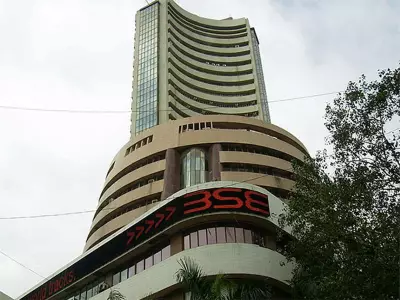
Budget 2026 STT Hike Triggers Sharp Market Correction
The Indian stock market experienced a dramatic intraday decline of up to 3% on Sunday, February 1, following Finance Minister Nirmala Sitharaman's Budget 2026 proposal to significantly increase the Securities Transaction Tax on derivatives trading. The sudden sell-off reflected immediate market concerns about rising transaction costs, though indices later recovered some ground to close approximately 2% lower.
Substantial STT Increases Announced
In her budget speech, Finance Minister Sitharaman outlined specific increases that would substantially raise trading costs for derivatives participants. The STT on futures transactions was proposed to rise to 0.05% from the current 0.02%, representing a 150% increase. Meanwhile, STT on options transactions was proposed to jump to 0.15% from the earlier 0.01%, marking an even more dramatic 1,400% increase.
"I propose to raise the STT on Futures to 0.05% from the present 0.02%," Sitharaman stated during her parliamentary address. "STT on options premium and exercise of options are both proposed to be raised to 0.15% from the present rate of 0.1% and 0.125%, respectively."

Practical Impact on Traders
The practical implications of these changes are significant for market participants. For every ₹1 lakh worth of futures sold, traders will now pay ₹20 as STT compared to the previous ₹12.50. Similarly, on a ₹10,000 options contract sale, STT has risen to ₹10 from ₹6.25 earlier. These increased costs directly affect profitability and trading strategies across the derivatives ecosystem.
Market Reaction and Financial Impact
Following the announcement, benchmark indices witnessed substantial declines. The BSE Sensex fell 1,547 points, or 1.88%, to close at 80,722.94, while the Nifty 50 declined 495 points, or 1.96%, to settle at 24,825.45. The total market capitalisation of BSE-listed companies dropped from ₹460 lakh crore to ₹450 lakh crore in a single session, representing an erosion of nearly ₹10 lakh crore in investor wealth.
Expert Analysis on STT Implications
Broader Market Consequences
Jimeet Modi, Founder & CEO of SAMCO Group, believes the STT increase carries deeper implications than surface-level analysis suggests. "On our India Budget Strength Index, this budget scores a 4/10 — essentially a defensive budget that preserves stability but misses a major growth and capital-market opportunity," he commented.
Modi explained that while fiscal discipline remains intact, the higher STT could weaken India's global capital attractiveness by affecting market microstructure. According to his assessment, higher derivatives costs might reduce trading volumes, potentially spilling over into lower cash market activity, thinner liquidity, and a higher liquidity premium demanded by global investors. Over time, these factors could influence valuation multiples, fundraising conditions, and capital allocation decisions.
Understanding Securities Transaction Tax
Securities Transaction Tax is a levy imposed on the purchase and sale of securities such as shares, futures, and options traded on recognised Indian stock exchanges. Originally introduced to curb tax evasion and improve market transparency, STT is collected during each transaction and varies based on trade type and instrument. The tax directly increases transaction costs for traders and investors, particularly those active in derivatives, as it is charged on traded value or premium, impacting overall post-tax returns.
Why the Correction May Be Temporary
Immediate vs. Structural Factors
Market analysts suggest the sharp reaction was primarily driven by immediate repricing of derivatives strategies rather than deterioration in India's macroeconomic or earnings outlook. Traders, arbitrageurs, and high-frequency participants were among the first to unwind positions as transaction costs rose sharply. Many experts believe that once this mechanical adjustment settles, markets are likely to refocus on fundamentals including earnings visibility, fiscal prudence, and the record capital expenditure push outlined in the Budget.

Foreign Investor Perspective
Aakash Shah, Technical Research Analyst at Choice Equity Broking, noted, "However, for long-only, fundamentally driven FPIs, the STT hike is unlikely to be a deal-breaker. Their investment decisions are more influenced by earnings visibility, currency stability, and policy predictability." He added that while higher transaction costs may reduce tactical participation and nudge some global allocators toward other Asian markets at the margin, sustained foreign flows will depend far more on macro stability, rupee movement, and tax policy consistency.
Budget's Macro Framework Remains Strong
The Budget's macroeconomic framework continues to reassure long-term investors. With a fiscal deficit target of 4.3% for FY27 and a record ₹12.2 lakh crore capital expenditure allocation, the government has reinforced the ongoing investment cycle across infrastructure, capital goods, and manufacturing sectors.
Prasenjit Paul, Equity Research Analyst at Paul Asset & Fund Manager at 129 Wealth Fund, said, "The stock market has reacted negatively to the STT hike on F&O (up to 0.05%) and the new tax treatment for buybacks, triggering a sharp intraday sell-off in the Nifty and Sensex." He emphasised that despite near-term volatility, the Budget remains structurally sound, supported by fiscal consolidation, infrastructure risk guarantees, and asset monetisation measures aimed at crowding in private capital and sustaining earnings momentum.
Knee-Jerk Reaction Assessment
Market veterans have largely described the fall as a knee-jerk reaction rather than a structural shift. Dhiraj Relli, MD & CEO of HDFC Securities, observed, "The immediate correction appears to be a knee-jerk response. I remain confident that investors should maintain their market participation, focusing strategically on sectors with strong earnings visibility." He pointed out that finer Budget details contain multiple provisions that will become more apparent over time and collectively support sustainable growth through FY27, even if the enhanced STT regime creates short-term headwinds.
Long-Term Market Outlook
As initial reactions subside, experts anticipate the market narrative shifting back to earnings growth, government capital expenditure momentum, and macroeconomic stability. Historically, policy-led volatility has often been followed by recoveries once traders adjust to new cost structures and long-term investors reassert their focus on fundamental factors.
With fiscal credibility intact, reforms in bond markets, improved foreign investment access, and continued infrastructure push, the broader equity story remains well supported. The immediate fall appears primarily driven by higher transaction costs in derivatives rather than any significant change in India's structural growth outlook, suggesting the correction may indeed prove temporary as markets digest the new taxation framework.