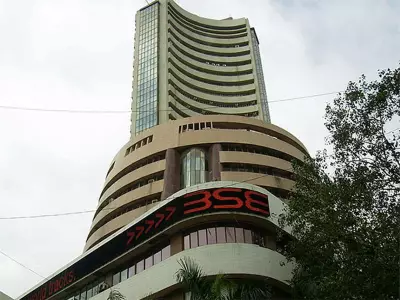
The Indian stock market has emerged as a favored investment destination for citizens across demographics, from experienced investors to younger millennials. This popularity is largely driven by accessible investment vehicles such as Systematic Investment Plans (SIPs) in mutual funds, which allow for disciplined and regular investing. However, the investment journey is significantly hampered by a dual taxation framework that includes both the Securities Transaction Tax (STT) and capital gains tax, creating financial burdens for investors.
Understanding the Securities Transaction Tax (STT)
STT is a levy imposed by the Indian government on the value of securities traded on recognized stock exchanges. This encompasses a wide range of financial instruments, including stocks, mutual funds, and derivatives. The tax is applied to the total transaction value, irrespective of whether the trade results in a profit or a loss. Consequently, investors are required to pay STT even in scenarios where their investments do not yield gains, adding to their overall costs.
Historical Context and Introduction of STT
STT was introduced in 2004 by then-Finance Minister P. Chidambaram, as part of a broader tax simplification effort. At that time, the long-term capital gains (LTCG) tax on securities traded on recognized exchanges was eliminated. The rationale behind this move was to create a streamlined tax system: the government would secure a steady stream of revenue from STT, while investors would enjoy tax-free long-term gains, thereby encouraging market participation.

The Return of Capital Gains Tax
For 14 years, this arrangement operated smoothly. However, as the stock market began generating substantial returns, the government reintroduced the LTCG tax on April 1, 2018. Under the revised regime, long-term capital gains exceeding INR 1 lakh in a financial year are subject to a 10% tax. For securities purchased before January 31, 2018, the cost is calculated as of that date, without any inflation adjustments, which can impact the taxable amount.
Current Taxation Structure and Its Implications
With the reinstatement of LTCG, STT remained in effect, leading to a situation where investors now face both taxes. This means that for every transaction, an investor must first pay STT and then, depending on the holding period, either a 20% short-term capital gains (STCG) tax or a 12.5% LTCG tax on gains above the exemption threshold. Notably, the LTCG tax rate was increased to 12.5% starting July 23, 2024, while the exemption limit saw only a marginal rise to INR 1.25 lakh.
Additionally, the STCG tax, applicable to profits from securities held for less than a year, has undergone increases over time—from 10% to 15% in 2008, and further to 20% in 2024. This layered taxation approach complicates investment decisions and increases the financial load on investors.
Impact on Investors and Policy Recommendations
The double taxation structure poses significant challenges for investors, particularly in an environment where savings are dwindling due to rising living costs. For long-term investors, eliminating the LTCG tax would provide substantial relief. If complete removal is not feasible, reducing the LTCG rate from 12.5% to approximately 5% could be beneficial. Similarly, lowering the STCG tax from 20% back to its previous level of 10% might encourage more active investment and market participation.
Considerations for Salaried Individuals
A notable issue is that salaried individuals earning less than INR 12 lakh annually do not qualify for a rebate on LTCG, even if their total income, including LTCG, falls below this threshold. This forces them to pay tax on LTCG exceeding INR 1.25 lakh, despite having modest overall incomes, which can be a significant financial strain.
Looking Ahead to Budget 2026
For India to maintain a vibrant and inclusive stock market, decisive policy action is needed to address the double taxation burden. As we approach Budget 2026, there is hope that the government will reconsider the current tax structure to foster a more conducive investment environment. By balancing tax revenues with investor incentives, policymakers can support economic growth and enhance the financial well-being of citizens, ultimately strengthening the stock market ecosystem.
Views expressed are personal.