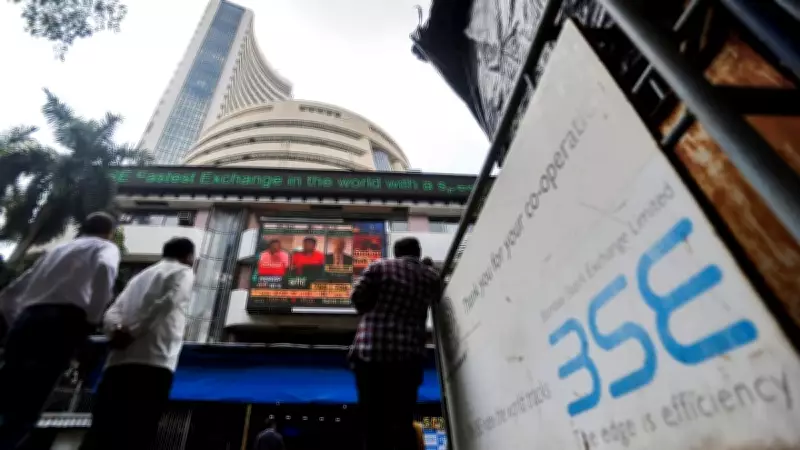
Indian stock markets experienced a notable downturn during the early trading session on Wednesday, February 5, 2026, marking a reversal from the previous three-day rally that had buoyed investor sentiment. The benchmark indices opened on a bearish note and continued to slide, reflecting renewed caution among market participants.
Sharp Decline in Key Indices
The 30-share BSE Sensex, a key barometer of the Indian equity market, recorded a substantial drop of 278.72 points, settling at 83,538.97. This decline represents a significant pullback from recent gains, highlighting the volatility that often characterizes stock market movements.
Similarly, the broader 50-share NSE Nifty index also faced downward pressure, declining by 94.15 points to reach 25,681.85. The simultaneous fall in both major indices underscores a broad-based sell-off across various sectors, potentially driven by profit-booking after the recent rally or external economic factors.

Context of the Three-Day Rally
Prior to this decline, Indian stock markets had enjoyed a three-day rally, which had lifted indices to higher levels. This rally was likely fueled by positive domestic cues, such as encouraging corporate earnings, government policy announcements, or global market trends. However, the early trade reversal suggests that the momentum may have been unsustainable, leading to a correction as investors reassessed risks.
The bearish opening indicates that market sentiment shifted overnight, possibly due to developments in international markets, changes in commodity prices, or domestic economic data releases. Such fluctuations are common in stock trading, where periods of gains are often followed by corrections as part of normal market cycles.
Implications for Investors
This early trade decline serves as a reminder of the inherent volatility in equity markets. Investors are advised to monitor key support and resistance levels, with the Sensex now hovering around 83,538.97 and the Nifty at 25,681.85. Technical analysts may view these levels as critical for determining future market direction.
Market experts often recommend a cautious approach during such phases, emphasizing diversification and long-term investment strategies over short-term trading. The decline after a rally could present buying opportunities for value investors, but it also highlights the importance of risk management in portfolio planning.
As trading progresses throughout the day, further movements in the indices will be closely watched for signs of recovery or continued weakness. Factors such as foreign institutional investor activity, rupee fluctuations, and global economic news could influence market trends in the coming sessions.