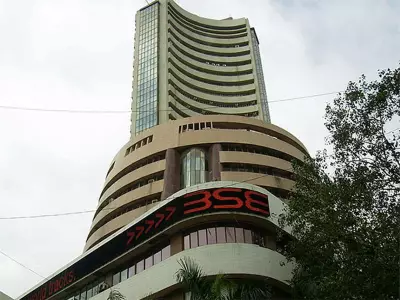
Indian Stock Markets Turn Rangebound After US-India Deal Rally
A day after clocking stellar gains of 2.5% each, the Sensex and the Nifty 50 traded rangebound on Wednesday, February 4, swinging between gains and losses. The Sensex dropped over 600 points to an intraday low of 83,120, while the Nifty 50 dropped to 25,570 during the session. The mid and small-cap segments also witnessed significant selling pressure, indicating broader market weakness.
Why the Rally Could Not Sustain
The domestic market had seen a sharp rally on Tuesday following the announcement of an India-US trade deal. This agreement, which reduced US tariffs on Indian goods from 50% to 18%, represents a significant positive development for the Indian economy. Sectors such as textiles, seafood, chemicals, auto ancillaries, and new energy businesses like solar are expected to benefit substantially.
However, the initial optimism quickly fizzled out. A primary reason is that the market is seeking more clarity on the intricate details of the deal. Moreover, US President Donald Trump's unpredictability remains a key concern for global markets. Tariffs continue to be a central strategy of the Trump administration, and there is no certainty regarding his future stance on tariffs affecting India. His recent actions towards South Korea and Europe have highlighted this unpredictability.

Growth-Valuation Mismatch and Earnings Concerns
Another critical factor is the growth-valuation mismatch in Indian equities, driven by weak corporate earnings. While large-cap stocks are trading near their historical averages, mid and small-cap segments remain at stretched valuations. This discrepancy is likely to keep any market rally short-lived, as fundamentals take precedence.
The market's focus has decisively shifted back to core fundamentals. Although positive triggers such as trade deal optimism, Budget expectations, and policy announcements exist, the sustainability of any rally ultimately hinges on earnings growth. VK Vijayakumar, Chief Investment Strategist at Geojit Investments Limited, noted, "The rally fuelled by the US-India trade deal will face hurdles to sustain. Since valuations continue to be high, there is no fundamental support for a sustained rally."
Liquidity and Retail Participation
Liquidity could be a contributing factor, particularly in mid- and small-cap stocks where retail participation is notably high. Some investors may be locking in gains or adopting a cautious stance due to heightened volatility. However, the overarching issue appears to be unimpressive earnings performance across sectors.
Ajit Mishra, SVP of Research at Religare Broking, emphasized, "Over the long term, earnings dictate market direction. Events like the Budget, trade deals, or industry-level announcements can influence sentiment in the short run, leading to sharp reactions. But for the market to sustain gains, earnings backing is essential."
Market Discounting Mechanism and Policy Impact
Mishra underscored that markets operate on a discounting mechanism. Even with positive news flow, the market may lack confidence in the earnings outlook for upcoming quarters. "Investors want to see whether policy announcements translate into actual earnings improvement. It may take time for policy decisions to show real impact on corporate earnings. Until then, the market is likely to remain range-bound," he added.
The headline indices are hovering near their record highs, but the real pressure is evident in mid-cap and small-cap portfolios. "Large caps have held up better, keeping the benchmark indices resilient. But the broader market is still struggling due to a lack of earnings stability. Unimpressive earnings, combined with elevated valuations in certain segments, have created a valuation-growth mismatch. This is keeping investors cautious," Mishra explained.
Geopolitical Risks and Future Outlook
Geopolitical risks also remain a significant overhang. For instance, any escalation involving Iran could push crude oil prices sharply higher. Since India is a major oil importer, a spike in crude prices could adversely affect the economy and dampen market sentiment.

In the short term, market reactions will continue to be driven by sentiment surrounding events like trade developments and policy announcements. However, as Mishra articulates, for a meaningful and sustained recovery, earnings growth and stability are imperative—especially for mid- and small-cap stocks. The path forward requires a concrete demonstration of corporate profitability to support current valuations and foster lasting investor confidence.