

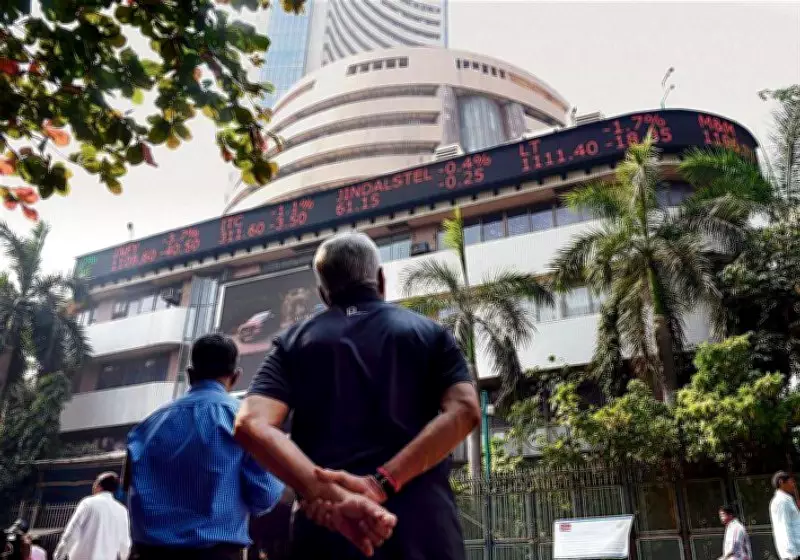
Indian Stock Markets Tumble as Geopolitical Tensions Escalate
The Indian equity markets experienced a significant downturn on Monday, with benchmark indices plunging sharply as the ongoing conflict between Iran and Israel entered its fourth week. The sustained geopolitical tensions have triggered a surge in crude oil prices, creating widespread anxiety among investors and leading to substantial market losses.
Market Performance Details
The 30-share BSE Sensex witnessed a dramatic fall of 1,555.62 points, representing a decline of 2 percent, settling at 72,977.34 during initial trading hours. Similarly, the broader 50-share NSE Nifty tanked 479.95 points, also marking a 2 percent drop, to close at 22,634.55. This substantial decline reflects growing concerns about the economic impact of prolonged Middle Eastern instability.
Key Contributors to Market Weakness
Among the Sensex constituents, several major companies faced significant losses. Tata Steel, State Bank of India, Bajaj Finance, Bharat Electronics, Titan, and Adani Ports emerged as the biggest laggards during the trading session. HCL Tech stood out as the sole gainer amidst the widespread market downturn, providing minimal relief to overall market sentiment.

Global Factors Influencing Indian Markets
The international energy markets showed clear signs of strain, with Brent crude oil, the global benchmark, climbing 0.62 percent to reach USD 112.9 per barrel. This price increase directly correlates with escalating tensions in the Middle East, particularly around the strategic Strait of Hormuz, where potential supply disruptions could severely impact global energy markets.
Asian markets mirrored the negative trend, with South Korea's Kospi diving nearly 6 percent, Japan's Nikkei 225 index declining approximately 4.6 percent, and both Shanghai's SSE Composite index and Hong Kong's Hang Seng index trading sharply lower. The US market had already set a negative precedent by ending significantly lower on Friday, creating a domino effect across global exchanges.
Expert Analysis and Investor Behavior
Hariprasad K, Research Analyst and Founder of Livelong Wealth, commented on the situation, stating, "The weakness reflects a significant deterioration in global risk sentiment, as geopolitical tensions in the Middle East continue to escalate. Asian markets have opened deep in the red, with Japan's Nikkei declining nearly 4.6 percent and South Korea's Kospi falling over 6 percent, underscoring a broad-based risk-off move."
He further explained, "The escalation in rhetoric between the United States and Iran, particularly around the strategic Strait of Hormuz, has heightened fears of potential supply disruptions in global energy markets."
Foreign Institutional Investors demonstrated cautious behavior by offloading equities worth Rs 5,518.39 crore on Friday, according to exchange data. In contrast, Domestic Institutional Investors showed some resilience by purchasing stocks worth Rs 5,706.23 crore. However, the broader trend remains concerning, with foreign investors having pulled out approximately Rs 88,180 crore (about USD 9.6 billion) from Indian equities so far this month.
Broader Market Implications
The combination of geopolitical uncertainty, rising energy costs, and persistent foreign fund outflows has created a perfect storm for Indian markets. The sustained conflict in the Middle East continues to drive volatility, while higher crude oil prices threaten to increase inflationary pressures and potentially slow economic growth. Market analysts suggest that until there is clarity on the resolution of international tensions and stabilization of energy markets, investor sentiment is likely to remain subdued.
The current market scenario underscores the interconnected nature of global economies and how regional conflicts can have far-reaching financial consequences. Investors are advised to monitor developments in the Middle East closely, as well as track crude oil price movements and foreign investment patterns, which will likely continue to influence market direction in the coming weeks.






