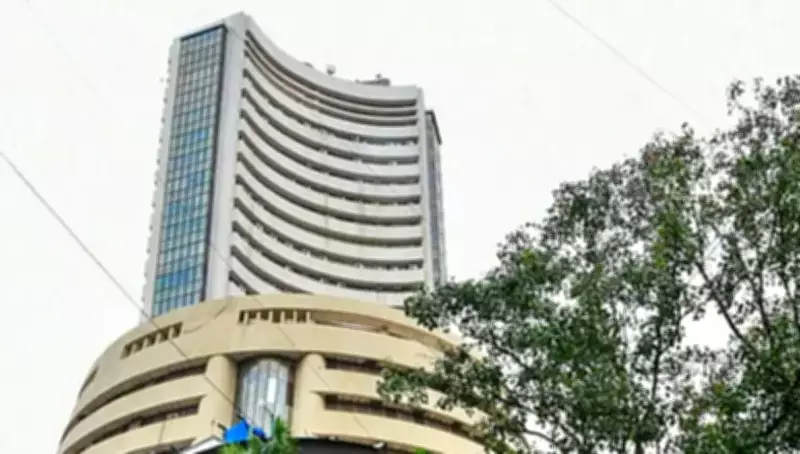
Major Market Meltdown on Dalal Street
Indian equity markets experienced a dramatic and widespread selloff on Tuesday, March 19, 2026, with benchmark indices plunging sharply in what analysts are terming a "bloodbath" session. The selloff was intense and broad-based, affecting nearly all sectors and leading to significant losses for investors across the board.
Sharp Decline in Key Indices
The benchmark S&P BSE Sensex, which tracks 30 of the largest and most actively traded stocks on the Bombay Stock Exchange, witnessed a staggering fall of 2,496 points. This represents one of the most substantial single-day drops in recent memory, highlighting the severity of the market turmoil.
Similarly, the broader NSE Nifty 50 index, comprising 50 major stocks from various sectors, tumbled by 775.65 points to close at the 23,002 level. This sharp decline pushed the Nifty below key psychological and technical support levels, signaling deep bearish sentiment among market participants.

Factors Behind the Market Crash
Market experts and financial analysts have pointed to a confluence of domestic and international factors driving this aggressive selloff. On the global front, renewed fears over economic slowdowns in major economies, coupled with geopolitical tensions, have created a risk-averse environment. This has prompted foreign institutional investors to pull out funds from emerging markets like India.
Domestically, concerns over inflationary pressures, potential interest rate hikes by the Reserve Bank of India, and corporate earnings disappointments have further dampened investor confidence. Additionally, profit-booking after recent rallies and technical breakdowns contributed to the downward spiral.
Sectoral Performance and Market Breadth
The market carnage was not limited to the headline indices. All major sectoral indices, including banking, information technology, auto, and metals, ended deep in the red. The Nifty Bank index, in particular, saw heavy selling pressure, reflecting worries about asset quality and credit growth.
Market breadth was extremely negative, with declining stocks outnumbering advancing ones by a wide margin. The overall market capitalization of BSE-listed companies eroded significantly, wiping out lakhs of crores of investor wealth in a single trading session.
Investor Sentiment and Future Outlook
The sharp correction has left investors rattled, with many adopting a cautious stance. Analysts advise that while such corrections can be painful, they may also present buying opportunities for long-term investors in fundamentally strong companies. However, they caution that volatility is likely to persist in the near term as markets digest these developments.
Market participants will closely monitor upcoming economic data, corporate results, and central bank actions for cues. The focus will also be on whether support levels hold or if further downside is in store, making risk management crucial in the current environment.