

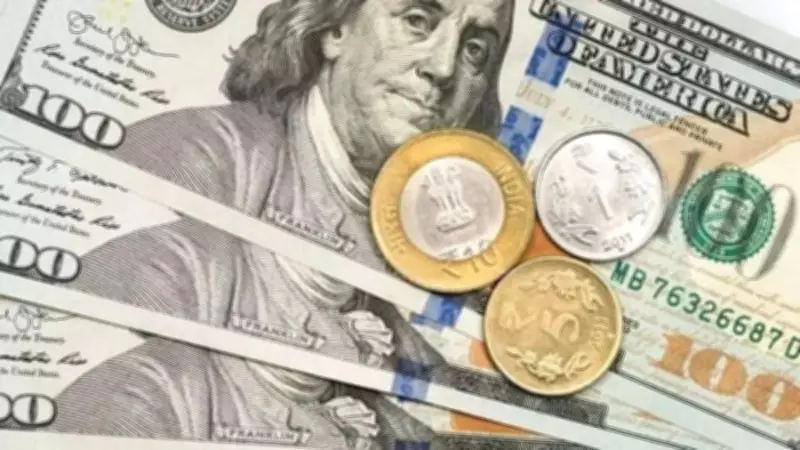
Indian Rupee Declines 48 Paise Against US Dollar in Early Trading Session
The Indian rupee experienced a significant drop in value during early market trade on Thursday, falling by 48 paise to settle at 93.31 against the US dollar. This depreciation marks a notable shift in the currency's performance, reflecting broader economic pressures and external market factors.
Key Factors Driving the Rupee's Decline
Forex traders and analysts have identified several critical elements contributing to the rupee's downward movement. The primary driver is the robust demand for the American currency from importers and banks, which has intensified selling pressure on the rupee. Additionally, the strength of the US dollar in the global market has further exacerbated the situation, making it more expensive for India to manage its foreign exchange reserves.
Another significant factor is the surge in crude oil prices, which directly impacts India's import bill and trade deficit. As a major importer of oil, higher prices increase the outflow of dollars, putting additional strain on the rupee. Market sentiment has also been influenced by geopolitical tensions and global economic uncertainties, leading to cautious trading behavior among investors.

Market Performance and Comparative Analysis
In the interbank foreign exchange market, the rupee opened weakly at 93.25 against the US dollar and quickly lost ground, touching an intraday low of 93.31. This represents a sharp decline from the previous close of 92.83, highlighting the volatility in early trading sessions. The rupee's performance is being closely monitored against other major currencies, with the US dollar index showing strength, which typically leads to depreciation in emerging market currencies like the rupee.
Historical data indicates that the rupee has faced similar pressures in recent months, but today's drop is particularly pronounced due to the confluence of domestic and international factors. Traders are advising caution, as further fluctuations could occur based on upcoming economic data releases and central bank interventions.
Implications for the Indian Economy
The depreciation of the rupee has wide-ranging implications for the Indian economy. A weaker rupee makes imports more expensive, potentially leading to higher inflation as the cost of goods and services rises. This could affect consumer spending and overall economic growth, especially in sectors reliant on imported raw materials.
On the export front, a depreciated rupee might offer some competitive advantage by making Indian goods cheaper in international markets. However, this benefit could be offset by global demand slowdowns and trade barriers. The Reserve Bank of India (RBI) is expected to keep a close watch on the currency movements and may intervene if volatility threatens financial stability.
Expert Insights and Future Outlook
Financial experts suggest that the rupee's trajectory will depend heavily on external factors such as US Federal Reserve policies, global oil price trends, and domestic economic indicators. While some predict continued pressure in the short term, others believe that supportive measures from the RBI and government could stabilize the currency.
Investors are advised to stay informed about market developments and adjust their strategies accordingly. The rupee's performance against the US dollar will remain a key indicator of India's economic health in the coming weeks, with potential impacts on stock markets, foreign investments, and trade balances.






