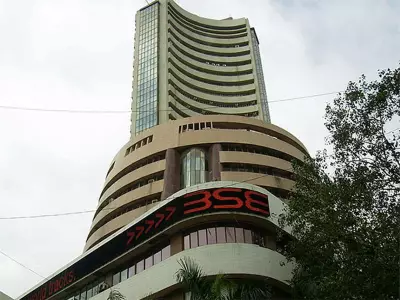
Indian Stock Markets Open Lower Amid Global Tech Concerns
The Indian equity benchmark indices, Nifty50 and BSE Sensex, commenced Thursday's trading session on a negative note, reflecting cautious investor sentiment influenced by global market trends and sector-specific pressures.
Opening Bell Sees Red Across Major Indices
At the opening bell, both key indices were trading in negative territory. The Nifty50 index slipped below the psychological level of 25,750, while the BSE Sensex witnessed a decline of over 150 points. By 9:16 AM, the Nifty50 was trading at 25,723.25, marking a decrease of 53 points or 0.20%. Simultaneously, the BSE Sensex stood at 83,666.28, down by 151 points or 0.18%.
Analysts Maintain Positive Bias Despite Initial Weakness
Stock market analysts continue to hold a positive outlook for domestic equities, citing several supportive factors. Recent trade agreements with the United States and the European Union, along with budget-related announcements and the ongoing third-quarter earnings season, are expected to provide underlying strength to the market.

IT Sector Faces Significant Pressure
Dr. VK Vijayakumar, Chief Investment Strategist at Geojit Investments Limited, highlighted significant near-term market trends. He noted that while the Nifty appears to be in a consolidation phase without major index-level movements, substantial changes are occurring within individual Nifty stocks.
The information technology sector has experienced considerable declines, following a selloff in US tech stocks that has spread to Indian markets. This selloff was triggered by concerns over new automation tools developed by Anthropic, which market participants fear could replace outsourced IT services. There are apprehensions about significant margin pressure for Indian IT companies, though the actual impact remains uncertain.
Domestic Consumption-Driven Segments Show Resilience
In contrast to the weakness in IT stocks, large domestic consumption-driven segments are performing well. This resilience is evident in leaders such as Reliance Industries, Bharti Airtel, major banking stocks, and select automobile companies.
Dr. Vijayakumar emphasized that after the growth-oriented Budget and recent trade deals with the EU and US, India's economic growth is expected to remain robust, facilitating strong domestic consumption. The continuation of a low-interest rate regime supports growth in the auto sector and is likely to extend to segments like air conditioners as summer approaches. Consequently, the strong domestic consumption narrative is anticipated to sustain the resilience of consumption-driven stocks.
Investor Activity Reflects Cautious Mood
Investor behavior mirrored the cautious market sentiment. Foreign portfolio investors were marginally net buyers, purchasing equities worth Rs 30 crore during the session. Domestic institutional investors also remained on the buying side, acquiring shares worth Rs 240 crore, according to exchange data.
Global Cues Present Mixed Picture
Global market signals were mixed, with US stocks closing lower overnight. Wall Street was weighed down by losses in technology counters, including Advanced Micro Devices and Palantir. Concerns over elevated valuations and doubts about the sustainability of the artificial intelligence-led rally contributed to the downturn.
Alphabet shares declined nearly 2% ahead of its quarterly earnings announcement. However, the stock recovered approximately 2% in after-hours trading after the company indicated plans for increased spending to strengthen its position in the artificial intelligence sector.
Market Outlook and Key Factors to Monitor
Dr. Vijayakumar pointed out that if the cessation of selling and marginal buying by foreign institutional investors becomes a sustained trend, the market could gain additional strength. This data point is crucial for investors to watch in the coming sessions.
The overall market scenario presents a dichotomy between sector-specific challenges and broader economic strengths, requiring investors to navigate carefully while considering both domestic fundamentals and global influences.