Indian Stock Market Faces Turbulent Week Amid Multiple Headwinds
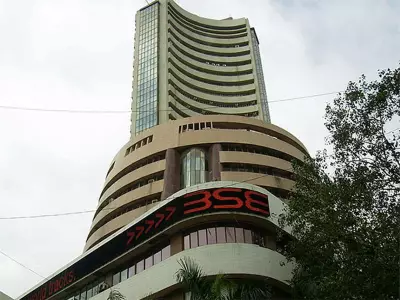
The Indian equity market experienced substantial volatility and significant losses during the previous trading week, with the benchmark Nifty 50 index declining by 2.5% for the week ended January 23. This downward movement has extended the monthly losses to more than 4% for January, marking what appears to be the second consecutive month of negative returns for the index. The market downturn has been attributed to several interconnected factors that have created a challenging environment for investors and traders alike.
Key Factors Driving Market Volatility
Persistent foreign capital outflows have placed considerable pressure on Indian equities, as international investors continue to withdraw funds from emerging markets. This has been exacerbated by the Indian rupee's depreciation to record lows against major global currencies, which has further dampened foreign investor sentiment. Additionally, mixed third-quarter corporate results have failed to provide the expected boost to market confidence, while ongoing geopolitical uncertainties continue to create an atmosphere of caution among market participants.
Technical Analysis and Market Outlook
Jigar S. Patel, Senior Manager of Equity Technical Research at Anand Rathi Share and Stock Brokers, provided detailed technical insights into the current market situation. He noted that the Nifty 50 index has decisively breached the crucial 25,400 support level, falling below the psychologically important 25,000 mark and moving toward the 24,900 zone. According to Patel, this technical breakdown suggests the possibility of further testing of support levels in the near term.

"At this juncture, there is a possibility of a retest of 24,900 or a marginal break below it, which could facilitate the completion of the ongoing corrective phase. If the index fails to stabilise around 24,800, the previous base near 24,500–24,400 emerges as the next significant demand zone," explained Patel.
However, the technical analyst offered a nuanced perspective, suggesting that the likelihood of an extended decline appears relatively low. He pointed to early signs of potential positive Relative Strength Index (RSI) divergence on hourly charts, indicating that the downward momentum may be decelerating. This technical development could signal a potential shift in market dynamics in the coming sessions.
"Once a fresh low is established, the market is anticipated to transition into a base-building phase, even if broader markets experience a slightly extended but likely final leg of decline. A recovery towards 25,400 may follow, while a sustainable bottom will be confirmed only upon a decisive move back above 25,400," Patel elaborated.
Based on this technical assessment, Patel advised traders to exercise caution in the current market environment. He recommended avoiding aggressive bottom-fishing strategies and waiting for clear confirmation signals before taking fresh directional positions in the market.
Expert Stock Recommendations for Short-Term Trading
Jigar Patel has identified three specific stocks that present potential trading opportunities for the next one to two weeks. These recommendations are based on detailed technical analysis and consider the current market conditions.
One 97 Communications (Paytm) - Sell Recommendation
With a previous closing price of ₹1,138.80, Paytm has been identified as a potential short-selling opportunity with a target price of ₹1,030 and a stop loss at ₹1,030. Patel highlighted that the stock has experienced a significant decline below its 50-day Double Exponential Moving Average (DEMA), resulting in a substantial single-day drop that has altered its near-term technical structure.
"Prior to this decline, the stock exhibited clear signs of distribution in the ₹1,250–1,350 range, where sustained volumes indicated silent selling at higher levels. On the technical indicators, bearish divergence was evident, signalling weakening momentum ahead of the breakdown," noted Patel.

The technical analyst further explained that the Relative Strength Index (RSI) is currently near the 30 mark, reflecting weak sentiment, while the Directional Movement Index (DMI) remains firmly negative, confirming the ongoing downtrend. Despite the recent decline, Patel cautioned that a short-term technical pullback or dead cat bounce cannot be ruled out, potentially extending toward the ₹1,200 level.
"Therefore, we recommend a sell-on-rise strategy. Short positions can be initiated in the ₹1,230–1,200 zone, with a stop loss at ₹1,311 on a daily closing basis and a downside target of ₹1,030," advised Patel.
Bajaj Auto - Accumulate Recommendation
Bajaj Auto, which closed at ₹9,413.50, has received an accumulate recommendation with a target price of ₹10,200 and a stop loss at ₹9,000. According to Patel's analysis, the stock has successfully retested its falling trendline after a decisive breakout, supported by healthy volumes that confirm the validity of the breakout pattern.
The stock is trading comfortably above both the 20-day and 50-day DEMA, with these moving averages acting as strong dynamic support levels. On the momentum front, the daily Stochastics oscillator has formed a hidden bullish divergence, indicating underlying strength and the potential for continuation of the prevailing uptrend.
"The overall technical setup suggests improving price structure with favourable risk-reward. In view of the confluence of trendline support, moving average alignment, and positive momentum signals, the stock appears well-positioned for further upside," stated Patel.
The recommended accumulation zone for Bajaj Auto is between ₹9,420 and ₹9,350, with the upside target set at ₹10,200 while maintaining a stop loss at ₹9,000 on a daily closing basis.
ONGC - Buy Recommendation
ONGC, with a previous close of ₹245.47, has received a buy recommendation with a target price of ₹268 and a stop loss at ₹230. Patel's analysis indicates that the stock has successfully retested the neckline of an inverse head-and-shoulders pattern after a decisive breakout supported by healthy volumes, reinforcing the strength of the reversal pattern.
The stock has recently sustained above its 50-day DEMA, accompanied by a notable pickup in trading activity that indicates renewed buying interest. Momentum indicators are aligning positively, with the DMI suggesting improving trend strength, RSI holding in a bullish zone, and Stochastics pointing toward further upside momentum.
"This confluence of price action and indicator support signals a favourable risk–reward setup for the counter. From a trading perspective, ONGC looks well placed for a continuation of the upward move," explained Patel.
The recommended entry zone for ONGC is between ₹245 and ₹243, with an upside target of ₹268 while maintaining a strict stop loss at ₹230 on a daily closing basis.
Important Considerations for Investors
While these technical recommendations provide specific trading strategies, investors should approach them with appropriate caution. Market conditions can change rapidly, and technical analysis represents one approach to market evaluation among many. The views expressed are those of the technical analyst and should be considered within the context of individual investment objectives and risk tolerance.
Investors are advised to conduct their own research and consult with certified financial experts before making any investment decisions. The dynamic nature of financial markets requires continuous monitoring and adjustment of strategies based on evolving conditions and new information.